
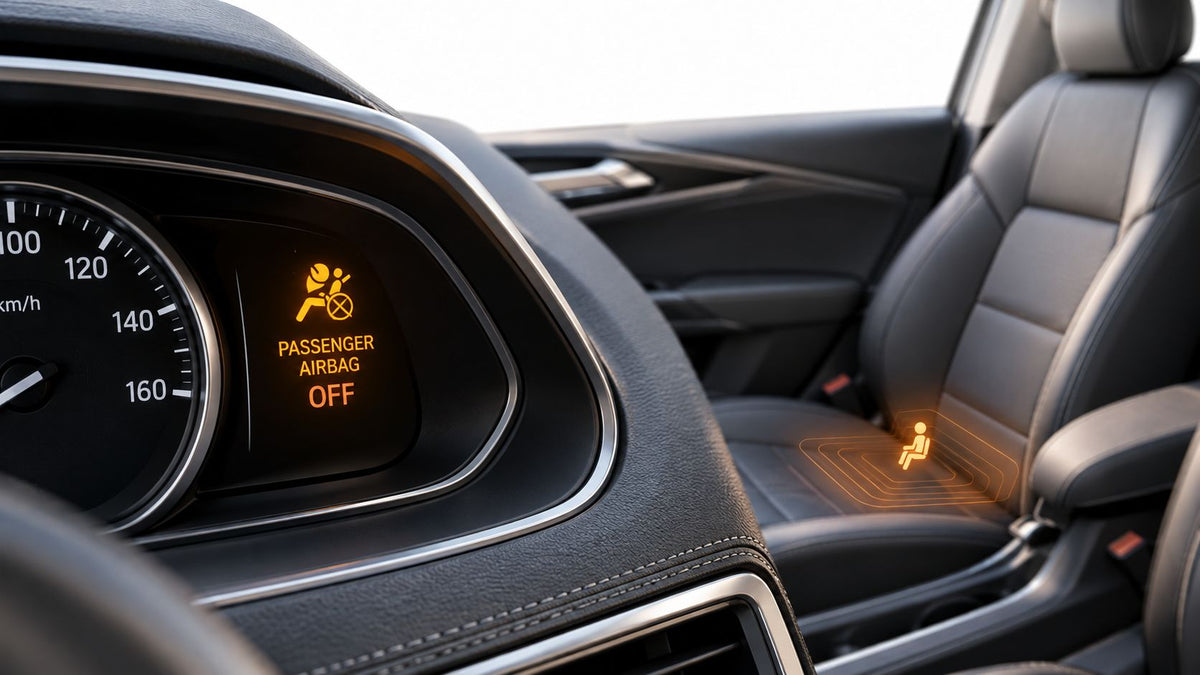
A steady passenger airbag warning after a crash or seat work usually means the SRS control module has stored a fault or crash data, and the system can't guarantee front-passenger deployment until the exact code is read and the underlying condition is repaired. In crash testing and historical analyses, passenger airbags produced a 27% reduction in fatalities for right-front occupants aged 13 and older in purely frontal crashes, with confidence bounds of 9% to 45%, which is why this warning deserves immediate attention rather than a shrug.
If you're staring at the dash right now, the first job is to separate a normal Passenger Airbag OFF status from an actual SRS malfunction. Those look similar to many drivers, but they point to very different conditions and very different next steps.
Table of Contents
- When the Passenger Airbag Light Stays On After a Crash or Seat Work
- How the SRS Self-Test Works and Why the Light Can Stay On
- Seat Sensors, Occupant Classification, and Why the Warning May Not Mean a Broken Airbag
- Normal Passenger Airbag Behavior Versus Warnings That Require Attention
- What Diagnostics Look Like and Why Clearing Codes Is Not a Fix
- Repairing the Restraint System After a Collision or Seat Service
- Common Questions About Passenger Airbag Warnings
When the Passenger Airbag Light Stays On After a Crash or Seat Work
A warning that shows up after a fender bender, a battery disconnect, or upholstery work usually isn't cosmetic. It's the vehicle telling you the restraint system found something it doesn't trust, and that matters because airbags are supplemental devices, not substitutes for belts.
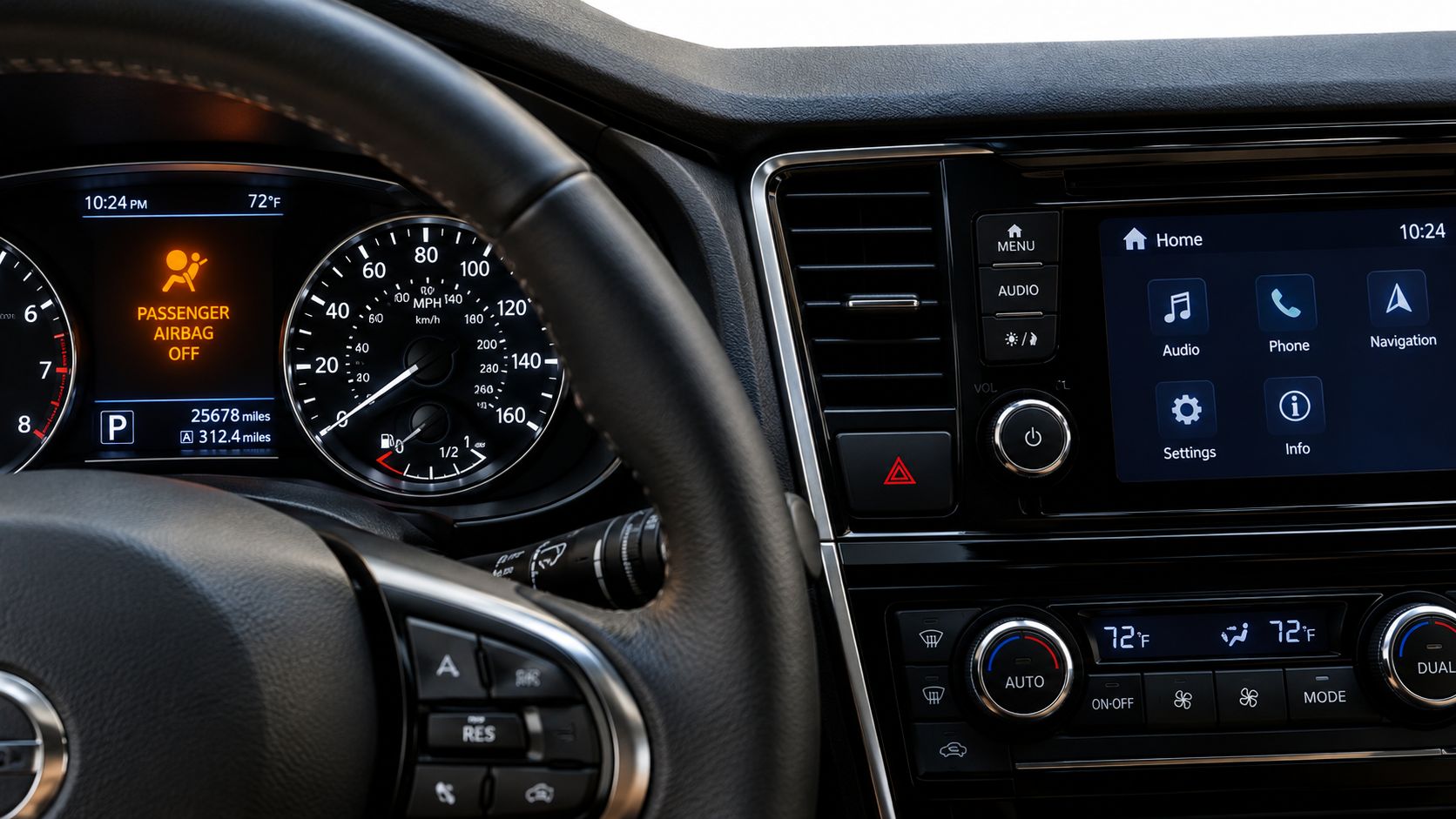
Read the light before you read the repair estimate
The amber Passenger Airbag OFF indicator can be normal when the seat is empty or when the occupant-classification system decides the front passenger airbag should stay off. A steady SRS warning is different, because it usually means the restraint-control system has detected a fault that may affect deployment.
A post-collision warning deserves special care. NHTSA notes that crash data or hard fault codes can keep the lamp on even when the visible airbag hasn't deployed, and the warning light itself doesn't identify the failed part. A compatible diagnostic scan and manufacturer-specific fault-code interpretation are required, which is why guessing usually wastes time.
Practical rule: if the light is tied to crash repair, seat removal, or sensor work, treat it as a restraint-system fault until the code proves otherwise.
What to say when you call a technician
Use plain details, not vague complaints. Tell them whether the lamp is the Passenger Airbag OFF status, the SRS warning symbol, or both, and mention the trigger event if you know it.
- After a crash: mention that the light stayed on after impact, because crash data or deployed restraint hardware may be involved.
- After seat work: mention seat removal, upholstery changes, or connector handling, because under-seat wiring and classification sensors are common trouble spots.
- After battery work: mention any jump-start, battery replacement, or low-voltage event, because the SRS module can store a fault during voltage instability.
If you need a repair-path example, the seat belt and SRS module guidance at Airbag system after a crash shows why the visible damage and the stored fault aren't always the same thing. That distinction is what keeps people from clearing a lamp before the car is actually safe.
How the SRS Self-Test Works and Why the Light Can Stay On
The restraint system does a short check every time the ignition comes on. In normal operation, the lamp illuminates for roughly 6 to 8 seconds and then goes out. If it stays on, the vehicle has found an active malfunction, not a reminder for routine maintenance.
The self-test is checking the whole restraint network
Modern SRS logic watches more than airbags alone. It monitors the passenger airbag firing circuit, seat-belt pretensioner circuits, wiring continuity, the restraint-control module, and the occupant-classification system. A fault in any of those paths can keep the warning lamp lit.
That's why clearing the icon without finding the cause doesn't solve the problem. The control module may inhibit, derate, or alter deployment logic when it sees bad data or an open circuit, and a vehicle can look normal from the outside while the protection system is still compromised.
A scan tool that can access the SRS module is the right starting point. Generic engine-code readers often miss the problem entirely because restraint faults live in a separate diagnostic layer.
Crash data can hold the lamp on after the visible repair is done
After a collision, the system may store crash data or a hard diagnostic trouble code. In those cases, the airbag bag itself may be intact, the dash may look fine, and the warning still won't go away because the module remembers the event.
That memory is useful because it preserves the reason the system shut down. It also explains why a technician needs to look at the module state, not just the parts you can see. A proper diagnosis often means checking the scan data before removing parts, then confirming that the warning lamp completes its normal self-test after repair.
For deeper module context, the restraint-control module overview at restraint control module guidance is useful because it shows why the lamp is tied to the system brain, not just a bulb in the dash.
A steady SRS lamp is the car saying, “I found a fault and I'm not willing to promise deployment until you prove the circuit is healthy.”
Seat Sensors, Occupant Classification, and Why the Warning May Not Mean a Broken Airbag
A passenger warning doesn't always mean the airbag is broken. Sometimes the system is doing exactly what it was designed to do, and the seat itself is telling the module that the front passenger airbag should stay off.
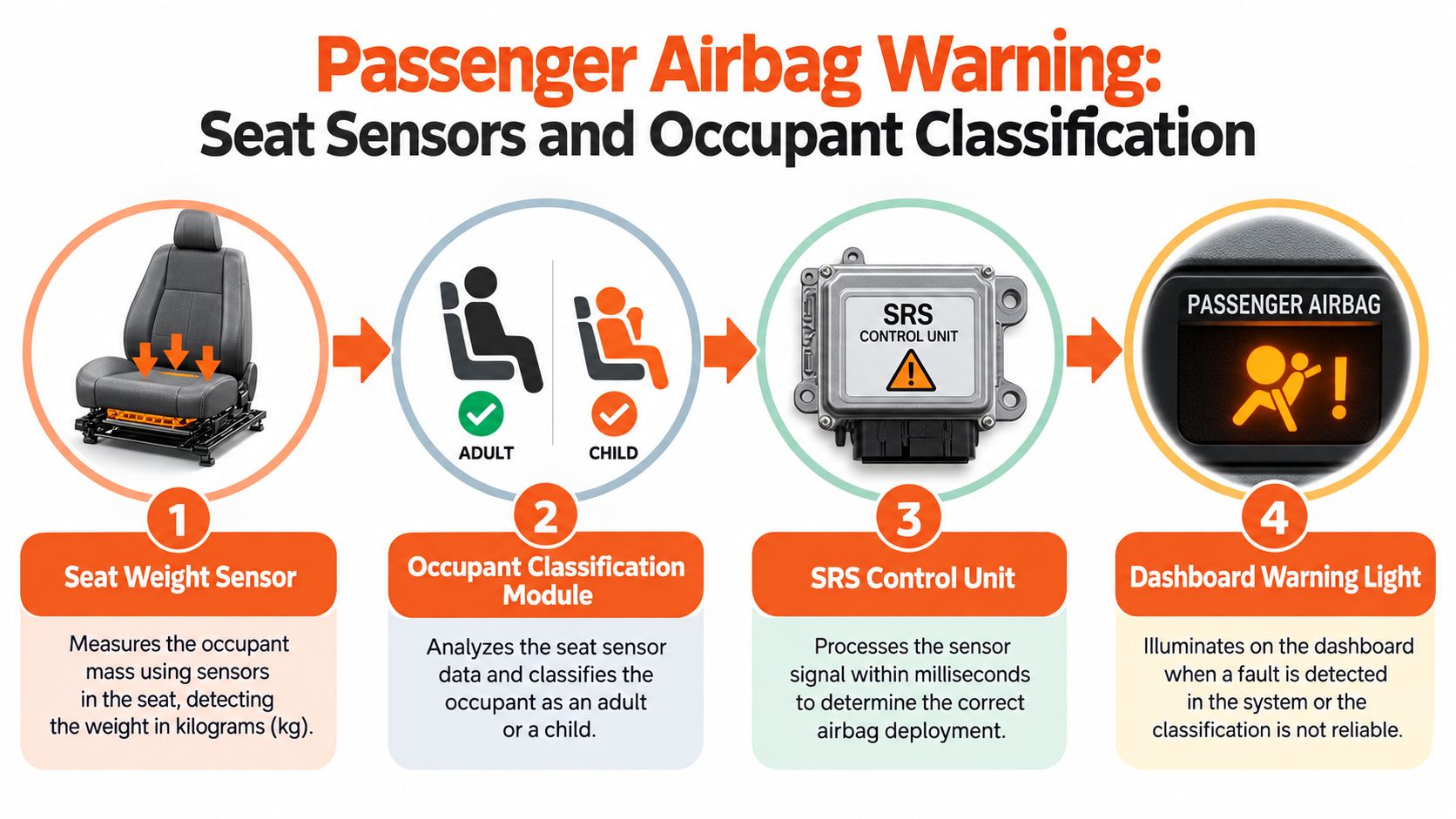
When the seat is making the decision
The passenger-seat Occupant Classification System uses seat sensors and related inputs to decide whether the front airbag should deploy. An empty seat or a small child or rear-facing restraint can legitimately command the passenger airbag off under FMVSS 208-based design logic.
Seating position matters too. Manufacturers commonly require the occupant to sit centered on the cushion, upright with the back against the seatback, feet on the floor, and the belt fastened. That placement helps the system classify the occupant correctly and helps the restraint work as intended.
What can fool the classification system
Objects on the cushion, spilled liquid, altered seat padding, damaged pressure sensors, or disconnected wiring can all confuse the system. The result can be an incorrect occupant reading, an unexpected Passenger Airbag OFF status, or a more serious SRS fault message.
Salvage rebuilders and DIY seat work often get caught here. Removing the seat, replacing upholstery, or swapping sensors can require a manufacturer-specific zero-point calibration. Erasing codes alone won't restore correct deployment authorization if the classification baseline was lost.
For a repair-process view, how to diagnose an airbag light is useful because it reinforces the sequence that works: diagnose first, repair the cause, calibrate if needed, then verify the lamp behavior.
Useful distinction: a normal OFF indicator can be part of the design. A persistent fault message means the system may not function correctly in a crash.
Normal Passenger Airbag Behavior Versus Warnings That Require Attention
A healthy vehicle gives you a short self-test, then moves on. A healthy passenger seat may also show Passenger Airbag OFF when there's no occupant or when the seat is set up for a child restraint. Those are different from a fault.
| Situation | What it usually means | What to do |
|---|---|---|
| Empty passenger seat with OFF status | Normal occupant-classification behavior | Check the owner's manual if you're unsure |
| Adult seated, OFF status unexpectedly shown | Classification may be wrong | Verify seating position, check for recalls, schedule diagnosis |
| SRS symbol stays on after key-on self-test | Active restraint fault | Get the code read with an SRS-capable scan tool |
| Warning appears after seat removal or upholstery work | Connector, sensor, or calibration issue | Inspect work done and confirm calibration |
| Warning appears after a collision | Crash data or damaged SRS component | Diagnose before resetting anything |
The actual boundary is urgency. An OFF indicator can be normal, but an SRS malfunction warning deserves attention because the system may have disabled protection. If the warning appeared after battery discharge, seat movement, wiring disturbance, or repair work, it's not safe to assume it's harmless.
If you're checking a used, auction, or rebuilt vehicle, don't stop at whether the light is off right now. Verify that the correct lamp sequence occurs at key-on, confirm there are no stored codes, and make sure any passenger-seat indicator behavior matches the seat condition. A lamp that comes and goes can still reflect a stored fault that hasn't been solved.
What Diagnostics Look Like and Why Clearing Codes Is Not a Fix
A proper SRS diagnosis starts with the exact trouble code, not a guess. The technician needs manufacturer-compatible scan data because restraint systems often store faults that a basic engine reader won't see.
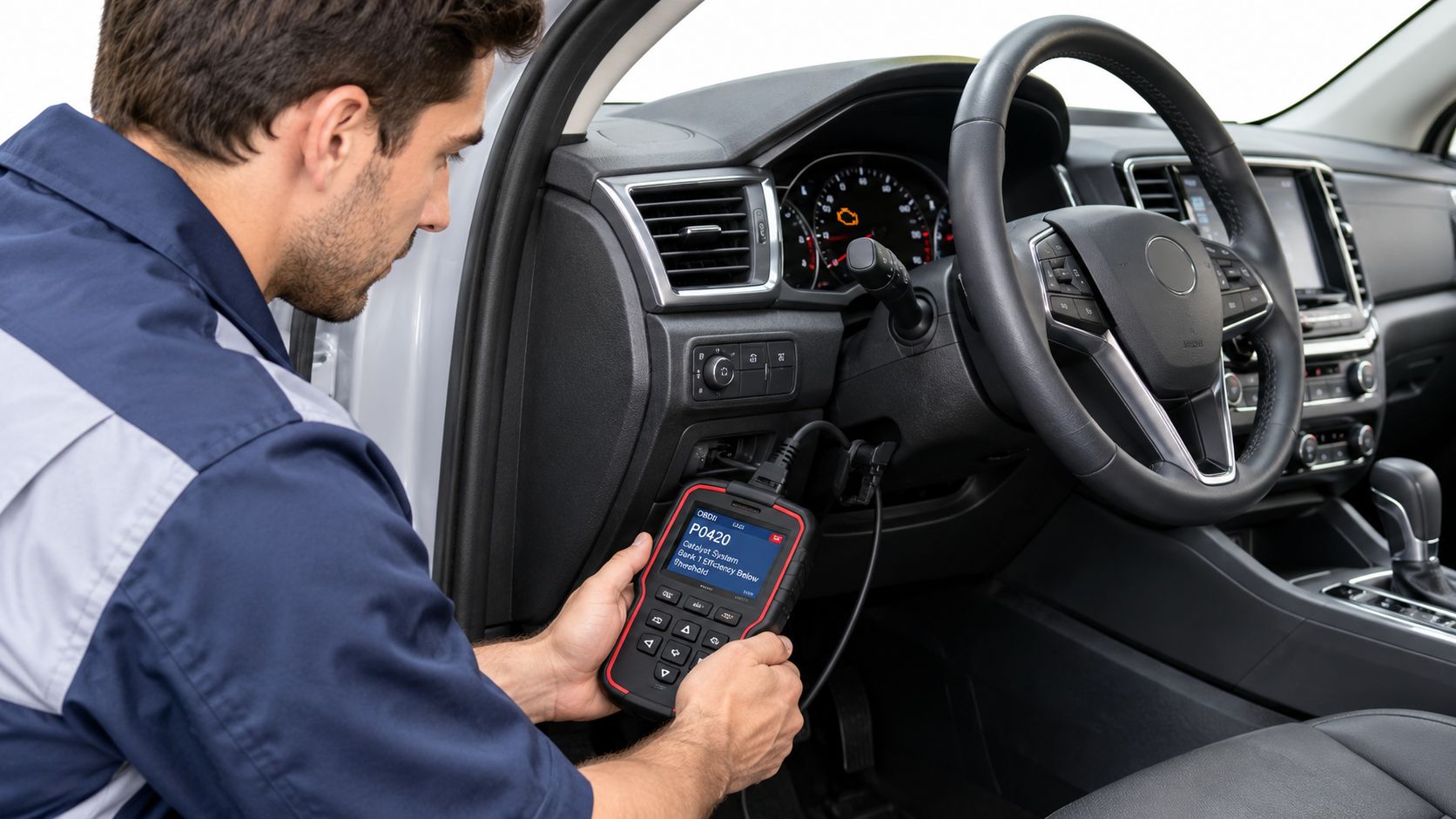
The workflow that usually makes sense
First comes the code retrieval. Then comes a visual inspection of under-seat connectors, harness routing, pretensioner wiring, and any evidence of impact damage, water intrusion, or disturbed terminals. After that, the technician checks the circuit using vehicle-approved procedures.
Safety boundary: SRS components should not be probed with ordinary test equipment. Accidental current can trigger pyrotechnic devices, so the wrong meter in the wrong hands turns a diagnosis into a hazard.
After repair, the system has to pass its own self-test again. That means the lamp must complete its normal key-on sequence, and any seat or occupant-classification work may need a calibration check before the vehicle is returned to service.
The temptation to clear the code first is strong because it's fast. It also hides the reason the module set the warning in the first place, which is exactly how a safety-relevant fault gets buried until the car needs the airbag and pretensioner system in a crash.
The video below shows how a scan-based diagnostic process fits into a real repair workflow.
Repairing the Restraint System After a Collision or Seat Service
Once the fault is identified, the repair path usually involves more than one component. Airbags, pretensioners, sensors, wiring, and the control module all work as one restraint network, so a single visible fix may not restore the whole system.
What a complete repair needs to account for
A collision can leave behind stored crash data, damaged connectors, or deployed restraint hardware that still keeps the module unhappy. Seat service can disturb classification sensors or harnesses under the cushion. If the diagnosis points to one of those conditions, the repair has to address the exact fault, then prove that the system is ready again.
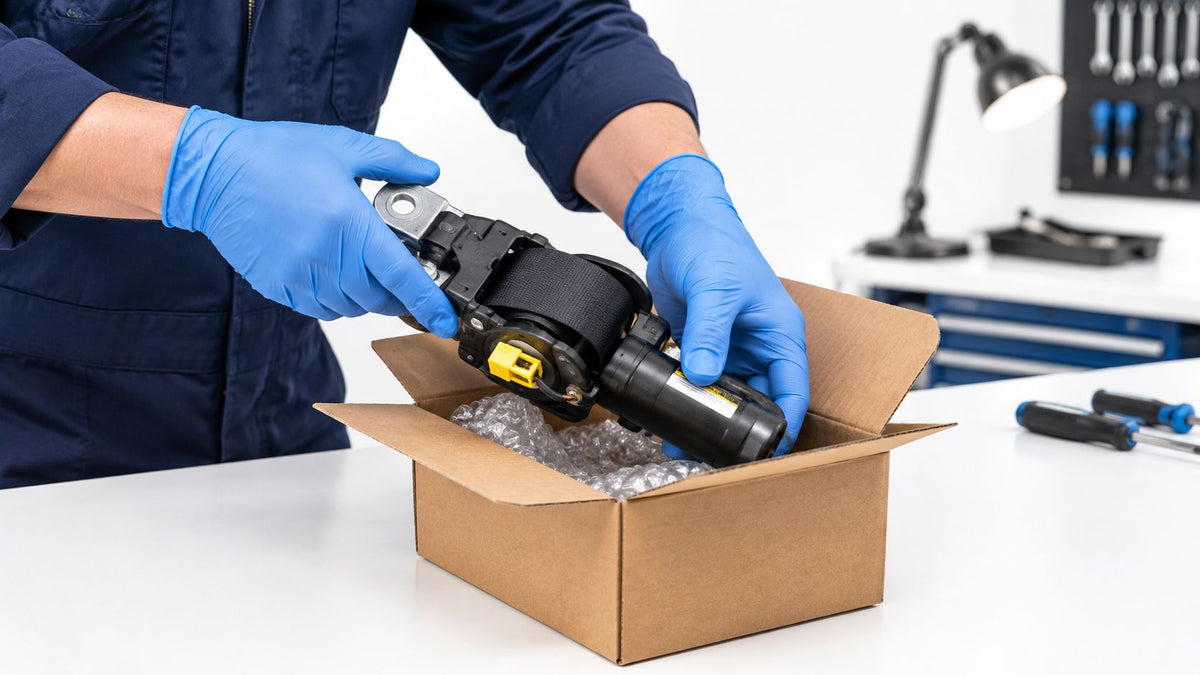
That is where restraint-restoration services fit. A mail-in option such as Material Handling USA compliance team may matter in a shop environment when safety process control and documentation are part of the workflow, but the vehicle still needs the correct automotive repair sequence before it can be trusted on the road.
The important part is sequencing. Resetting a module without fixing the underlying issue can leave the vehicle's protection unavailable. Replacing only the airbag bag while ignoring pretensioner faults, wiring damage, or crash data doesn't restore the full SRS network either.
What good documentation looks like
Keep the original diagnostic code, note the repaired component, and record any calibration or module-reset work performed. Collision repair businesses, rebuilders, and owners all benefit from that paper trail because it shows the system was returned to an operational state instead of being cosmetically silenced.
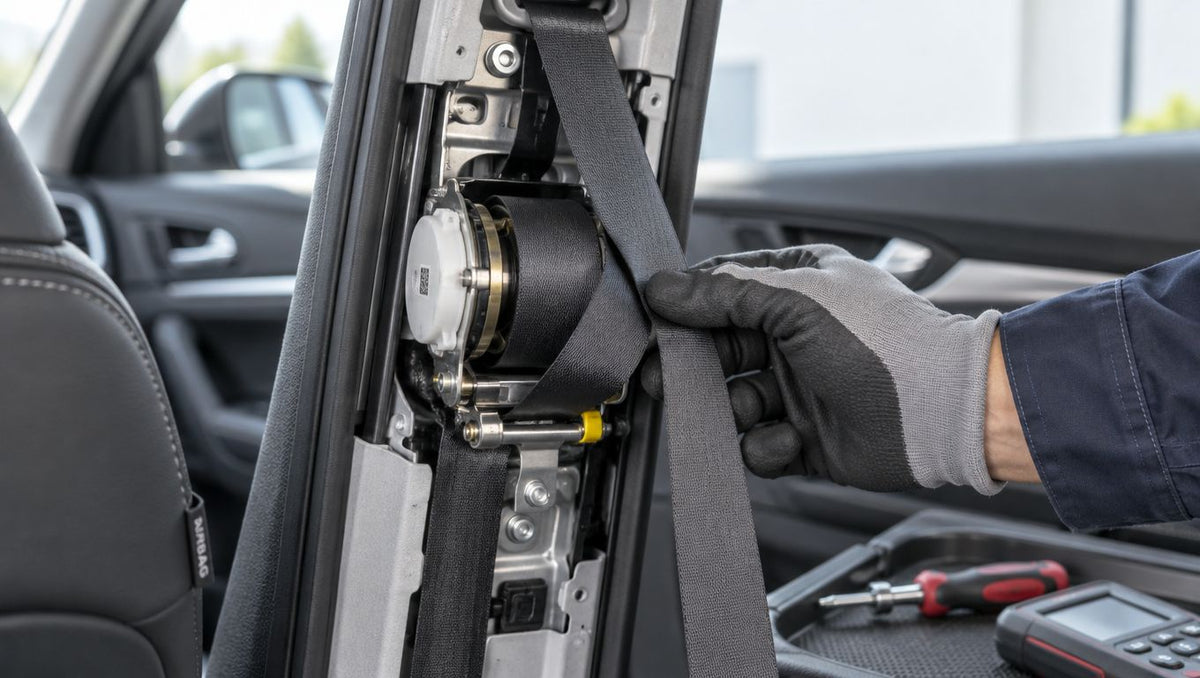
Seat belt pretensioner repair, webbing replacement, and SRS control module reset services are all relevant when the post-collision warning comes from damaged restraint hardware rather than from a simple dashboard glitch. The right repair matches the fault, not the guess.
Common Questions About Passenger Airbag Warnings
A lot of drivers want one simple answer, but the right answer depends on which warning is lit and why. A Passenger Airbag OFF status can be normal when the seat is empty or classified as a small occupant, while an SRS warning symbol means the restraint system has logged a fault.
Can you drive with the warning on? Short trips to a qualified diagnostic facility are one thing, but daily driving with an unresolved SRS fault means you're relying on the seat belt alone if a crash happens. That's not a good trade when the system was designed to work together.
How long do codes stay stored? Often long enough that a temporary lamp reset doesn't prove anything. If a crash data record, connector issue, sensor problem, or recall-related fault is still present, the code can remain part of the module's memory until the underlying condition is corrected.
What role do recalls play? A big one. NHTSA recall documentation has identified occupant-classification failures that can deactivate the front passenger airbag and illuminate the warning system, as well as a passenger-seat heater harness issue that can create a sporadic fault and deactivate the airbag when the seat is occupied. If a warning appears after seat work or without an obvious impact, a recall check is part of the job.
The hardest mistake to avoid is treating a temporary light-out as proof of repair. If the system was never diagnosed, the car might only be silent because the module is still in a fail-safe state.
If your passenger airbag light is on after a crash, seat removal, or upholstery work, Seat Belt Repair can help with the restraint-side repairs that often sit behind the warning. Visit Seat Belt Repair to review mail-in seat belt pretensioner repair, webbing replacement, and SRS module reset options that fit post-collision restoration work.

Leave a comment
This site is protected by hCaptcha and the hCaptcha Privacy Policy and Terms of Service apply.