
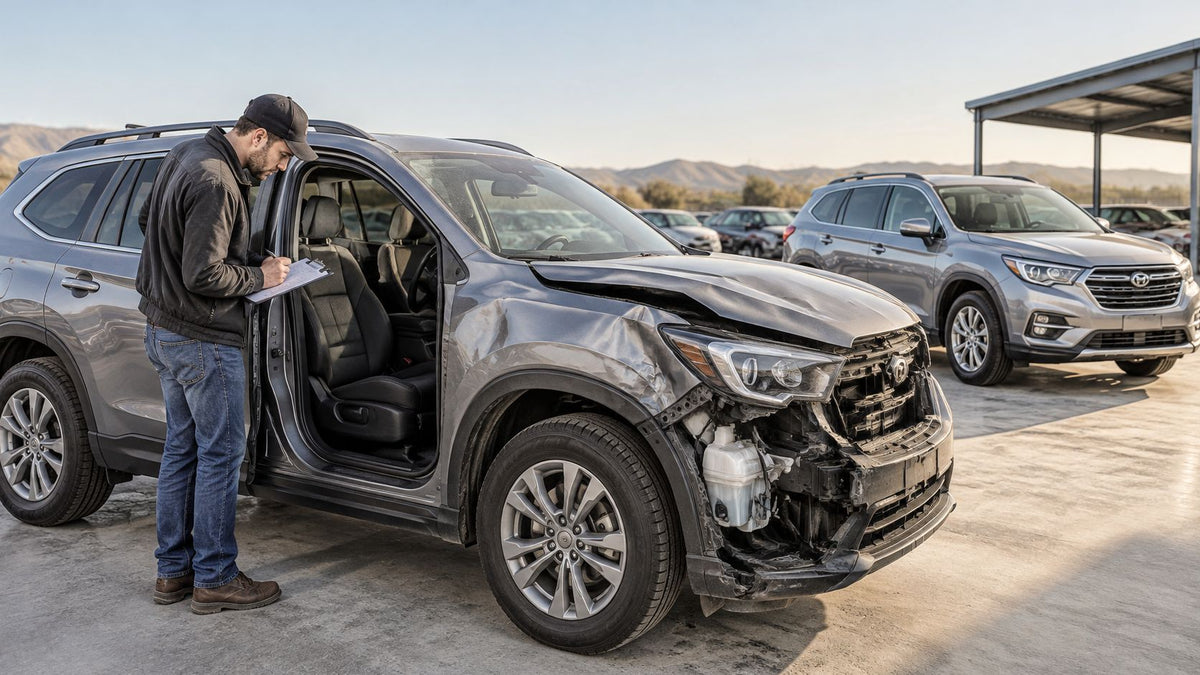
A collision SUV appears thousands below clean-title retail, and the auction timer is already moving. Then you add the buyer premium, pickup, transport, body work, and a restraint system with deployed airbags, locked belts, and crash data in its module. The discount looked like profit until the full repair list came into view.
Flipping cars for profit depends on what remains after every cost needed to make a car safe, legal, and appealing to buyers. A low hammer price is only a starting point. The quiet margin-killer is often the restraint system: a belt can look fine but be locked internally, and an SRS module can retain crash data after the visible damage is repaired.
Table of Contents
- Which Auction Lots Still Leave Profit
- How to Source Cars Worth Bidding
- Repair or Replace Belts and SRS Modules
- How to Build the Flip Cost Estimate
- Repair the Car in Worksheet Order
- Title Rules and How to Resell the Car
Which Auction Lots Still Leave Profit
The SUV from the opening scene can still be a sound buy, but only if its structure, parts needs, and restraint work fit the resale price. A clean-title ad is not a realistic benchmark for a salvage-branded car, and the hammer price doesn't include auction fees, transport, repairs, or the work required to make the vehicle roadworthy.
Use the lot type to decide what deserves a closer look. Don't treat every low-priced car as the same kind of project.
| Lot type | Buy signal | Cost that erases the deal | Bid for a retail flip |
|---|---|---|---|
| Clean-title theft recovery | Runs or is nearly complete, with missing parts listed | Unlisted electronics, glass, and keys | Yes if comps cover the missing parts |
| Collision repairable | Straight structure, with damage matching the photos | Deployed airbags, locked belts, and module coding | Yes after a restraint estimate |
| Flood or water | Low price versus a clean twin | Corroded connectors, modules, and bearings | Usually no unless electrical work is your specialty |
| Parts-only or non-repairable | Part-out value above fees and transport | Title blocks a rebuilt registration | No for a retail flip |
Read the damage beyond the main photo
Clean-title theft recoveries may need fewer body repairs than a collision car, but a missing key, instrument cluster, infotainment unit, or window can turn a tidy-looking listing into a parts hunt. Confirm what's absent and what the seller has checked. A car that starts without a key may still have an immobilizer or programming problem.
Collision repairables are the core retail-flip candidate when the structure is straight and the damage is contained. Check whether the auction photos and condition report agree, then price the airbags, belts, module work, body repairs, and any needed programming as separate lines. “Runs and drives” doesn't tell you whether the restraint system is intact.
Bid filter: If the repair plan assumes that belts or modules are fine because the dash looks clean, the estimate isn't ready.
Skip guesses that can't be priced
Flood cars can hide corrosion inside connectors and modules, where damage may surface after the car has been dried and running. Water exposure can also reach bearings and other components that don't show trouble in listing photos. Unless you can diagnose electrical faults confidently and price the risk, a low purchase price isn't enough reason to bid.
Parts-only and non-repairable titles suit dismantlers who can recover value from components. They aren't sensible retail flips when the title prevents road registration. Confirm the title brand and your state's rules before treating any car as a candidate.
Locked pretensioners and crash-coded SRS modules belong on the estimate from the start. If you can't name every likely cost before the timer ends, you don't have a maximum bid yet.
How to Source Cars Worth Bidding
Keep your search narrow: one metro area and a small group of models you already know how to price and sell. Familiarity helps you spot a missing part, recognize a bad repair, and judge whether local buyers will want the finished car.
Six moves before you set a bid
- Filter the listings. Search Copart, IAAI, or a similar insurance auction for repairable collision cars and clean-title theft recoveries. Hide flood and non-repairable titles so they don't distract from lots you could retail.
- Read the condition report. Look for airbag deployment, seat-belt lockup, structural notes, odometer branding, and title status. The primary damage photo is a sales thumbnail, not a full inspection.
- Check completed sales. Compare sold vehicles with the same model, year, mileage range, and title status. Active ads show what sellers hope to get; completed sales are a more useful guide to what buyers accepted.
- Build the fee stack. Add the buyer premium, gate or load-out fee, transport, possible storage, and a repair reserve before writing down a maximum bid. A car can be cheap at the hammer and expensive by the time it reaches your shop.
- Inspect the hidden areas. Go in person or hire a third party when interior photos don't show pillar trim, belt webbing, or the dash clearly. A run-and-drive label doesn't rule out fired pretensioners or a restraint warning.
- Walk away from withheld details. If the seller won't clarify airbag or belt status and the photos show a bare dash or cut webbing, don't fill the gaps with optimism. Write your maximum bid on paper before the auction starts so the pace can't push you past it.
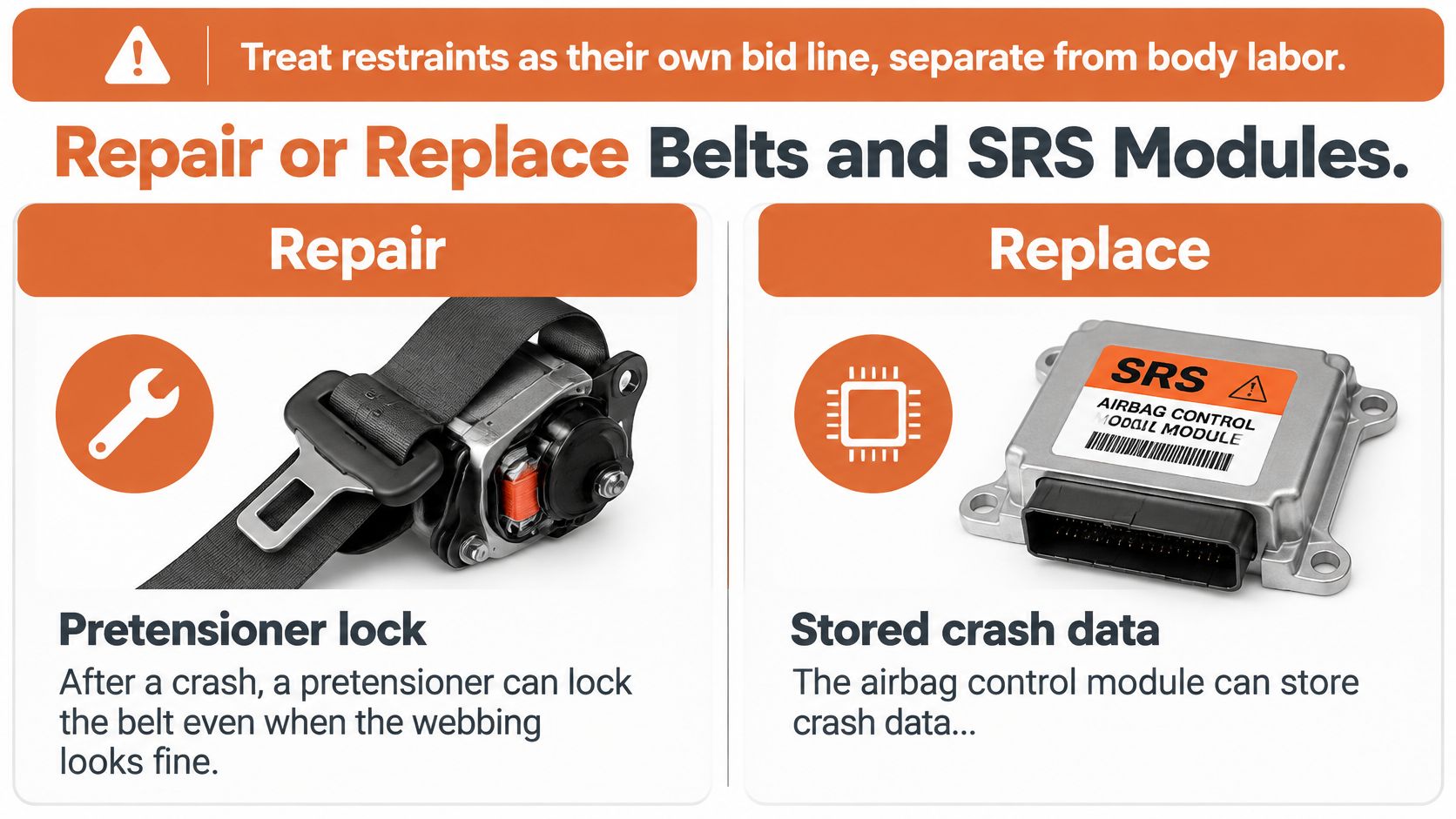
Seat belts need their own line, separate from body labor. A pretensioner can lock a belt even when the webbing looks undamaged, and an SRS module may retain crash data. The auto-auction guide is relevant background, but the listing still needs a vehicle-specific inspection.
The graphic below highlights why restraint costs deserve a separate estimate.
Use the video as another visual reference while checking auction listings, not as a substitute for verifying the condition of a specific vehicle.
Repair or Replace Belts and SRS Modules
A belt that won't pull out after a crash can be locked by its pretensioner even if the webbing looks normal. An SRS module may also retain crash data that keeps the warning lamp on. Treat both as repair decisions, not as minor interior details.
| Problem | Dealer-style default | Repair path | Change the call when |
|---|---|---|---|
| Locked or deployed pretensioner | New belt assembly plus labor | Rebuild the original retractor | Housing is crushed or anchor pulled out |
| Torn, frayed, or chewed webbing | New assembly | Replace webbing on the original unit | Belt was cut at a structural point you can't restore |
| SRS module with crash data | New module and programming | Reset to clear crash data and hard codes | Module case is damaged or missing |
| Several belts on one car | Quote every position at replacement | Repair each intact assembly | Combined restraint bill exceeds the flip margin |
Make the condition, not the default quote, decide
Replacement is the right call when the belt housing is crushed, the anchor has torn out of the structure, or the module case is physically damaged. A belt cut through a load-bearing section also needs a safe replacement solution, not a cosmetic patch. If the car has multiple fired positions, price each one; the driver's belt is not the whole restraint estimate.
When the mounts and housing are intact, a locked retractor or deployed pretensioner may be a repair candidate. A suitable repair service can restore the original OEM assembly for local reinstallation. A module with crash data may also be eligible for a reset, provided the module itself is undamaged and the vehicle's remaining restraint faults are addressed.
For example, a salvage car with several locked but intact belts and one crash-coded module could have a very different restraint bill if the original components can be restored rather than replaced. Seat Belt Repair serves collision shops, body shops, salvage rebuilders, insurance repairs, independent mechanics, and individual vehicle owners. Its mail-in work includes seat belt restoration and SRS module resets; the airbag-system guide describes common post-crash replacement and reset considerations.
The Locked Seatbelt Repair Service – Fix Stuck Seat Belt After Accident rebuilds an original factory unit when the internal mechanism has locked and the assembly is suitable for restoration. Customers remove the part and mail it in for repair; the business states that repairs are completed within 24 hours of receipt.
Protect the margin without compromising safety
Seat Belt Repair's listed belt repair price starts at $64.97, and an SRS module reset is listed at $49.97, with a listed regular price of $799.00 for that reset service. Those are service prices, not a complete installed repair quote: include shipping, removal, reinstallation, diagnosis, and any replacement parts the car needs.
As a simple worksheet example, three intact belts at $64.97 each plus one module reset at $49.97 totals $244.88 before shipping. That calculation only applies if all three belts and the module are suitable for the listed services. If the housing, anchor, webbing, or module case fails the safety test, budget for replacement or pass on the car.
How to Build the Flip Cost Estimate
A live listing can make a car feel like a bargain before you've accounted for all the work between the auction and a buyer's driveway. Build one worksheet per vehicle, and leave the hammer price blank until every other cost is visible.
Fill in the lines before bidding
- Set the stopping point. Leave the hammer-price line blank at first. You'll fill it only after you know what the rest of the project can carry.
- Add auction charges. Check the lot rules for the buyer fee, taxes collected by the auction, gate or load-out charges, storage, and late pickup. Don't use a fee estimate from a different lot or auction.
- Price transport. Include the trip to your shop and any second stop required if the vehicle can't be driven. A car labeled run-and-drive still needs a transport plan that fits its condition and location.
- Estimate body and paint. Use the listing photos to identify panels and visible damage, then set aside a contingency for hidden structural work. Don't assume a bumper cover is the entire repair because it's the damage shown in the main photo.
- List named mechanical work. Include problems already identified in the report, such as a no-start condition or radiator damage. Add missing keys, glass, or other parts on a theft recovery rather than leaving them in a vague “miscellaneous” category.
- Price the restraint repair. Mark each belt and module repair, replace, or walk away. For an eligible intact belt, enter $64.97 for repair; for a module reset, enter $49.97, then add shipping both ways. Use replacement pricing only for components that don't pass the repair decision.
- Budget title and inspection steps. Enter the costs for title processing, inspection, registration, and any emissions test your state requires for that title brand. Confirm the process before bidding, not after the car is already in your shop.
- Include holding and selling costs. Account for the time the vehicle occupies space and ties up cash, plus listing costs or fees for the eventual sale. If you expect to sell through an auction, include that sale's fees too.
- Compare with completed sales. Subtract the full cost from sold comps for similar rebuilt vehicles, not clean-title asking prices. The remainder needs to cover your labor and leave a cash cushion; otherwise, lower the hammer-price ceiling or skip the lot.
A restraint estimate belongs on the worksheet before the bid, not after the dash comes apart.
Let the arithmetic set the bid
Suppose a collision vehicle has two locked belts and one module with crash data. If all three components are eligible for service, the worksheet uses $64.97 + $64.97 + $49.97 before shipping for those restraint lines. If the cost leaves too little room beneath the price similar rebuilt vehicles sold for, the lot needs a lower bid or no bid.
Don't treat a projected sale price as guaranteed income. The car still needs to pass inspection, attract a buyer, and sell without extra repairs that erase the remaining cushion. Recalculate if the condition report changes on auction day; the earlier bid ceiling no longer applies when the facts change.
Repair the Car in Worksheet Order
After the winning bid, follow the worksheet from pickup through final checks. Keeping the work in that order makes it easier to catch a new structural problem before it turns into an unplanned parts order.
Document and repair the car
- Photograph the pickup condition. Capture the dash, every belt, visible gaps, and damage, then keep the photos with the auction invoice. They help you distinguish pre-existing damage from a problem discovered later.
- Move the car as budgeted. Use the transport plan on the worksheet, including a second stop if the car isn't driveable. Don't create a new transport expense by assuming the auction label tells you how the vehicle will behave on the road.
- Finish structure before trim. Repair the structural areas and panels before reinstalling interior trim. If a rail or pillar needs work beyond your hidden-structure allowance, stop and rebuild the estimate before ordering cosmetic parts.
- Address known mechanical and missing-part issues. Work through the no-start, radiator, glass, keys, or other defects listed in the report. On a theft recovery, verify that the replacement parts are present and functional before moving to final detailing.
- Send eligible restraint components for service. Remove a belt or module only if the decision was repair. Pack each OEM part with your name and return phone number, then reinstall it locally after it returns.
- Replace only failed components. Use a replacement assembly or module when the housing, anchor, webbing, or case fails the repair test. Don't substitute a cosmetic fix for a damaged restraint component.
- Check operation and keep records. Confirm that the airbag lamp is out and every belt latches, extends, and retracts correctly. Save the repair, parts, and inspection paperwork together for the title process.
If new damage appears while you're working, pause before buying more parts. Update the cost sheet and compare the revised total with the likely sale price. A repair that takes the car beyond its contingency can turn a planned flip into a project you keep funding because you've already started.
Title Rules and How to Resell the Car
Straight panels don't finish a salvage flip. Before bidding, find out how your state handles a rebuilt or prior-salvage title, who can complete the rebuild, and what inspection documents the vehicle needs. Title rules differ, so don't assume a path that worked for one car will work for another brand or state.
Keep the title file complete
Set aside the auction paperwork, dated repair photos, parts receipts, body invoices, restraint invoices, and inspection documents. The DMV or state patrol may want to see how the vehicle was repaired and where major parts came from. Keep the belt and module records with the rest of the work, rather than treating them as separate shop paperwork.
A non-repairable or parts-only brand is not a shortcut to a cheap retail car. If the title blocks road registration, sell the vehicle for parts or leave it to a buyer who deals in dismantling. For other title brands, verify the required inspection and registration path before you describe the car as road-ready.
Never sell a car with the airbag warning light on, missing deployed airbags, or belts that won't latch and retract. Disabling a warning to make the dash look clean hides a safety fault; it doesn't repair the system. Make the repair and confirm the system's operation before listing.
Price and present the finished car honestly
Use sold rebuilt-title comps, not clean-title retail, to set the asking price. Put the title brand in the opening lines of the ad, describe the repairs plainly, and photograph the finished interior with belts visible. A buyer should be able to see that the restraint system and cabin have been addressed, not infer it from a polished exterior photo.
Private-party sales suit clean, desirable cars with an easy-to-explain repair history. Wholesale or dealer sales may fit an odd-color car, a high-mileage vehicle, or stock that's taking up space beyond your holding budget. If early inquiries bring only low offers, adjust the price rather than adding accessories that buyers may not value.
Read the state-specific considerations in this guide to salvage-title cars before you bid, then confirm the rules with your state's vehicle agency. Good paperwork won't turn a bad buy into a profitable one, but missing paperwork can make a sound repair much harder to sell.
Seat Belt Repair offers mail-in seat belt restoration and SRS airbag module resets for salvage rebuilders, repair shops, mechanics, and individual owners. If locked belts or crash data are squeezing a vehicle's margin, visit Seat Belt Repair to review the service options before you set your next bid.

Оставить комментарий
Этот веб-сайт защищается hCaptcha. Применяются Политика конфиденциальности и Условия использования hCaptcha.