
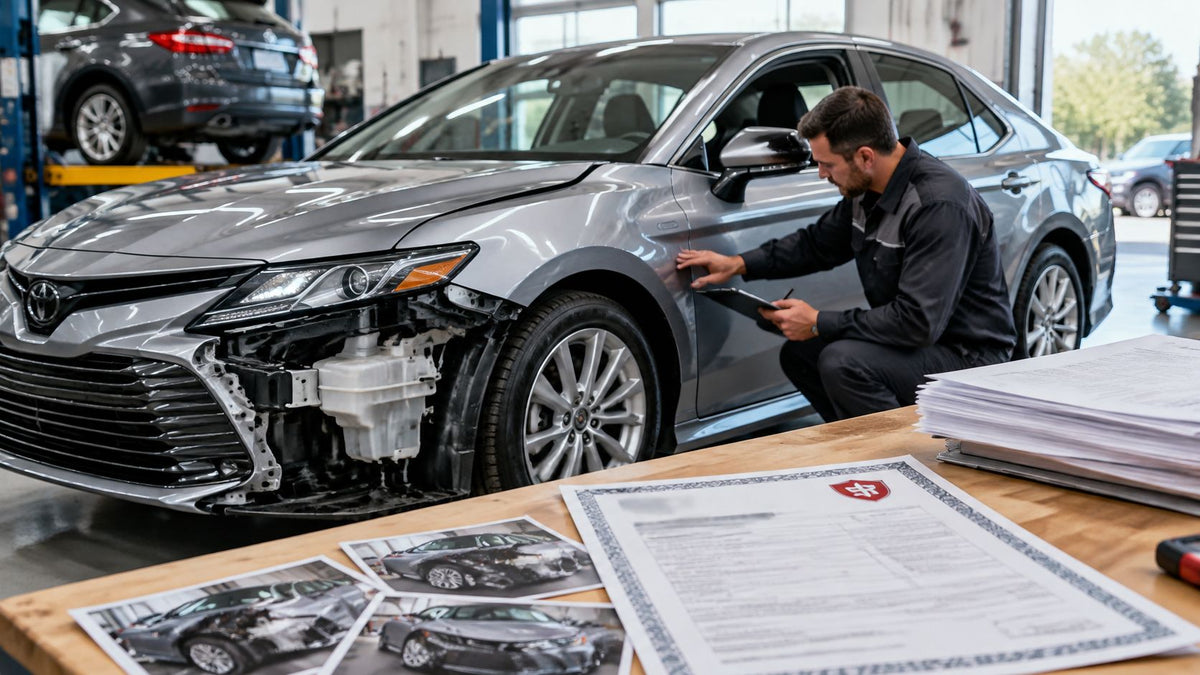
The usual advice about salvage title cars is to buy cheaply, repair the damage, and make sure the car passes inspection. That leaves out two questions that can matter more than the auction price: what does the inspection prove, and who pays if the car is damaged again? A successful rebuild needs a legal path back to registration, documented safety-system repairs, and an insurance plan that still makes financial sense after the next crash.
Table of Contents
- What a Salvage Title Really Records
- Salvage Title Rules by State
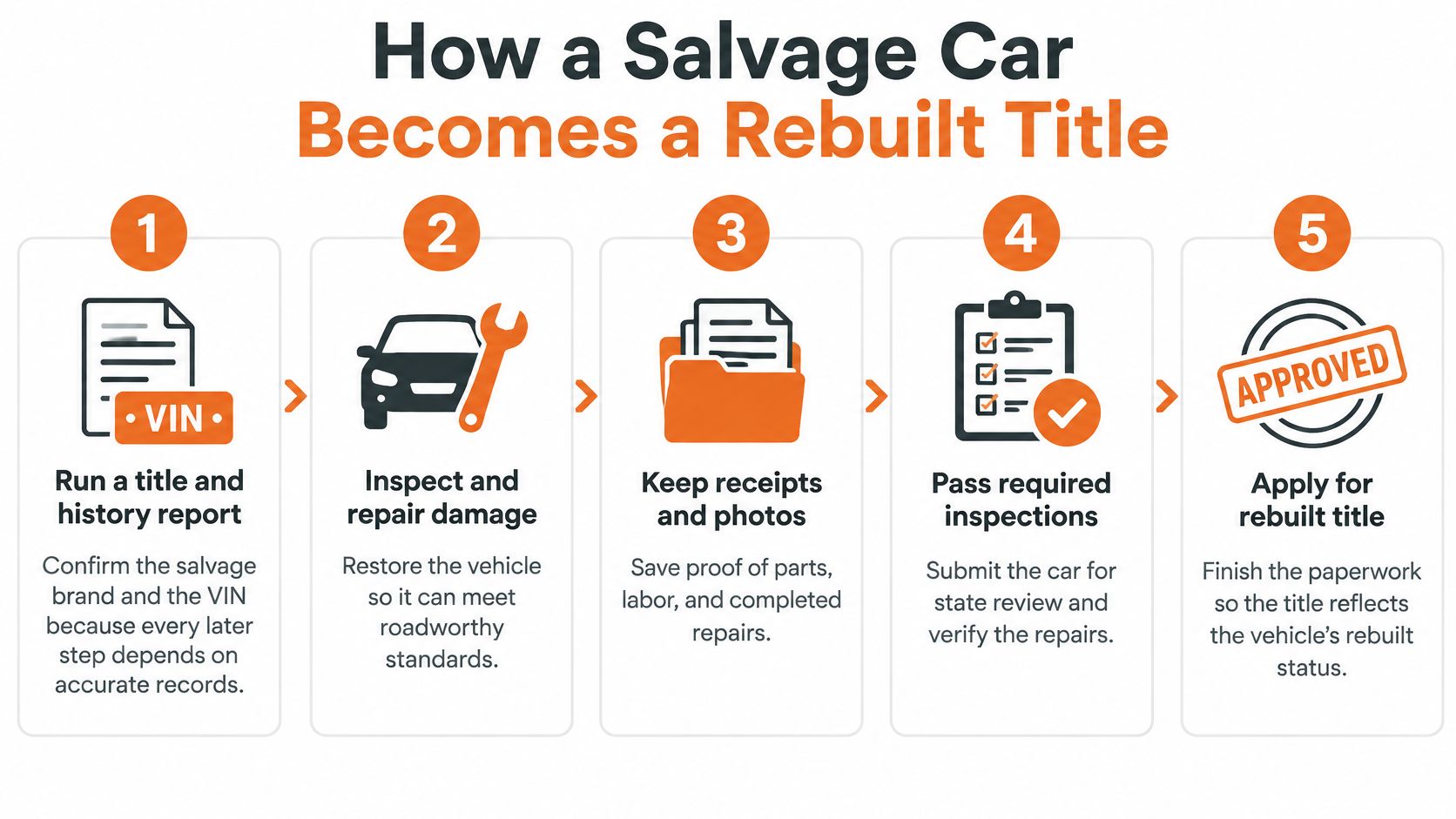
- How a Salvage Car Becomes a Rebuilt Title
- Repair or Replace Each Restraint Part
- Checking the Restraint System After Repair
- Insurance and Resale Value After a Salvage Brand
- Resell, Keep or Disclose a Rebuilt Car
- Decide Whether to Buy a Salvage Title Car
What a Salvage Title Really Records
Fresh paint, straight body panels, and a quiet engine don't change a vehicle's title history. A salvage title records a legal branding event, not a mechanical condition grade. It tells you that the vehicle met the applicable jurisdiction's criteria for salvage, but it doesn't identify every damaged component or establish whether later repairs were competent.
Think of the title history as a permanent medical chart. Recovery can change someone's present condition without erasing the original injury. In the same way, repairing a vehicle can change its eligibility for road use without eliminating the history buyers, insurers, and lenders need to evaluate.
The scale of that recordkeeping is substantial. According to the Bureau of Justice Assistance's FY2024 NMVTIS annual report, the National Motor Vehicle Title Information System contained more than 680 million current title records and over 1 billion title-history records as of September 30, 2024. That national system helps buyers investigate history beyond the state shown on the current document.
Read the exact brand
These labels describe different legal situations:
- Salvage: Treat the vehicle as a repair project with unresolved registration eligibility, not as a car you can immediately drive home.
- Rebuilt or restored: The vehicle has completed the applicable title-restoration process. Evaluate its condition separately.
- Junk or nonrepairable: Don't assume a normal rebuild path exists. Obtain confirmation from the destination DMV before spending money.
A history report also isn't a complete damage inspection. Compare the report, title document, visible VIN, seller's description, and physical vehicle. Start with the title check, even when the car looks finished.
Salvage Title Rules by State
State rules determine when a vehicle receives a salvage brand, what title it may receive after repair, and which records the rebuilder must provide. Use the table to identify the rules to verify for the state where you plan to register the car.
| State | Salvage trigger | Brand after repair | Proof the rebuilder must show |
|---|---|---|---|
| Nebraska | For a late-model vehicle, estimated total repair costs exceed 75% of its retail value immediately before the damage | Check with the Nebraska DMV whether the vehicle qualifies for a rebuilt title and what brand will appear | Ask the Nebraska DMV for the current title and inspection document requirements |
| New York | Qualifying damage and insurer transfer under the state's repair-cost rule | Rebuilt-salvage branding remains for the vehicle's entire existence | Required restraint-system documentation and a separate safety inspection |
| Texas | A vehicle classified as salvage under Texas rules must be restored to roadworthy condition to qualify as rebuilt | Rebuilt | Ask the Texas DMV for the current application and supporting-document requirements |
| Utah | A salvage vehicle repaired and returned to operation | Rebuilt/restored, with salvage history retained | Ask the Utah DMV for the current restoration and registration requirements |
| Nevada | Check with the Nevada DMV which salvage classification applies | Check with the Nevada DMV which title designation applies after repair | Airbag and seat-belt compliance records and identifying information for parts |
For state-specific details that the table does not establish, ask the DMV where you intend to register the vehicle which title documents it will accept, what inspections and records it requires, and whether the vehicle is eligible for restoration. An auction's “rebuildable” description does not determine that eligibility.
The Nebraska DMV salvage-title guide says a late-model vehicle is salvage when estimated total repair costs exceed 75% of its retail value immediately before the damage. The comparison is with the vehicle's pre-damage value, not the price you pay at auction.
A threshold isn't a repair standard
A branding threshold determines when a vehicle enters a legal category. It does not establish whether its frame is aligned, electrical connections are sound, or restraint components will function correctly.
An older car with costly body damage and a newer car with deployed restraints may face different title and repair questions. The title rule defines the legal process; a component-level assessment addresses the vehicle's condition.
Practical rule: Confirm the title's legal path before pricing the repair path.
Interstate purchases require checking whether the destination state recognizes the existing document and what it requires for examination, parts receipts, and registration. Ask about restrictions tied to nonrepairable wording, and obtain current forms before arranging transport.
Use the same sequence for each state: identify the classification trigger, check the post-repair brand, list the required evidence, then confirm registration conditions. If an answer is unclear, postpone the bid until the DMV clarifies it.
How a Salvage Car Becomes a Rebuilt Title
The Utah DMV salvage-vehicle guide describes a rebuilt or restored vehicle as a salvage vehicle that has been repaired and returned to operation while retaining branded-title status. Rebuilt is a legal outcome that says the car was repaired and returned to operation, not that its quality has been graded.
- Confirm identity and title history. Match the VIN on the vehicle to the ownership paperwork and history report. Stop if the documents describe a different vehicle or an unexplained title status.
- Document damage before disassembly. Photograph the exterior, passenger compartment, restraint components, and damaged mounting areas. Save the purchase paperwork and initial diagnostic scan so reviewers can see the vehicle's starting condition.
- Repair using traceable, compatible components. Identify parts by VIN, part number, and equipment configuration. A restriction on used inflatable restraints does not automatically apply to every used body or mechanical part. Check each part's eligibility before buying it.
- Complete the required examinations. Follow the destination state's instructions for appointments, receipts, ownership evidence, and vehicle presentation. Missing paperwork can stall the title process even after visible repairs are finished.
- Apply for the appropriate branded title and registration. Submit the required application and examination documents. A submitted application does not authorize you to drive the vehicle.
Keep an evidence file
A state review may focus on ownership, identity, and parts documentation. It may not independently validate every structural or electronic repair. Passing the examination does not establish that every restraint component works correctly.
For the state examination, organize the records that show the vehicle's identity, ownership, and parts history. Keep originals secure and submit copies when requested. Unlabelled receipts can make it harder to connect a part or purchase to the vehicle. A missing receipt or required form can delay the examination, so check the state's paperwork requirements before scheduling.
Repair or Replace Each Restraint Part
| Component | Typical crash effect | Repair or replace | Paperwork to keep |
|---|---|---|---|
| Airbags | Deployment consumes the component | Install the required vehicle-specific new system | Part number, VIN, invoice |
| Seat belt pretensioners | May activate, tighten, or lock | Follow manufacturer replacement requirements; consider professional restoration only where permitted | Part number, stage, connector configuration, invoice |
| Seat belt webbing | May suffer cuts, fraying, or crash loading | Follow manufacturer instructions for the affected assembly; preserve correct identification | Photographs and service invoice |
| Seat belt retractor | May lock or fail to retract correctly | Diagnose the cause, then use the permitted repair or replacement procedure | Inspection results and photographs |
| SRS control module | May retain crash data and faults | Follow manufacturer replacement or permitted specialist-service procedure | Diagnostic reports before and after service |
| Impact sensors and wiring | May suffer impact damage or contaminated connections | Replace or repair according to vehicle-specific instructions | Photographs, part identification, repair invoice |
The New York DMV salvage examination guide requires a vehicle-specific new inflatable-restraint system when the original was activated or removed and prohibits using a used system removed from another vehicle. An airbag that fits the dashboard opening isn't necessarily electrically or legally acceptable.
Why appearance can mislead
A pretensioner uses a controlled deployment to manage belt slack during a crash. Clearing an electrical fault doesn't replenish an activated mechanism. Similarly, a belt that moves smoothly may still require replacement under the manufacturer's post-collision instructions.
The SRS control module presents a different problem. Stored crash data isn't the same as an ordinary fault caused by a disconnected plug. A specialist must determine whether the module is eligible for service or requires replacement, rather than assuming every module can be reset.
Use a collision repair parts checklist to organize component identification before ordering or sending parts for evaluation.
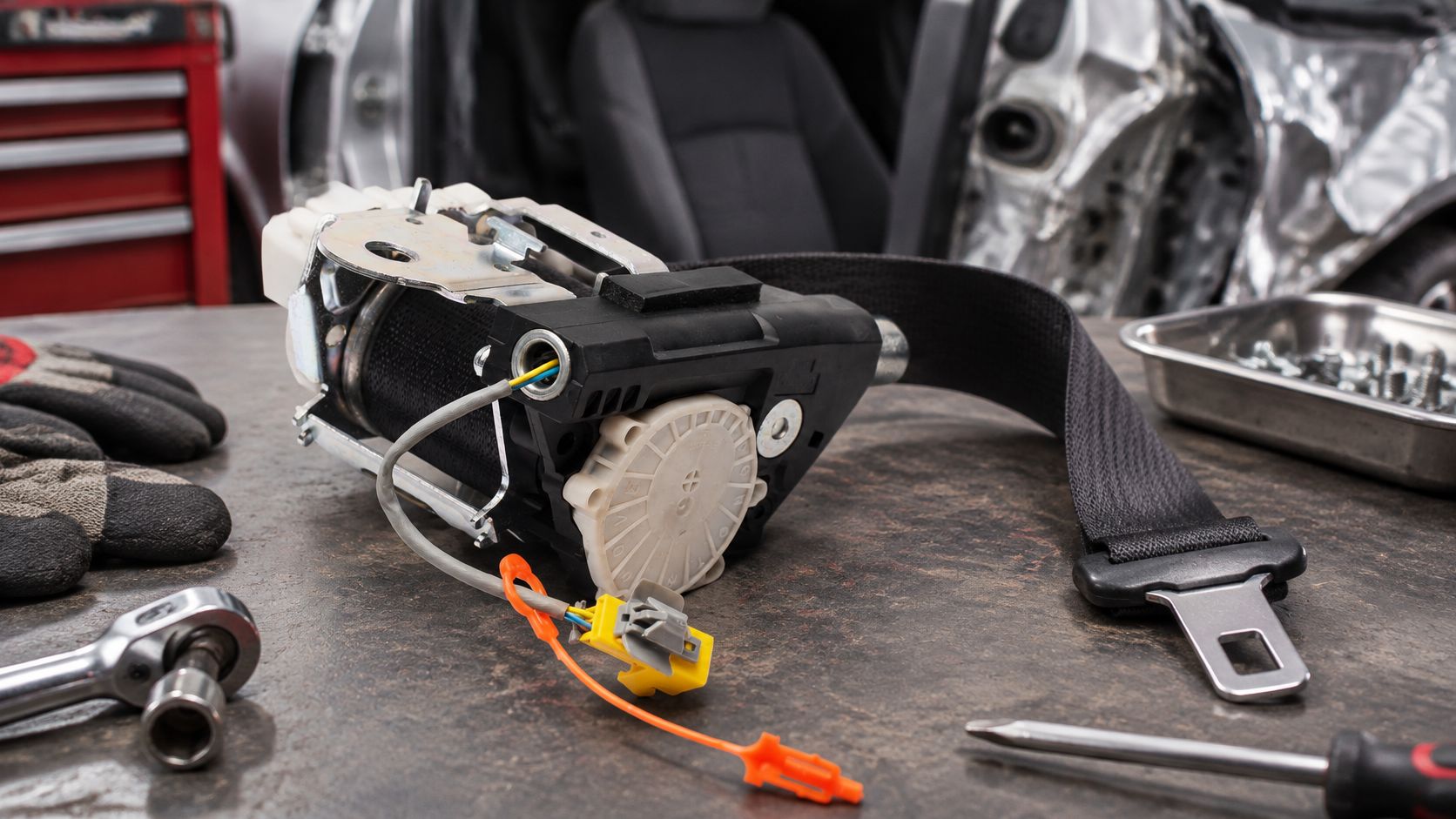
Our Locked Seatbelt Repair Service – Fix Stuck Seat Belt After Accident restores original locked and non-retracting belt units. Our certified technicians repair seat belts to factory standards, but a component service doesn't replace the installer's responsibility to follow applicable manufacturer procedures and state requirements.
Don't open pyrotechnic components or probe their deployment circuits yourself. Have a qualified technician use the specified disabling, removal, installation, and verification procedures.
Checking the Restraint System After Repair
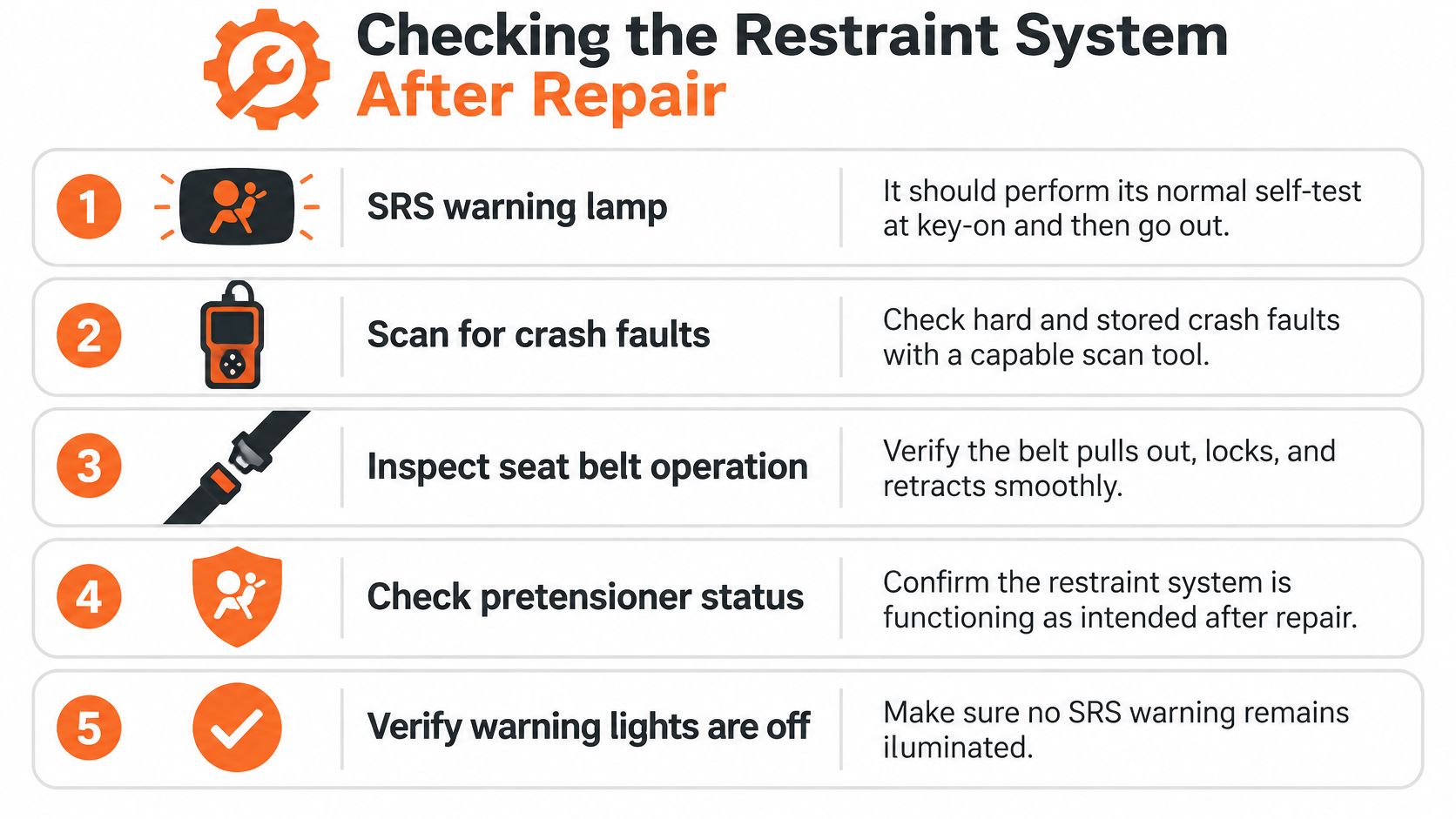
The SRS warning lamp's self-test and diagnostic scan are useful checks, while inspection of each belt position, connector, and installation confirms what those checks cannot show. A vehicle's title examination also has a limited purpose. The New York DMV salvage-vehicle guidance states that its salvage examination is not a safety or emissions inspection and requires a separate safety inspection before the examination. Title status, general roadworthiness, and restraint-system condition are separate questions.
Lamp and diagnostic checks
- Observe the full lamp sequence: At key-on, the SRS warning lamp should follow the vehicle's specified self-test and go out as directed. A lamp that never illuminates needs investigation.
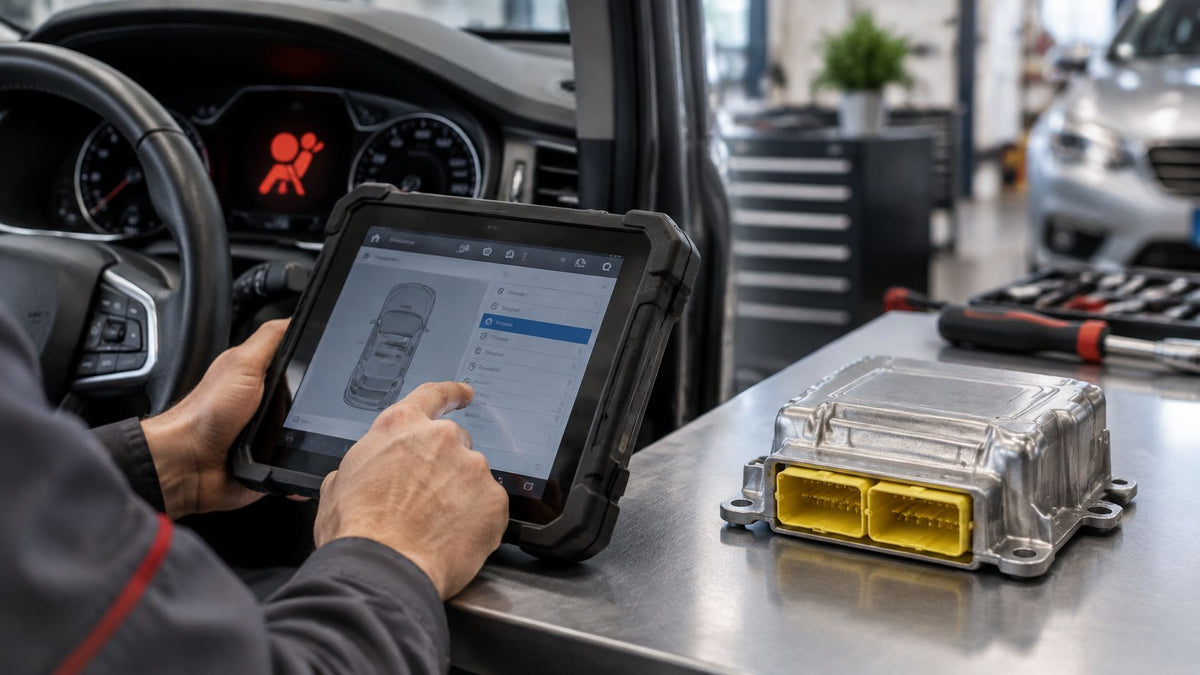
- Scan the restraint system: Use a diagnostic tool that can read the restraint module and relevant connected systems, not only the engine controller. Save module identification and fault results before and after repairs.
- Interpret the report carefully: A standard OBD scanner or code reader cannot erase crash data stored in the SRS system. A cleared code alone does not document that each restraint component has passed its required checks.
Mechanical and installation checks
Check every seating position, including rear and center belts. Extend each belt to inspect accessible webbing, check that it retracts, and verify locking using the vehicle's prescribed procedure. Confirm that each buckle engages and releases. A satisfactory check of the driver's belt says nothing about the passenger restraints.
Have the installer examine anchors, fasteners, mounting surfaces, pretensioner connections, and harness routing. Seat movement must not stretch wiring, pinch connectors, or interfere with belt operation. Follow the specified fastener and torque procedures.
Flood exposure calls for close inspection of affected connectors and circuits. A clean cabin does not establish that electrical components are serviceable.
A dark warning lamp records one result, not the condition of every restraint. Before road use, gather the final scan report, installation photographs, component invoices, and the technician's test findings. Attach them to the repair record, with any unresolved items identified. The functional testing requirements checklist can help organize those checks.
Do not authorize road use while safety-related faults remain unresolved. If the repair records conflict with the vehicle's physical condition, investigate the discrepancy before relying on either.
Insurance and Resale Value After a Salvage Brand
A large purchase discount isn't automatically a saving. You can spend less at auction and still take on more financial exposure than you intended.
The distinction matters because Consumer Reports' rebuilt-title buying guidance notes that these vehicles may qualify for liability insurance while full coverage is often unavailable. Liability coverage doesn't pay to repair your own car merely because you caused a collision.
Price the vehicle and the protection available for it together.
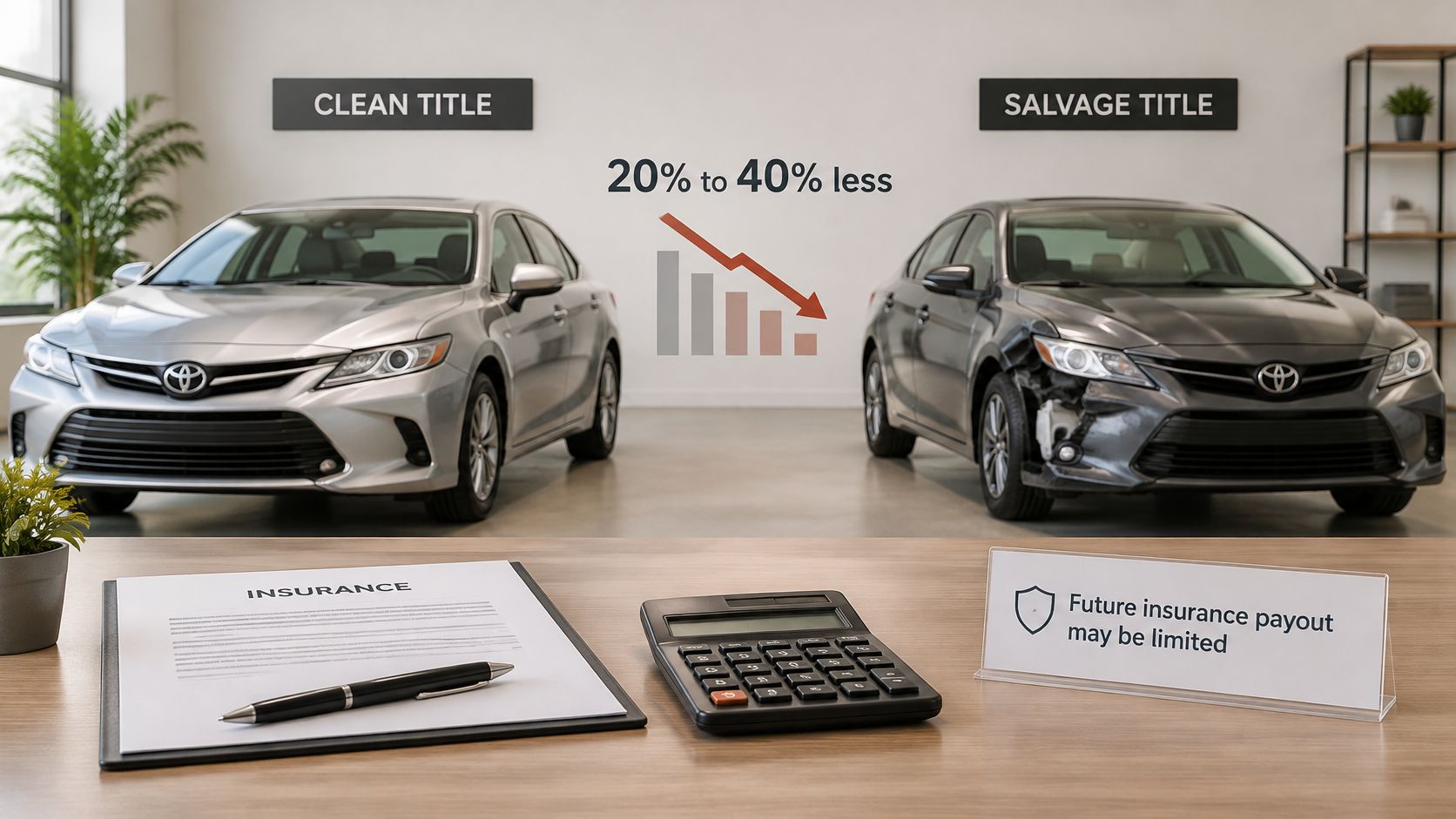
Complete the pre-bid worksheet
| Worksheet line | What to enter |
|---|---|
| VIN-specific insurance eligibility | Written confirmation of available coverage before bidding |
| Title status | Salvage or rebuilt, confirmed against the history report |
| Estimated finished value | Expected branded-title sale value, supported by suitable comparables |
| Deductible and coverage limits | Terms from the written insurance quote |
| Documented safety repairs | Restraint-part records, scan reports, and invoices |
| Inspection, transport, parts and calibration | Itemized estimates, including labor and applicable fees |
| Reduced payout after a later total loss | A conservative settlement scenario below clean-title value, not a promised payment |
For premium context, Mitchell-Joseph Insurance Agency explains premium changes. Use that background to frame questions, but obtain an answer for the actual VIN, title status, driver, and intended coverage.
Consider a hypothetical purchase without relying on a headline discount. Start with the price a buyer would realistically pay for the finished branded vehicle. Subtract transport, auction charges, repairs, inspections, calibration, taxes, contingency, and your required margin; the remainder is your bid ceiling.
Then test a later total loss. If collision coverage is unavailable and you cause the crash, you may have no payment for your vehicle under your own policy. If coverage is available, ask how the insurer will establish its pre-crash value and account for pre-existing damage.
Budget test: Could you afford to lose the money tied up in the finished car without an own-vehicle insurance payment?
Use the video as additional context while reviewing the purchase decision.
Don't assume invoices become a guaranteed settlement value. Confirm coverage terms in writing and keep dated photographs establishing the vehicle's condition when insurance begins.
Resell, Keep or Disclose a Rebuilt Car
Decide how you may sell or use the car before authorizing repairs. A vehicle kept for personal use can suit a different budget and timeline than one you need to sell quickly to repay borrowed money.
Use the repair evidence file described earlier to answer buyer questions, rather than repeating every record in a new packet. For resale, add a clear account of the vehicle's current condition, any outstanding issues, and the documents you are providing. Documentation supports a stronger listing, but the selling price still depends on comparable branded sales.
Match the exit route to the buyer
| Exit route | What to establish before committing |
|---|---|
| Sell privately | Whether likely buyers understand the brand and can obtain financing and insurance |
| Sell to a dealer | Whether the dealer accepts branded vehicles and what its actual purchase offer would be |
| Keep the vehicle | Whether ongoing ownership costs and uninsured exposure fit your budget |
Private buyers may want an independent inspection and time to arrange insurance. A dealer may make a lower offer to account for resale difficulty. Keeping the vehicle avoids an immediate sale, but the owner still carries its financial risks.
Make disclosure easy to verify
Identify the brand in the listing and transaction documents. Check your state's disclosure and transfer requirements, and provide the information before a buyer travels, applies for credit, or pays for an inspection.
For example, a listing can state: “Rebuilt title. The vehicle sustained prior damage and was repaired. Records of the repairs and state examination are available.” Describe the work and any unresolved issues accurately. A state examination documents that the vehicle met the applicable examination requirements; it should not be described as a full safety certification.
- Set an asking price: Compare branded vehicles and use your completed-cost worksheet, rather than relying on clean-title advertisements alone.
- Set a walk-away price: Decide what you will accept through each sales route before negotiating.
- Confirm financing early: Buyers who need a loan may face restrictions that cash buyers do not.
Keep a copy of the disclosure, signed transaction documents, and records provided to the buyer.
Decide Whether to Buy a Salvage Title Car
Buy only when the legal process is clear, the repair estimate fits your bid ceiling, compatible restraint components are available, and insurance is confirmed in writing. None of those conditions can compensate for another being missing.
A maybe belongs on hold until you have a written insurance quote and an independent inspection plan. Policy Quail's pre-purchase insurance guidance for first-time buyers can help organize that conversation before money changes hands.
Walk away from an untraceable restraint history, unexplained flood-related electrical damage, or a budget that works only at clean-title resale value. Apply that discipline when evaluating vehicles at auto auctions, where photographs can't establish the full repair scope.
If specialist component work is appropriate, arrange qualified reinstallation and retain the records. We don't offer installation services; customers reinstall repaired parts themselves or use a local body shop or mechanic.
Before placing any bid, run the title history and confirm the destination state's rules for that exact document.
Seat Belt Repair offers mail-in seat belt pretensioner repair, webbing replacement, and SRS airbag control module service for post-collision vehicles. Visit Seat Belt Repair to review component-service options for your rebuild, then coordinate installation and vehicle-level verification with your local repair shop.
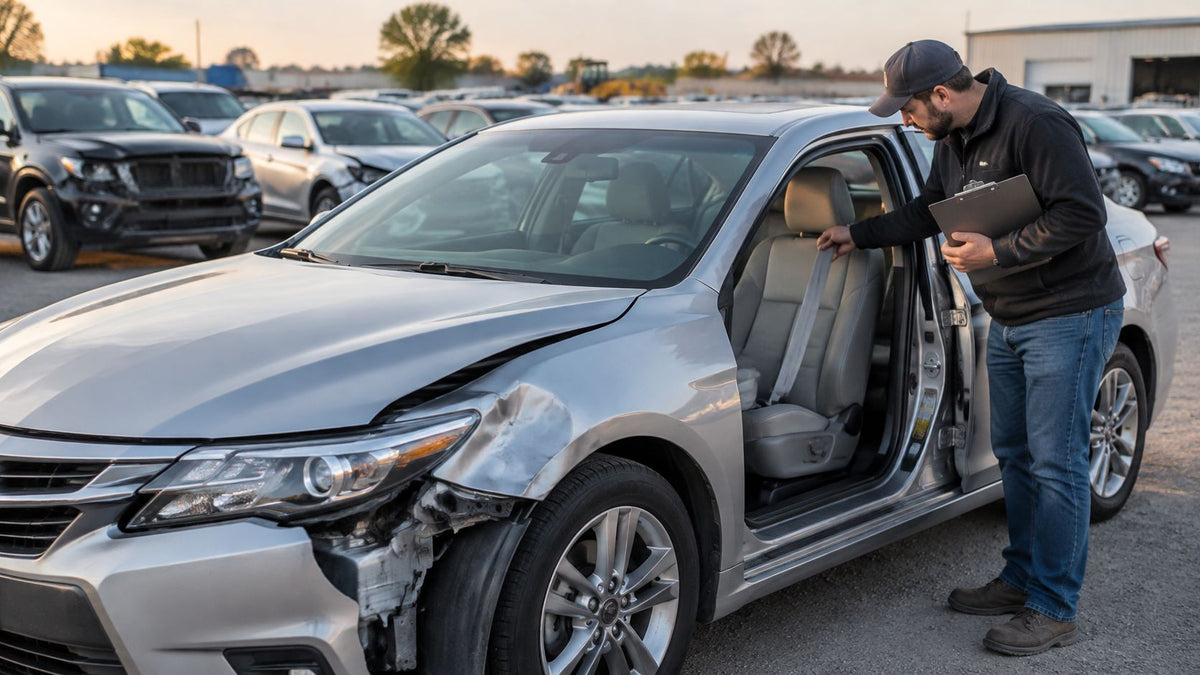

Leave a comment
This site is protected by hCaptcha and the hCaptcha Privacy Policy and Terms of Service apply.