
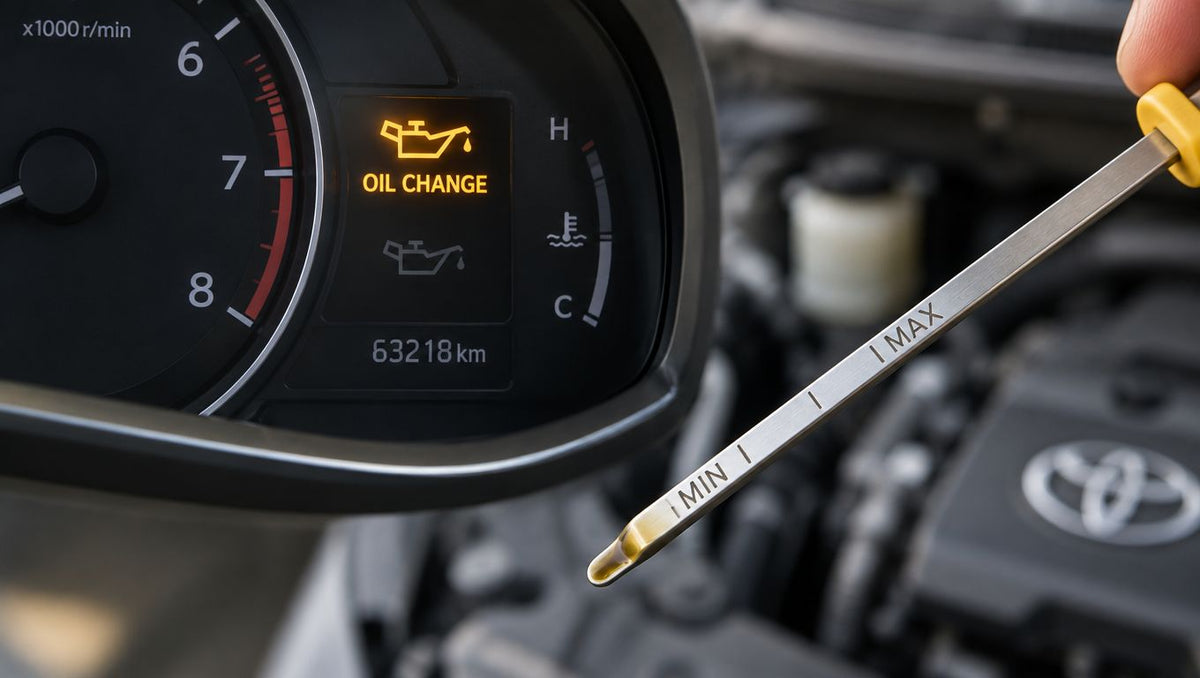
You're driving home when an oil-shaped symbol appears on the dashboard. It might be amber, red, accompanied by a wrench, or paired with a message such as “CHANGE ENGINE OIL SOON.” Your first reaction is understandable: should you pull over immediately, or can you finish the trip?
The answer depends on which warning system has activated. An oil change indicator is usually a maintenance reminder that estimates remaining oil life. An oil pressure warning is a potential emergency that can signal inadequate lubrication inside the engine. They may look related, but treating one like the other can either create unnecessary panic or expose the engine to serious damage.
Table of Contents
- When Your Dashboard Light Comes On
- Two Different Warning Systems in Your Car
- How Modern Oil Life Monitors Actually Work
- Reading Manufacturer Thresholds and Recommendations
- Why Driver Habits Often Clash With Technology
- Resetting Indicators and Verifying Actual Oil Condition
When Your Dashboard Light Comes On
You are merging onto a busy highway when an oil-can symbol appears in the instrument cluster. Traffic is moving, the engine sounds normal, and the light may be amber or red. The safest first step is to read the full message rather than interpret the icon or color by itself. When conditions allow, check the owner's manual for that vehicle's wording and warning procedure.
The key question is whether the dashboard is scheduling maintenance or reporting a lubrication problem. A message such as “MAINTENANCE REQUIRED,” “CHANGE ENGINE OIL SOON,” or “CHANGE ENGINE OIL NOW” usually comes from an oil life monitor or service reminder. These systems estimate how much useful service life remains and prompt you to arrange an oil and filter change. AAA explains that some vehicles show remaining oil life, while others use service messages (AAA's maintenance reminder guide).

An oil pressure warning answers a different question. It indicates that the running engine may not have enough oil pressure to circulate lubricant through its moving parts. The oil may be old, low, leaking, or unable to circulate because of a mechanical fault. If this warning remains illuminated with the engine running, stop in a safe place and switch the engine off. Driving farther can turn a lubrication problem into severe internal damage.
A quick decision at the roadside
- Maintenance message or amber service reminder: Arrange an oil and filter change promptly, using the vehicle's oil-life guidance and maintenance instructions.
- Oil pressure warning that stays on: Stop driving as soon as safety permits and seek professional assistance.
- Unclear symbol or message: Check the manual or contact a technician. Dashboard icons can vary between vehicles.
- Oil smell, smoke, tapping, or sudden engine noise: Treat the situation as urgent, even if the displayed message appears routine.
Dashboard symbols can resemble one another, just as a lock-shaped warning can be mistaken for another vehicle alert. This guide to understanding a lock light on the dashboard shows why identifying the exact symbol matters. Before deciding whether you can continue driving, identify which system has activated.
Two Different Warning Systems in Your Car
A driver sees an oil-shaped symbol during a commute. The right response depends on which system activated. An oil pressure warning reports a possible problem happening while the engine runs. An oil change indicator estimates that scheduled maintenance is due. An oil-level check reports how much oil is physically in the engine. These systems may share similar symbols, but they measure different conditions.
| Dashboard system | What it estimates or detects | Typical response |
|---|---|---|
| Oil pressure warning | Whether the engine has adequate lubrication pressure | Stop safely and investigate immediately |
| Oil change indicator | How much useful oil life the vehicle estimates remains | Schedule an oil and filter change |
| Oil-level check | How much oil is physically in the engine | Check with a dipstick or electronic level system |
The difference is similar to the difference between a fire alarm and a calendar reminder. The pressure warning reacts to a possible operating fault, while the oil change indicator marks a maintenance threshold. A pressure problem can involve low oil, a leak, a failing pump, a blocked passage, or another mechanical fault. The oil change indicator generally cannot diagnose those conditions.
Oil warning lights have a longer history than oil-life monitoring. Snap-on's history of oil reminders and resets describes early oil warning lights as low-pressure alerts and identifies later service reminders that used simpler distance-based calculations. Snap-on also identifies 1988 as the year GM introduced an odometer-based oil change reminder. That development marked a shift from detecting an immediate pressure condition to estimating when maintenance should occur.
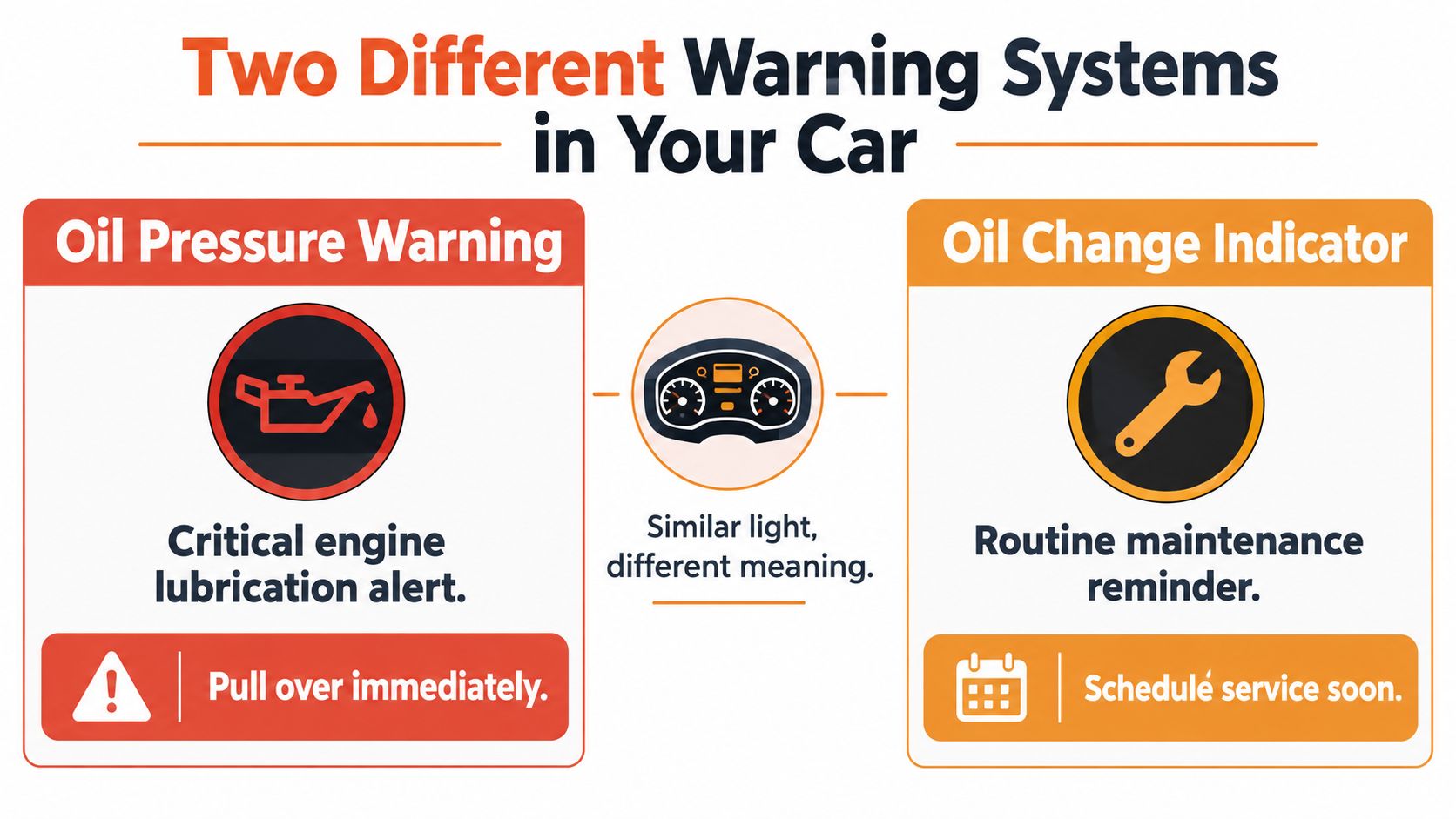
The symbol alone does not provide enough information. Read the displayed message, check its color, note whether the engine is running normally, and consult the owner's manual. A routine service reminder can wait for an appointment, while a pressure warning that remains on with the engine running calls for stopping as soon as safety permits.
Safety rule: Never reset or ignore an oil pressure warning because the engine still sounds normal. Damage can develop before changes in noise or performance become obvious.
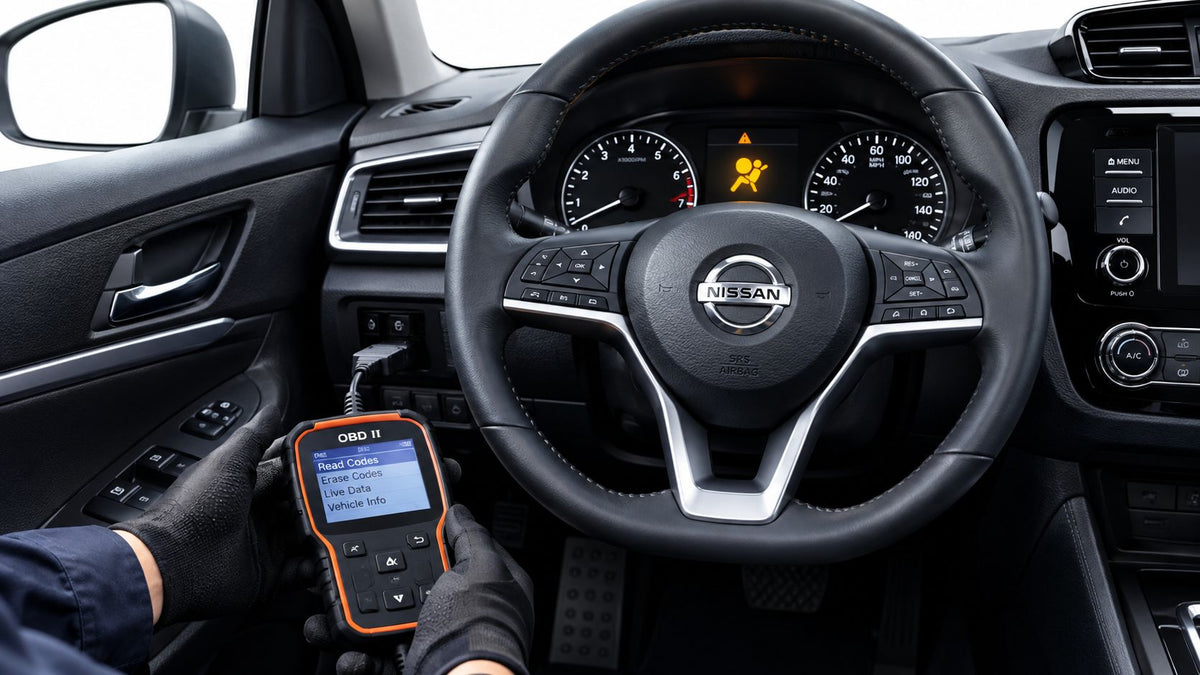
An airbag or restraint warning belongs to a separate system, not the oil service system. If that symbol is the one you need to identify, use this airbag light diagnostic guide. Correctly identifying the warning is the first step toward choosing the right response.
The video below provides another visual comparison of dashboard warning systems and their meanings.
How Modern Oil Life Monitors Actually Work
A modern oil change indicator usually isn't a tiny laboratory inside the oil pan. In most vehicles, it's software inside the control system that estimates how quickly the oil is being used based on engine operation.
The difference is like that between a pedometer and a fitness tracker. A basic mileage reminder counts distance and triggers service after a fixed interval. A more advanced monitor evaluates the conditions behind that distance. A short trip through cold traffic places different demands on oil than a steady drive at operating temperature, even if both trips add the same mileage.
The inputs behind the estimate
The system can consider factors such as:
- Engine revolutions, which reflect how much work the engine has performed.
- Coolant and outside-air temperatures, which help identify cold starts and heat exposure.
- Start-up conditions, especially repeated starts before the engine reaches normal temperature.
- Idle time, because the engine continues operating even when the vehicle isn't moving.
- Load history, including the effort required during demanding driving.
A vehicle driven mostly on open roads may use its estimated oil life differently from one used for short errands, heavy traffic, or frequent idling. Two vehicles can travel the same distance while placing very different demands on their oil. The system is trying to estimate oil degradation from use, not merely count the number on the odometer.
A technical service bulletin published through NHTSA describes these algorithmic inputs and explains that oil-life estimates commonly approach a change-needed point at about 5% remaining life, while 0% indicates that the oil and filter should be replaced immediately (the NHTSA-hosted oil-life monitoring bulletin). That estimate still isn't a direct chemical test of the oil. It's a calculated maintenance prediction based on the vehicle's operating history.
The indicator can account for driving severity, but it can't repair a leak, add missing oil, or confirm that the engine has the correct oil level.
That limitation matters. An oil-life monitor can tell you when the vehicle estimates that service is due, but it normally doesn't tell you whether oil has escaped from a damaged seal or fallen below the safe level. Drivers still need to follow the owner's manual for oil-level checks and investigate visible leaks, burning smells, or unusual engine noise.
Reading Manufacturer Thresholds and Recommendations
The percentage on the dashboard is a scheduling signal, not a precise measurement that every manufacturer interprets identically. The safest approach is to learn what your vehicle's messages mean and act before the system reaches its final warning.
Honda's Maintenance Minder describes 15% to 6% remaining oil life as the “Maintenance Due Soon” range (Honda's Maintenance Minder information). That range means you should arrange the service rather than waiting for the last possible reminder. It gives you time to book an appointment, plan a fleet visit, or gather the correct oil and filter.
Ford's Intelligent Oil-Life Monitor uses a different wording pattern. It indicates “Change Engine Oil Soon” at about 5% remaining life and “Oil Change Required” at 0%, according to the same manufacturer guidance source. The exact display, color, and menu layout can vary by vehicle, so your manual remains the final authority for your model.
Turn the percentage into an action
Use the display as a practical decision aid:
- A higher remaining-life reading: Continue normal driving while monitoring the system and checking the oil level according to the manual.
- The manufacturer's due-soon range: Schedule the oil and filter service rather than postponing it indefinitely.
- A low-life or required-service message: Arrange service promptly and avoid treating the reminder as something to clear without changing the oil.
- A pressure warning at any percentage: Follow the emergency response for pressure, not the routine response for oil life.
Driving conditions still matter. Frequent short trips, repeated cold starts, heavy loads, high temperatures, and extended idling can consume estimated oil life faster than light highway use. The advantage of an algorithmic monitor is that it can adapt the interval to those conditions instead of applying one fixed mileage rule to every driver.
Why Driver Habits Often Clash With Technology
A driver sees an oil-life reminder at 30% and still changes the oil because the odometer has reached a familiar interval. Another driver sees no maintenance message and assumes the engine is protected, even though the oil level has not been checked. Both reactions come from treating one dashboard signal as a complete answer.
Older habits remain attractive because mileage is easy to remember. Modern oil-life monitors estimate service timing from recorded operating conditions, such as temperature, engine load, and trip patterns. They are maintenance calculators, not laboratory tests of the oil and not direct measurements of oil pressure.
Survey data summarized by Tire Review's discussion of oil-change habits found that 63% of motorists had vehicles with built-in maintenance reminders, while only 51% of those drivers relied solely on the reminder system. The same analysis reports that 48% of drivers still changed oil every 3,000 to 6,000 miles. The figures show how available technology and driver confidence can point in different directions.
The uncertainty has understandable causes. Service centers may suggest different intervals, online advice may repeat older rules, and some owners worry that trusting a computer means neglecting the engine. The Tire Review analysis also reports that only 47% of drivers had checked the owner's manual for the recommended interval, while more than 77% said their service center still recommended a 3,000-mile change. With that much conflicting advice, drivers may treat the monitor as either an authority or a nuisance.
Compare the advice instead of choosing by instinct
| Advice source | What it can tell you |
|---|---|
| Owner's manual | The manufacturer's interval and severe-use requirements |
| Oil-life monitor | An estimate based on recorded operating conditions |
| Service professional | Oil level, leaks, inspection findings, and symptoms |
| Mileage habit | A familiar rule that may not fit the vehicle |
Use these sources together. The manual sets the vehicle-specific boundaries, the monitor adjusts the reminder to driving conditions, and a technician can investigate physical evidence. Short trips, frequent cold starts, heavy loads, high temperatures, or extended idling may justify closer attention when the manual identifies severe service.
A separate dashboard oil-pressure warning demands a different response. An oil-life message usually asks you to plan maintenance. A pressure warning can indicate that lubrication is failing now, regardless of the remaining oil-life estimate. That distinction prevents a routine reminder from being treated like an emergency, or an emergency warning from being dismissed as routine service.
The same verification principle applies to other vehicle parts. A Yellow Seat Belt Webbing Upgrade Replacement should be judged by its specific safety and fitment requirements, not by assumptions based on another component.

Resetting Indicators and Verifying Actual Oil Condition
Resetting an oil change indicator is part of completing the service, not a substitute for it. The reset tells the vehicle that fresh oil and a new filter have been installed, allowing the monitor to begin a new estimate. If you clear the message without changing the oil, the dashboard may look normal while the maintenance calculation is no longer trustworthy.
Reset procedures vary by make, model, instrument cluster, and model year. Some vehicles use steering-wheel menus, some require a trip or dashboard button, and others use a specific ignition and pedal sequence. Use the owner's manual or the manufacturer's service information for the exact instructions. Don't guess, especially if the display includes separate oil-life, oil-level, and maintenance menus.
Complete the service before clearing the message
A reliable sequence looks like this:
- Replace the oil and filter. Confirm the correct specification and quantity from the owner's manual.
- Record the service. Note the date, vehicle mileage, oil specification, and work performed.
- Reset the monitor using the vehicle-specific procedure. The display should return to its normal starting state.
- Cycle the ignition or start the engine as instructed. Confirm that the maintenance message has cleared.
- Recheck the dashboard after driving. A message that returns immediately may indicate an incomplete reset or another fault.
The reset only addresses the maintenance estimate. It doesn't prove that the engine contains enough oil. A vehicle may have plenty of estimated oil life but still be low because of consumption or a leak. Conversely, the oil level may be correct while the oil-life monitor says service is due.
Check quantity and condition separately
If the engine uses a dipstick, park on a reasonably level surface, allow the engine to settle as the manual directs, remove the dipstick, wipe it clean, reinsert it fully, and read the level against the marked range. Don't overfill to compensate for uncertainty. If the vehicle uses electronic oil-level monitoring, follow the dashboard procedure and the required temperature or parking conditions.
Look for obvious problems while checking. A level below the marked range, fresh oil under the vehicle, a strong burning-oil smell, or new engine noise deserves prompt attention. Oil color alone isn't a complete diagnostic, but gritty contamination, a milky appearance, or metal particles should be discussed with a qualified technician.
Research summarized by Motor emphasizes that oil-life alerts generally don't report low oil level, leaks, contamination, or whether the engine has enough oil for safe operation (Motor's explanation of oil monitoring and resets). That distinction is becoming more important as some vehicles add electronic oil-level systems alongside oil-life algorithms.
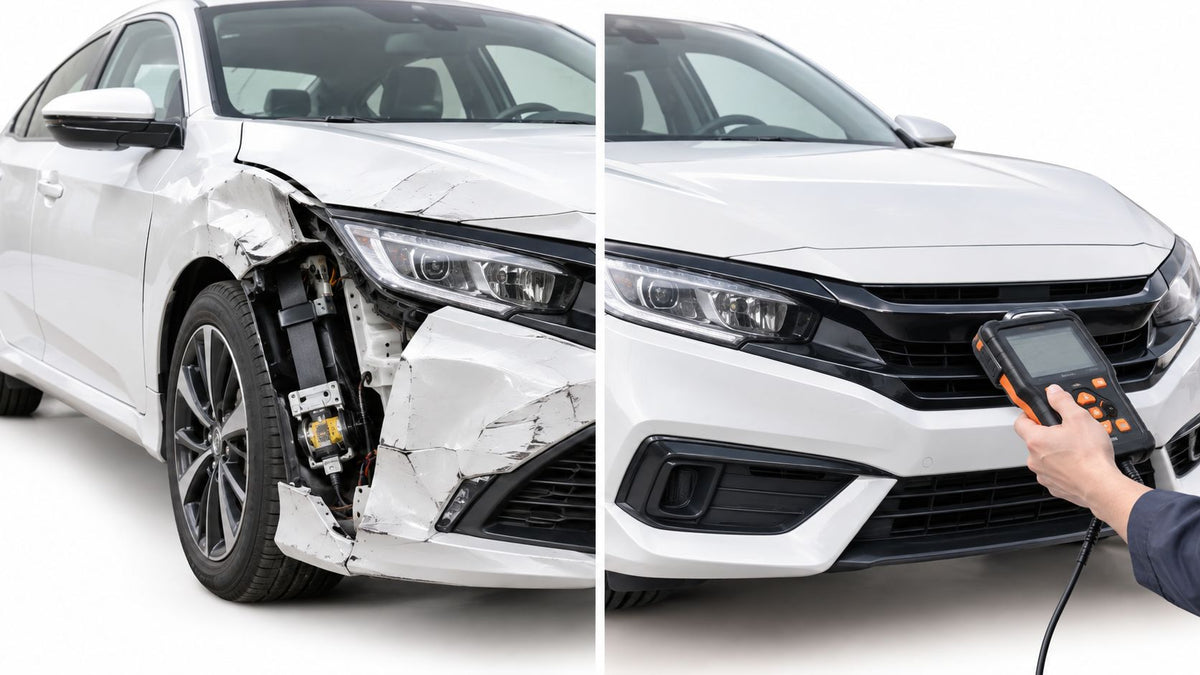
If a warning light appears after an oil change, don't just reset it again. Verify the level, confirm the correct filter and oil were used, and distinguish a maintenance message from an oil pressure warning. For broader post-collision restraint concerns, Seat Belt Repair's used-car safety inspection guidance addresses a different safety system and shouldn't be confused with engine maintenance.
Seat Belt Repair provides mail-in repair for seat belt pretensioners, seat belt webbing, and SRS airbag control modules, with OEM components and functional testing before shipment. If your vehicle needs restraint-system work after a collision or has damaged webbing, visit Seat Belt Repair to review the appropriate service before reinstalling the parts.

Leave a comment
This site is protected by hCaptcha and the hCaptcha Privacy Policy and Terms of Service apply.