
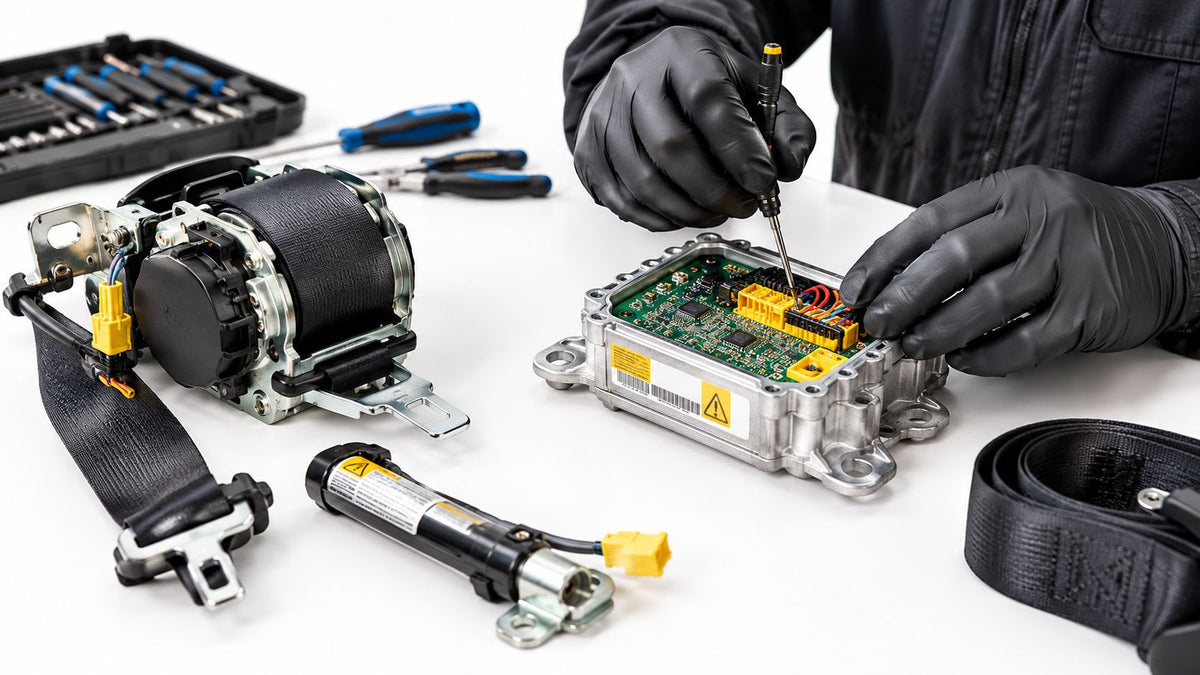
You're probably here because the car still drives, the body shop has the panels lined up, and the airbag light won't go out. Maybe a belt is locked, maybe a bag deployed, or maybe the vehicle now wears a salvage title and the SRS lamp is the one thing you can't explain away.
That warning isn't decoration. It's the car telling you the restraint network stored crash data, found a fault, or lost confidence in part of the system that's supposed to protect the people inside. If you've been sorting out fault questions too, the fault overview in North Carolina fault rules explained is a useful companion read, and the internal airbag light diagnosis guide helps make sense of the first scan.
Table of Contents
- Why the Airbag Light Stays On After a Collision
- How the SRS System Works as One Network
- Core Air Bag Services You Can Mail In
- The Mail-In Process From Box to Bench
- Dealership Replacement vs Mail-In Reset and Repair
- Quality Controls That Define a Trustworthy Service
- Beyond the Reset Light and What Safe Reinstallation Really Means
Why the Airbag Light Stays On After a Collision
A straight bumper and a closed hood tell you nothing about the SRS. If the light stays on after impact, the module has stored a record or a fault, and the system is refusing to clear it on its own.
The light is a stored fault, not a loose bulb
After a collision, the restraint-control module often keeps crash records and hard faults. A quick scan-tool clear rarely fixes that. NHTSA notes that after deployment events, the restraint-control module may need replacement during repair, and deployment data can remain locked inside the controller after the event (NHTSA vehicle air bag guidance).
Practical rule: if the light came on after impact, treat it as a system record, not a dashboard nuisance.
That distinction matters because the car is reporting a problem inside the restraint network. The airbag may look untouched, the belts may still click, but the module can still be holding crash data or a fault that keeps the system from working the way it should.
Why this sends people looking for reset work
A customer usually reaches this point after one of three things. The airbags fired, the pretensioners locked, or the warning light came on and never cleared. In each case, the job is to restore the restraint system to a state the vehicle can trust again.
That is also why the answer is not the same part on every car. On one vehicle, the module needs reset work. On another, the belt assembly needs service. On a third, both have to be handled together before the warning will disappear for good. A good first pass is a proper diagnosis, and the airbag light diagnosis guide shows what shops look for before parts start moving.
If the crash also led into insurance questions, the overview at North Carolina fault rules explained helps frame why the repair path can differ from one claim to the next.
How the SRS System Works as One Network
A collision can leave the dashboard light on even when the car still starts, drives, and looks normal from the outside. Inside the cabin, the Supplemental Restraint System is still tracking a fault, a deployed component, or crash data that needs proper service. NHTSA describes the system as a connected set of airbags, seat-belt buckle switches, retractor pretensioners, occupant-classification sensors, seat-position sensors, impact sensors, and an electronic restraint-control module (NHTSA restraint-system publication).
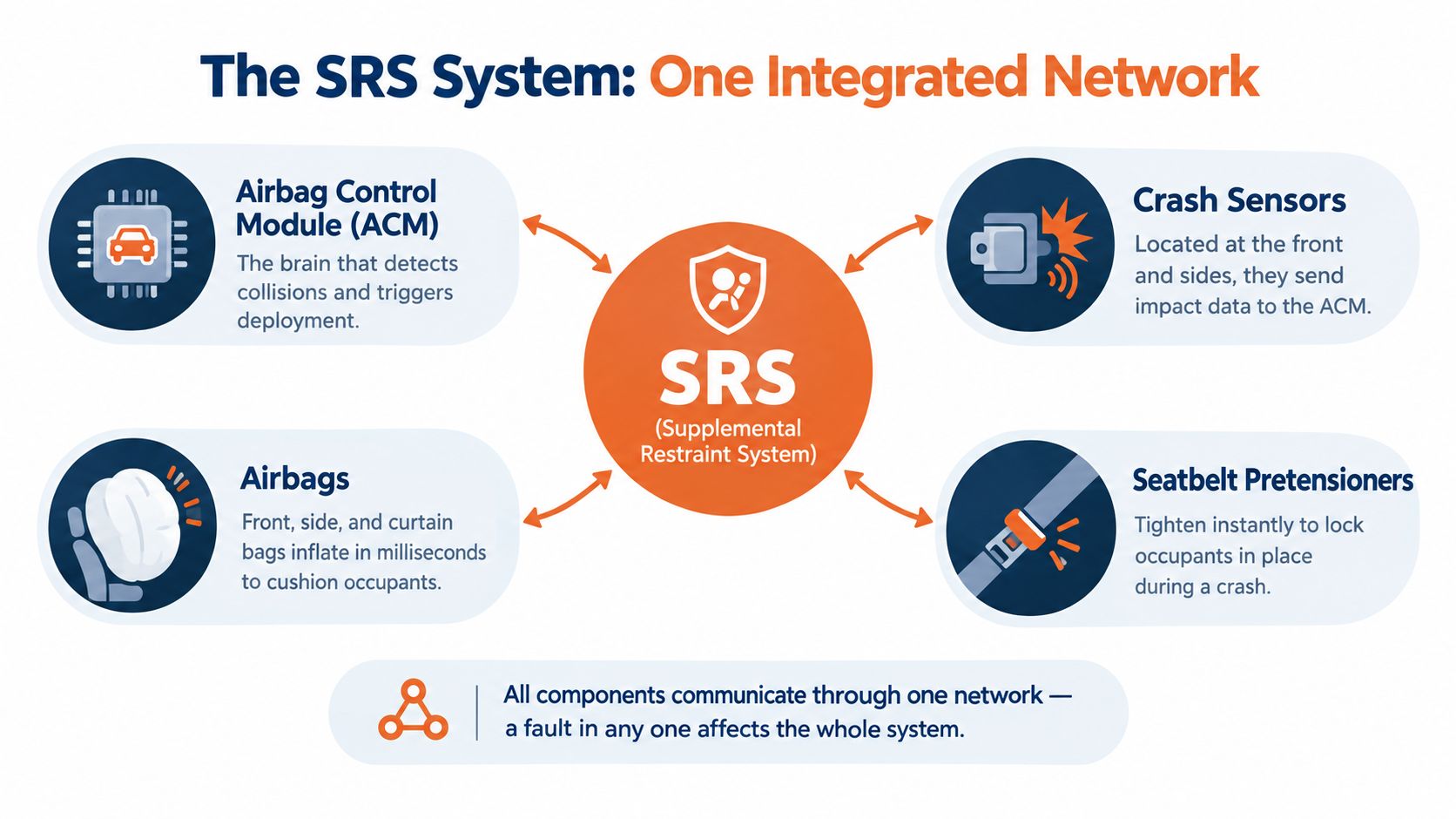
Think relay team, not single part
The module takes input from the sensors and sends commands based on what it sees. A crash can trigger a pretensioner without calling for airbag inflation, depending on the event. That is why a Ford case documented by NHTSA, referenced in the same restraint-system publication, showed retractor pretensioners actuating even though frontal airbag deployment was not expected for the crash severity.
A locked belt does not mean the airbag failed. A non-deployed airbag does not mean nothing happened. The system may have done part of its job and still stored the kind of record that keeps the warning light on until the right repair is done.
What's usually repairable and what usually isn't
Some parts can be serviced, and some cannot. The module may be reset if the electronics are intact and the crash record can be cleared under the proper procedure. A deployed airbag is a one-time device and should be replaced after deployment by an authorized repair technician (NHTSA vehicle air bag guidance).
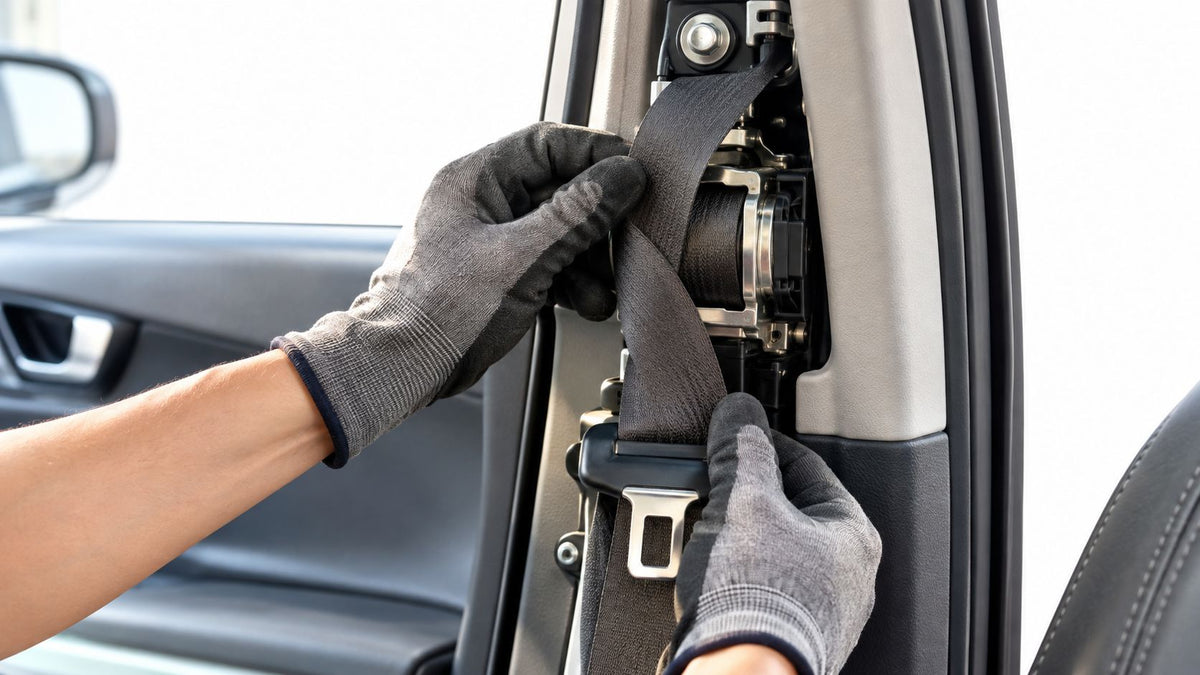
Belts follow the same logic. A pretensioner that fired, a buckle that no longer communicates, or webbing that is cut or stretched changes the whole restraint chain. At that point, the job is not to patch one piece and hope for the best. The work is to restore the network so it can read, react, and hold an occupant the way it was designed to do.
The module is only one node in the network. A reset alone won't undo a mechanically damaged belt stage or a bad connector.
Core Air Bag Services You Can Mail In
Rebuilders and body shops send three kinds of jobs through the door: a module with crash data, a belt that stays locked after deployment, or webbing that is too damaged to trust again. Each one calls for a different fix, because the SRS is a connected restraint network, not a pile of separate parts.
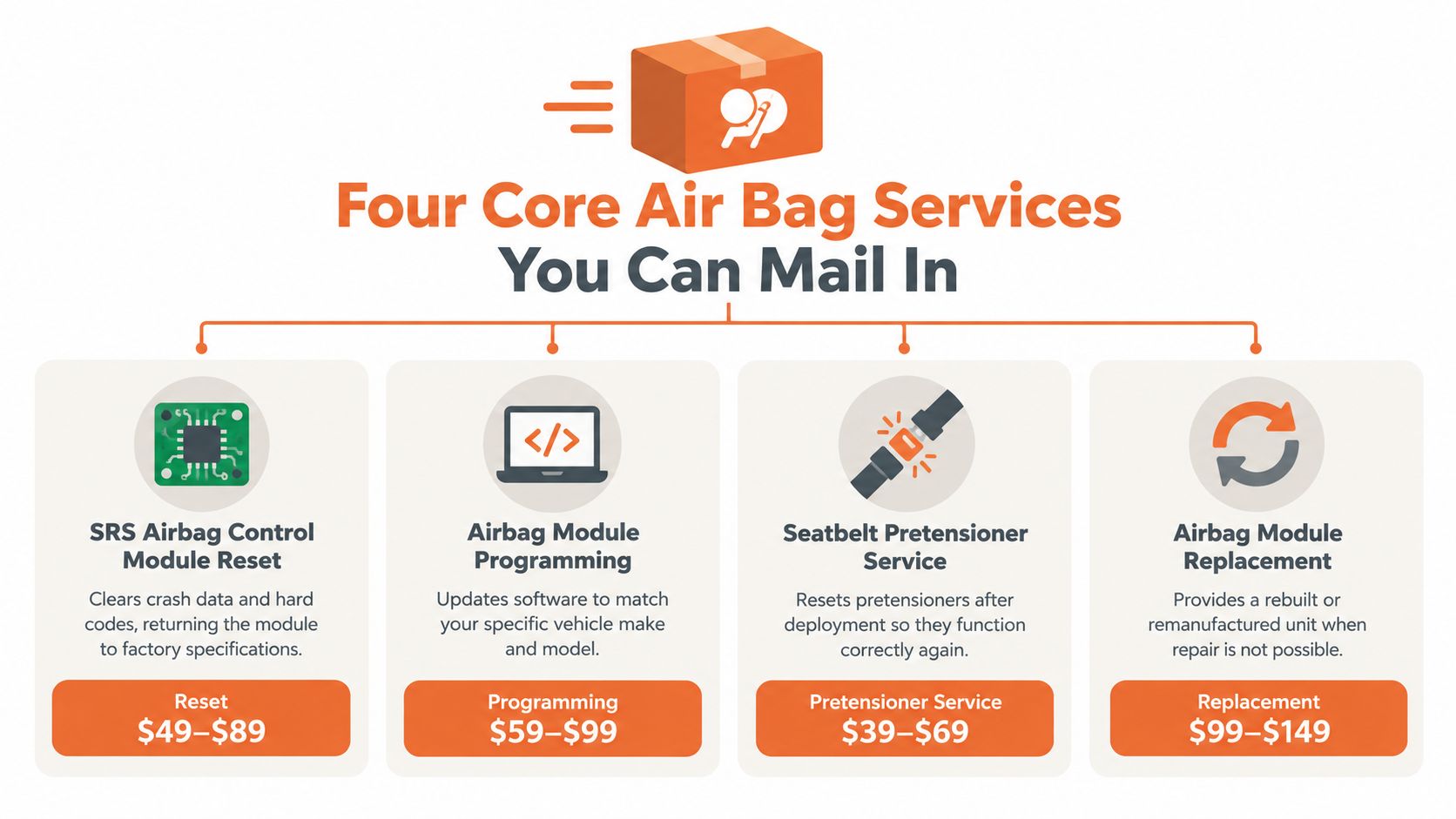
Reset work for the SRS module
A module reset clears crash data and hard faults stored in the controller after an accident. That is the right service when the electronics are still intact but the unit is holding an active collision record. When the module shows signs of physical damage or a documented deployment, replacement is the safer repair path, because a reset cannot restore a damaged controller to service.
Pretensioner service for locked or deployed belts
Seat belt pretensioner service covers belts that fired, locked up, or stopped retracting the way they should. On many vehicles, the belt assembly and the module are tied together closely enough that you cannot treat the belt as separate from the rest of the SRS. If the pretensioner has been mechanically triggered, a module reset by itself will not make the belt usable again. The restraint chain still has to be restored from the belt end back to the controller.
Webbing replacement when the belt itself is damaged
Cut, frayed, chewed, or torn webbing needs replacement, not patching. The belt material has to hold load in a crash, so the fabric matters as much as the electronics and firing stages. Correct stitching, label placement, and color match all matter because the finished assembly still has to fit the vehicle and function like the original.
Diagnostic guidance when you're not sure what failed
Some customers know the warning light is on but do not know which part failed or which belt stage they are dealing with. The fix starts with proper identification, part number, and vehicle data, so the wrong component does not get mailed in for a second round trip.
For a single owner, that usually means one component at a time. For a body shop or salvage rebuilder, it is often a batch of mixed failures, which is why the service menu matters. A mail-in airbag light reset for an SRS module after an accident is the clearest example of how the module side of that workflow is handled.
The Mail-In Process From Box to Bench
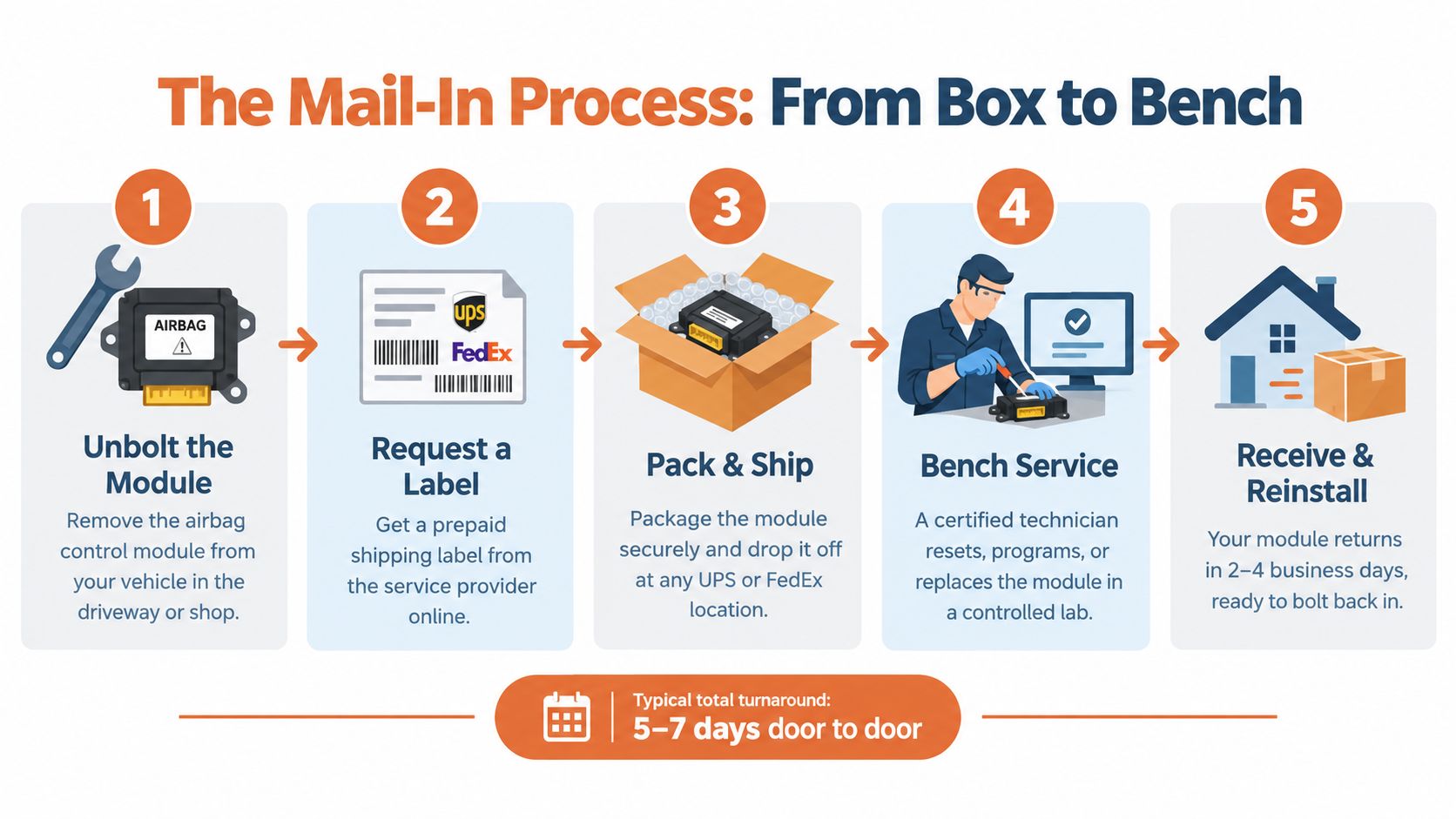
Mail-in SRS work feels unfamiliar the first time, mostly because the part leaves the vehicle before the repair happens. In practice, the process is straightforward if the right component is identified up front and packed so it reaches the bench intact.
What has to come off the car
The customer or local shop removes the module, belt unit, or other affected component. The key is to send the exact unit that matches the vehicle, not a close guess. Connector count, part number, and VIN details matter because an SRS part is tied to a specific vehicle configuration.
How the part gets prepared
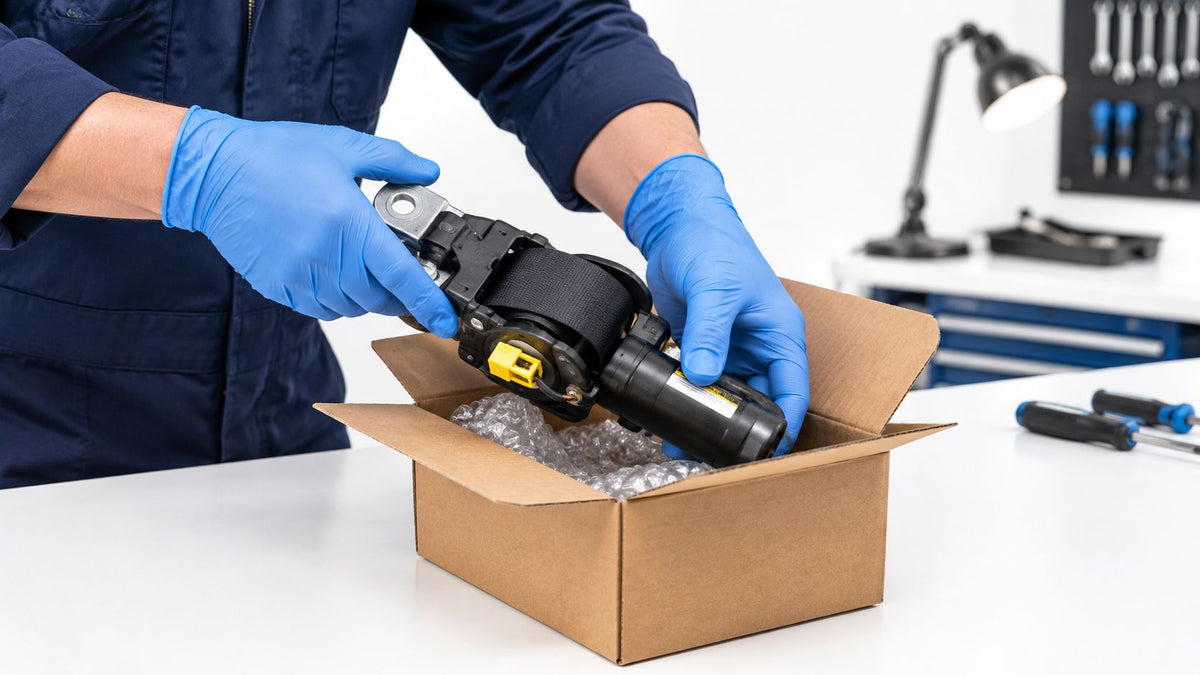
The part should be packed so it won't take impact damage in transit. No one should probe connectors casually or try to “test” the unit with random power sources. NHTSA technical instructions commonly require disconnecting the battery and waiting before SRS work, and they warn that qualified personnel should handle removal, installation, and disposal procedures (NHTSA recall procedure).
What happens at the bench
Once it arrives, the technician identifies the unit, confirms the fault state, and performs the requested service under controlled conditions. That can mean reset work, programming, or a repair decision based on what the unit contains. Functional checks should happen before it goes back in the box.
What the customer should expect after return
Installation is still the owner's or shop's responsibility. The service ends with the part being returned ready for reinstallation, not with a door-to-door install appointment. The whole point is to get a verified unit back fast enough that the car, shop, or rebuild project doesn't sit longer than needed.
Dealership Replacement vs Mail-In Reset and Repair
The big decision is usually cost, time, and whether the original part can be restored instead of replaced. Dealership work tends to push toward new assemblies and in-house coding. Mail-in service keeps the original module or belt assembly, restores the relevant component, and sends it back for reinstallation.
| Factor | Dealership Replacement | Mail-In Reset or Repair |
|---|---|---|
| Parts approach | New OEM assembly is commonly ordered | Original component is serviced when it can be restored |
| Downtime | Often tied to parts ordering and shop scheduling | Usually shorter once the unit reaches the bench |
| Programming | VIN coding and vehicle-side setup may be required | Reset and return is the focus, with compatibility checked before shipment |
| Salvage and rebuild use | Some dealers are cautious with recovered SRS parts | Commonly used by rebuilders who need the original unit serviced |
| Workflow | Vehicle stays in the shop | Part is shipped out, serviced, and shipped back |
Body shops and reconditioning departments usually care about turnaround and repeatability more than showroom convenience. That's where marketing for auto repair shops becomes relevant, because the providers that serve shops well are usually the ones that know how to handle repeat volume, clear communication, and proper documentation.
The practical trade-off is simple. A dealership may be the right fit when the vehicle needs a full OEM replacement path and the job is being handled entirely in-house. Mail-in repair makes more sense when the original unit is serviceable, the owner or shop wants to keep the factory component, and the vehicle needs to return to service without waiting on a full parts chain.
Salvage and rebuilt titles complicate the dealership route even more, because the vehicle history can make original-component servicing the cleaner operational choice. In that case, the original module or belt assembly is often the only part that fits the build plan cleanly, which is exactly where mail-in service earns its place.
Quality Controls That Define a Trustworthy Service
A crash leaves more than a warning light behind. A trustworthy shop controls the part, the bench work, and the paperwork so the restraint network comes back with the same logic it had before the hit.
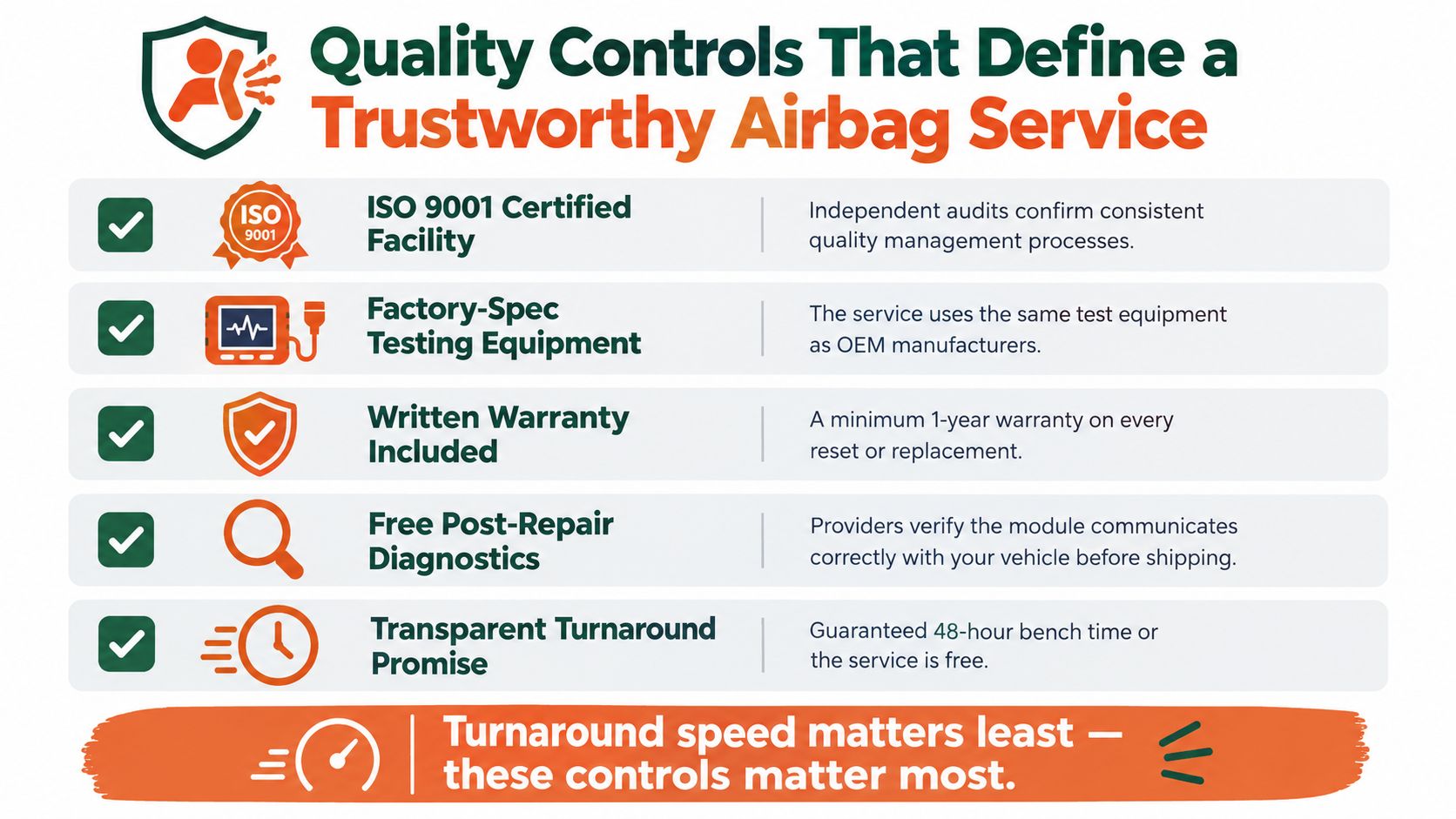
The controls that matter
The first check is procedure. The service should follow manufacturer-spec steps and line up with FMVSS expectations. After repair, the readiness indicator still has to be checked, because occupant-protection monitoring is part of the system's job, not an afterthought (NHTSA vehicle air bag guidance).
Next comes functional testing. A reset or repaired part should be checked before shipment so the customer is not finding a second fault after reinstalling it. A warranty matters too, but only when it sits on top of a real technical process instead of standing in for one. See the shop's functional testing requirements for the kind of verification that should happen before a part leaves the bench.
Practical rule: if the provider cannot explain how it verifies communication after service, keep looking.
Traceable service history is another filter that matters in practice. Shops, insurers, and rebuilders need to know what was received, what was done, and what was returned. That record helps later if the vehicle needs inspection, resale paperwork, or a follow-up diagnosis.
Questions worth asking before you ship anything
- What exact component do you service? Ask whether they handle the module, pretensioner, or webbing, and under what conditions each one is repairable.
- What gets tested before return? Look for a clear description of functional testing, not a vague promise.
- What happens if the part cannot be restored? You want a defined outcome, not a shrug.
- How is the service documented? Keep the paperwork tied to the VIN and the repaired component.
- What warranty is included? The warranty should match the actual service performed, not just the shipment date.
Seat Belt Repair, for example, is a mail-in service for pretensioners, webbing replacement, and SRS module reset, with OEM components and return shipping handled after the bench work is finished. That workflow matters because it keeps the service tied to the actual restraint part, not just the warning lamp.
Beyond the Reset Light and What Safe Reinstallation Really Means
A dash light going out is only part of the job. The restraint system still has to prove it can see every connected part, clear stored faults, and react the way it should in a real crash.
I look for the readiness indicator, no residual codes, clean belt retractor movement, and correct belt stage response in the vehicle. FMVSS No. 208, as set out in the federal regulation text, is the standard that keeps that monitoring tied to occupant protection instead of dashboard appearance.
Salvage and rebuilt vehicles deserve even more care. Auction cars often arrive with crash data already stored in the module, so the light is the start of the inspection, not the end of it. The goal is a system that communicates correctly, retracts correctly, and is documented against the VIN.
Before the car leaves the bay, the readiness indicator should be on, residual codes should be gone, retractors should cycle cleanly, and the service record should follow the vehicle.
If the part passes bench work, the car still needs a final system check, a clean scan, and paperwork that matches the VIN.

Leave a comment
This site is protected by hCaptcha and the hCaptcha Privacy Policy and Terms of Service apply.