
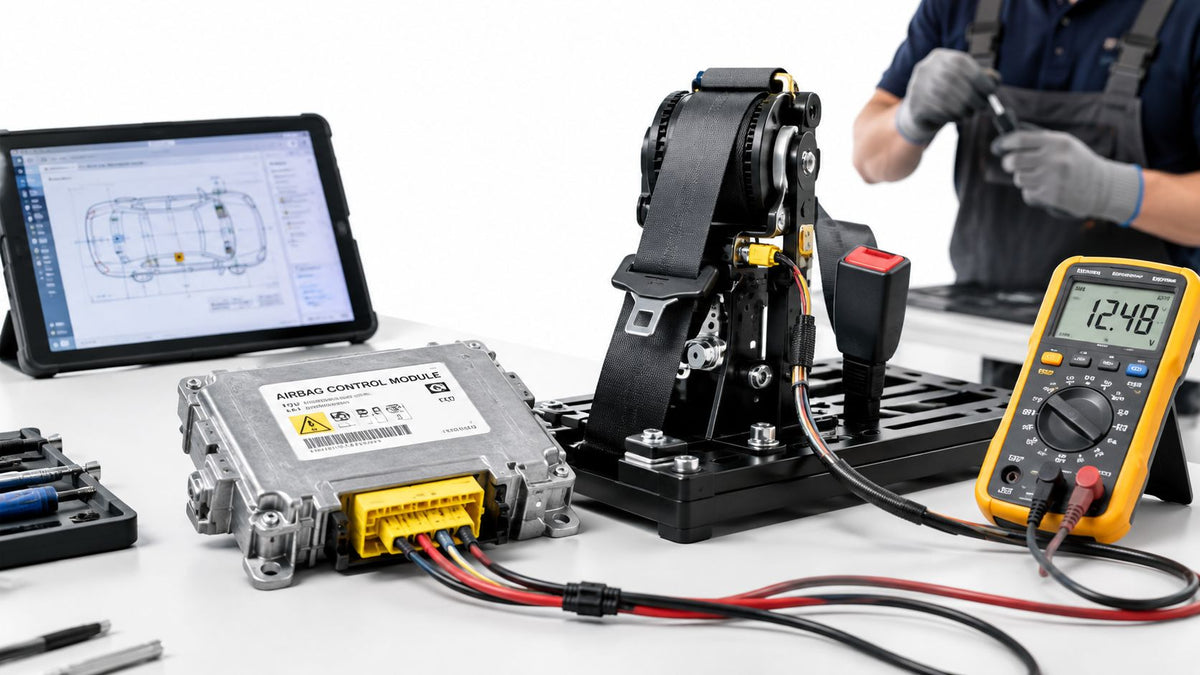
If you're validating repaired SRS or seat belt parts, functional testing requirements mean more than clearing codes and sending the part back out. The evidence has to combine requirement traceability, process controls, and safety-standard alignment so you know the repair works safely, not just temporarily.
A shop owner or collision tech usually feels this pressure right after a crash repair. The dash light is on, the pretensioner locked up, or the belt won't retract, and the customer wants the car back. That's where generic QA language falls short, because restraint components sit inside a regulated safety system, not a casual pass/fail checklist.
Table of Contents
- Why Functional Testing Matters After Collision Repair
- Understanding OEM and FMVSS Testing Standards
- Test Equipment and Diagnostic Procedures for SRS Modules
- Functional Verification for Repaired Seat Belt Components
- Pass/Fail Criteria and Documentation Requirements
- Real-World Examples of Validated Repairs
Why Functional Testing Matters After Collision Repair
A wrecked car often leaves behind one visible problem and several hidden ones. The seat belt might be locked, the SRS lamp might be on, and the control module may hold crash data that a simple code clear won't fix. In that moment, the wrong move is to treat the repair like a cosmetic job.
The part that looks fine can still be unusable
A deployed pretensioner can keep a belt from retracting even when the webbing looks intact. An SRS module can communicate badly enough to keep the warning lamp active, even after the rest of the car starts and drives normally. That's why the repair has to prove function, not just appearance.
Practical rule: if the restraint part hasn't been verified under the right conditions, it's not ready to trust.
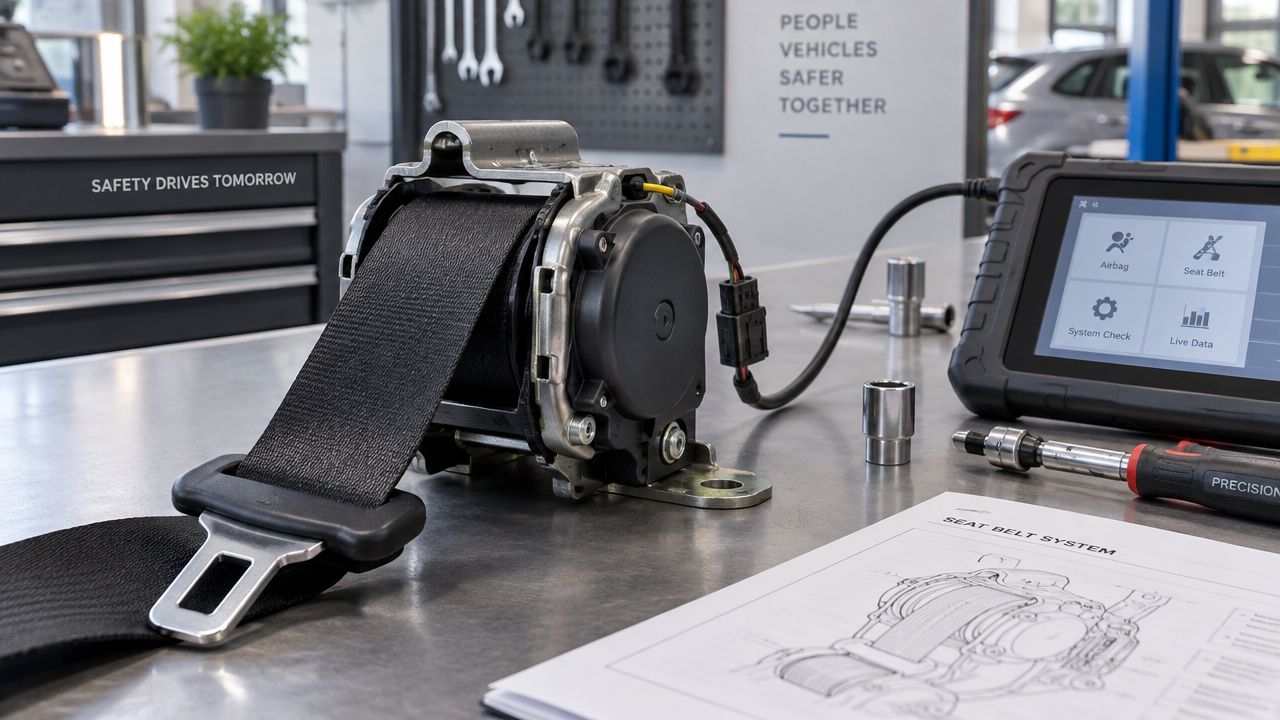
A collision repair needs proof, not assumptions
ISO 26262 was published in 2011 and defines requirements for safety-related electrical and electronic systems in road vehicles, across hardware, software, semiconductors, and tools, with verification and validation built into the lifecycle TÜV functional safety overview. That framing matters in the shop because it shows the standard mindset: you don't just ask whether a part powers up, you ask whether the safety-relevant function is proven.
In practical terms, that means the belt, module, and related circuits need evidence before reinstall. If the component was repaired, reset, or remanufactured, the question becomes whether the part behaves the way the vehicle maker expects under defined conditions, not whether the warning light happened to go out once.
A useful way to think about it is this: cosmetic repair restores appearance, but functional testing restores trust. For restraint parts, trust has to be earned with diagnostics, documentation, and alignment to the original safety design.
Understanding OEM and FMVSS Testing Standards
The testing hierarchy starts with regulation and moves downward into manufacturer instructions. Federal Motor Vehicle Safety Standards set the baseline for restraint performance, while OEM repair procedures define how a specific vehicle line should be checked, reset, and verified. A repaired component has to satisfy both, because the car doesn't care whether a shortcut was convenient.
Regulatory rules set the floor
For safety-related automotive systems, ISO 26262 gives the development and verification mindset, while production quality rules add repeatable inspection and functional checks. IATF 16949:2016 requires each product to undergo layout inspection and functional verification against relevant customer engineering, material, and performance standards, with frequency defined in the control plan IATF layout inspection and functional testing. That's important because it turns testing into an ongoing production control, not a one-time gesture.
OEM procedures tell the shop what proof looks like
A manufacturer may specify diagnostic access, lamp behavior, connector checks, or part-by-part validation that a generic workflow never covers. That's where the repair business has to be disciplined. If you use only a basic scan tool, you can miss stored faults, pending faults, or communication issues that still matter after the obvious crash code is gone.
For a practical example of how this plays out in the field, browse Camry recall history when you're checking whether a specific model's restraint behavior or repair history deserves a closer look. That kind of context helps a shop avoid treating every vehicle like the same platform.
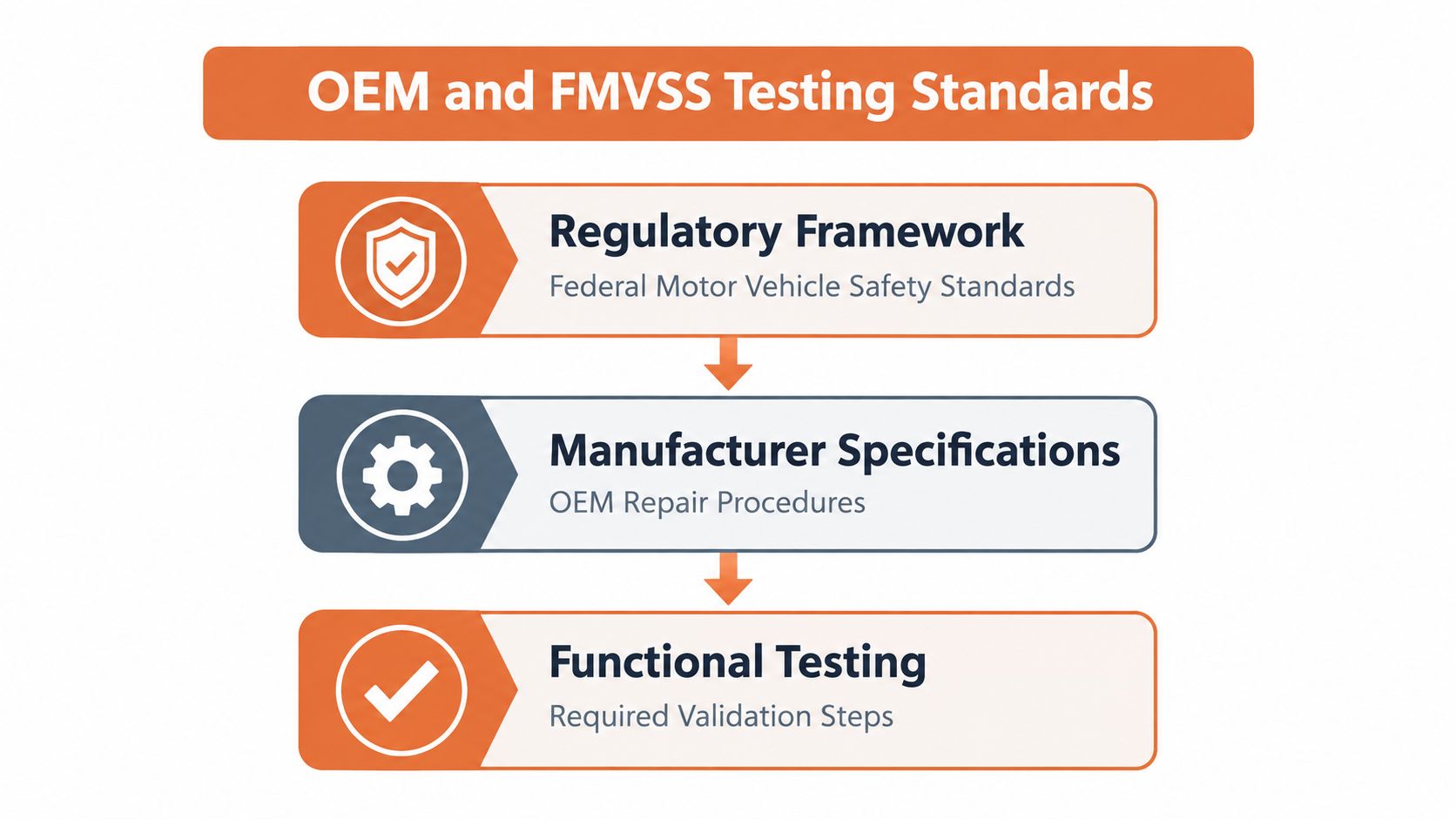
A body shop also needs a written path from test to decision. The internal workflow on collision repair parts should be read that way, as a process for matching the repaired part to the vehicle's safety expectations, not as a parts catalog.
Standards and service reality don't always match
The challenge is that the broad testing language used in manufacturing doesn't always tell a collision tech exactly what to measure after service. That gap is where OEM procedure, diagnostic evidence, and control-plan thinking have to meet. If the part is going back into a customer's car, the shop should be able to show why it passes, not just say it passed.
Test Equipment and Diagnostic Procedures for SRS Modules
A repaired SRS module can look fine on a basic scanner and still fail the checks that matter. The shop needs equipment that can read the module at the OEM level, verify the network path, and show whether the warning system is behaving the way the vehicle expects. If the tool cannot see the right faults, it cannot prove the module is ready.
Start with the right communication path
Start by confirming that the module and the network are communicating normally. Read stored faults, pending faults, and network-related faults with SRS-capable equipment, then verify that the warning lamp completes its normal bulb-check sequence before it goes out SRS diagnostic guidance. If the lamp skips that check, the system still needs attention.
Use simulators where the procedure allows it
Post-repair validation also needs power and ground checks, because a weak supply can create misleading fault behavior. Where the setup supports it, non-intrusive actuation logic validation with simulators lets the technician confirm deployment-circuit logic without firing pyrotechnic devices in the vehicle. That gives the shop a safer way to verify circuit response while keeping the car out of a live deployment test.
A scan tool that reports “no fault codes” is the same as a unit test that only checks the happy path. The restraint system still needs boundary checks and failure-mode checks before release.
Shop-floor insight: if the tool cannot verify communication, lamp behavior, and circuit integrity, the job is not finished.
For customer-facing explanations, why the SRS light is on helps connect the warning lamp to the diagnostic path. That matters because many drivers assume a light points to one simple fault, while the module may be flagging a communication or circuit problem that needs a fuller check.
Don't confuse reset with proof
A module that clears and stays quiet is a good sign, but it is not full proof. The technician still has to confirm normal communication across the vehicle network and make sure no hidden issue is keeping the system from working as designed. In a collision repair setting, that last verification is what separates a cleared code from a safety part a shop can trust.
Functional Verification for Repaired Seat Belt Components
Seat belt repairs need their own proof because the belt assembly is doing mechanical work, not just talking to a scan tool. A locked or deployed pretensioner can leave the belt feeling normal until the first pull, and that's exactly why bench verification matters. The belt has to spool, lock, and retract in a way that matches the vehicle's original behavior.
Verify the mechanism, then verify the load path
On a repaired assembly, the technician should confirm that the webbing feeds smoothly, the retractor locks when it should, and the pretensioner mechanism responds properly during bench testing. The connector count helps identify whether the system is single-stage, dual-stage, or triple-stage, which changes how the assembly must be evaluated. If the stage count is wrong, the repair plan is wrong too.
The piece on seat-belt pretensioner repair is useful context because pretensioner behavior is often the reason a belt locks up after impact. That's not a cosmetic issue. It's the core safety event the repair has to resolve.
Webbing replacement is more than matching color
A custom-color or OEM-style webbing replacement still has to preserve the original restraint function. The stitching, label placement, spool behavior, and anchorage points all need to stay consistent with the part's intended use. If the belt looks correct but doesn't retract or lock correctly, the visual finish doesn't matter.
Practical rule: a repaired belt passes only when the mechanism, webbing, and mounting behavior all line up with the original system.
One option shops use for this kind of work is a mail-in service that resets SRS modules and repairs seat belt pretensioners with OEM components, then ships the parts back for reinstall. The important point isn't the business model, it's the validation path. The repaired component still needs the same mechanical checks before it goes back into a car.
Match the test to the system
A single-stage belt shouldn't be judged like a triple-stage assembly. Different connector layouts and pretensioner designs change the way the system behaves under load, so the bench test has to reflect the actual configuration. That's why generic seat belt advice falls short. The test has to mirror the part in front of you.
Pass/Fail Criteria and Documentation Requirements
A part doesn't become trustworthy because the tech feels good about it. It becomes trustworthy when it clears defined checks and leaves a paper trail that another shop, insurer, or owner can review later. That's especially important for restraint parts, where the evidence should survive beyond the day of repair.
Pass criteria need to be specific
A successful SRS reset should show that crash data is cleared, hard codes aren't present, and the warning lamp behaves correctly during the bulb-check sequence. A successful seat belt repair should show correct spool, lock, and retract behavior, plus the expected response from the pretensioner or stage-specific mechanism. If any of those items fail, the component stays out of service.
A generic code reader can only tell you so much. OEM-level diagnostics can show the difference between a cleared symptom and an unresolved fault path, which is why the test method matters as much as the result.
Fail criteria should trigger more diagnosis, not a shrug
If the module won't communicate, if a pending fault keeps returning, or if the lamp sequence doesn't match expected behavior, the part hasn't passed. The same goes for a belt that retracts slowly, binds, or fails a lock test under simulated load. Those are not minor imperfections. They're signs the component still isn't ready.
The quality control checklist for auto shops is a good companion for this mindset because it reinforces the idea that release decisions should follow documented checks, not memory or habit. In restraint work, documentation is part of the safety decision.
Records matter as much as the test
Keep the test results, part numbers, OEM procedure references, and warranty paperwork together. If the shop repairs a module or belt and the vehicle comes back later, that file shows what was checked and what standard guided the release. It also helps distinguish an actual repair from a guess.
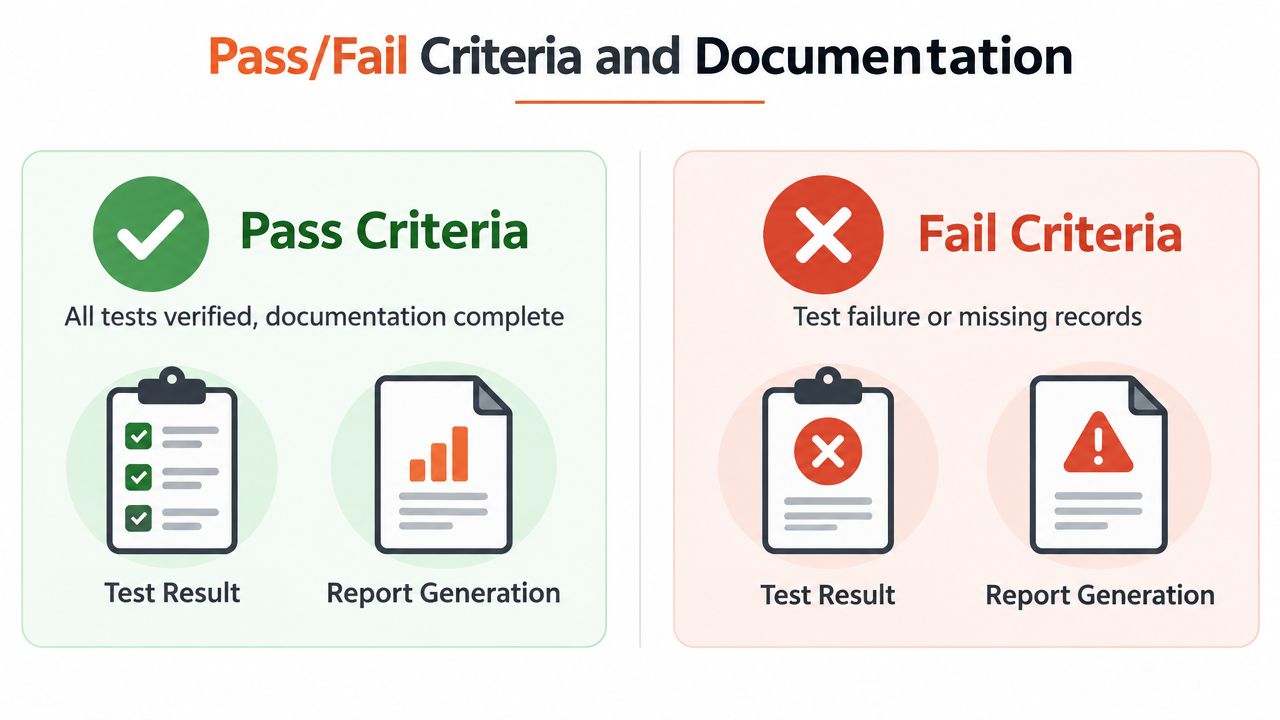
Record-keeping tip: if the file can't explain the result, the result won't hold up under scrutiny.
That's where a service record becomes part of the repair itself. A component with clear test history is easier to trust than one that only has a verbal assurance. For shops, that record also supports warranty handling and reduces confusion when the part returns to service.
Real-World Examples of Validated Repairs
A good repair looks different depending on the part, but the logic stays the same. The repair has to end with clear evidence that the component behaves like a safe part again, not just a cosmetically finished one. That's why the strongest examples combine electrical checks, mechanical checks, and documentation into one file.
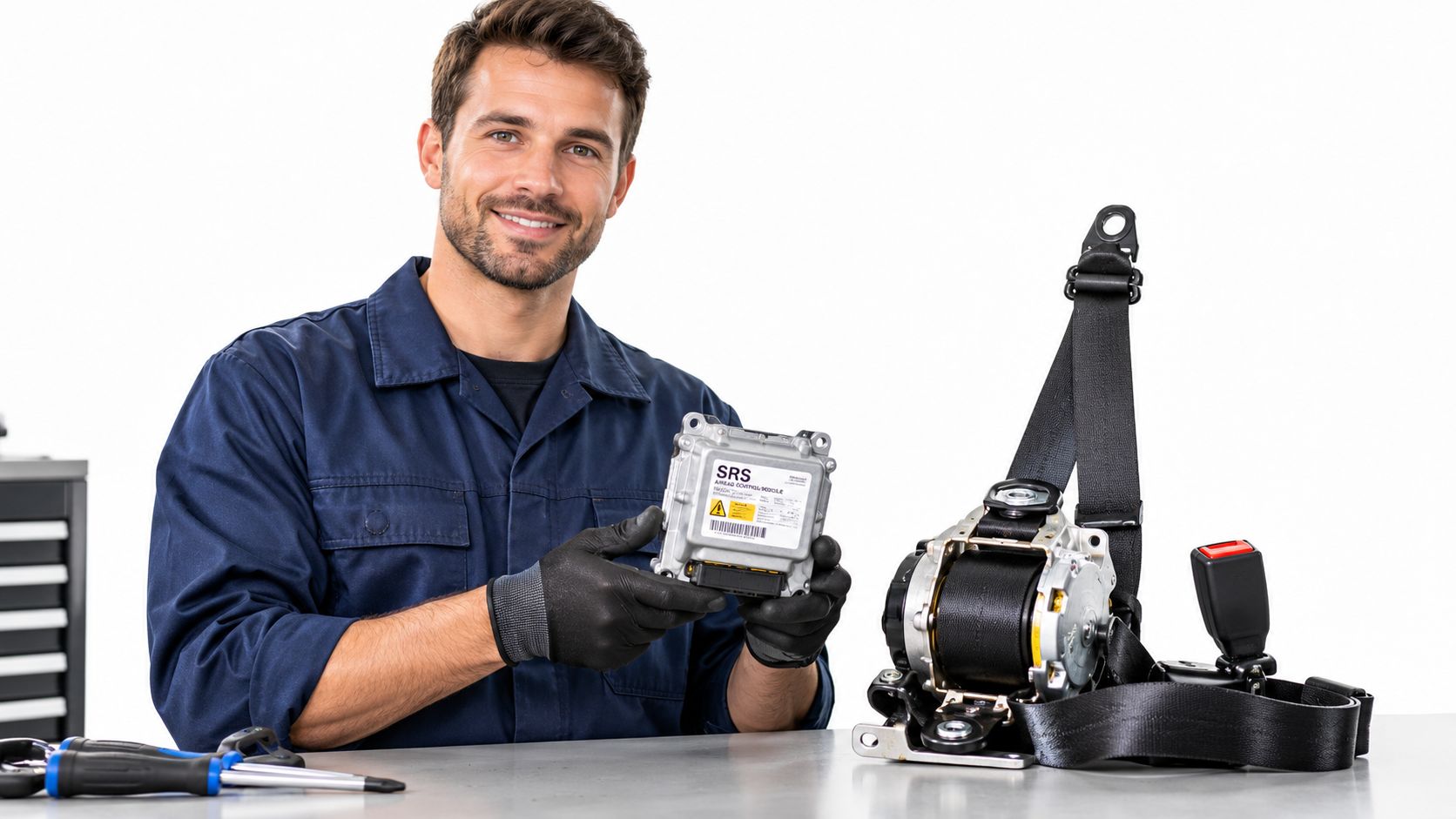
A Lexus airbag control module with crash data stored in memory, for example, can't just be wiped and reinstalled without confirming that the reset removed the collision state. A proper repair file would show the memory work, the post-reset communication check, and the return of normal lamp behavior. That's the kind of evidence a shop wants before treating the module as usable again.
Different parts, different proof
A dual-stage pretensioner needs bench verification that the replacement components and retractor behavior line up with the original design. A triple-stage belt with custom webbing needs a broader check, because the repair touches both the mechanism and the restraint path. In both cases, the evidence should show the part passed under the configuration it will live in.
The attached video fits here because the visual review helps technicians connect the module and belt assembly to the diagnostic outcome.
The strongest evidence package is boring in the best way
When the repair is done right, the file looks ordinary: test results, part identification, procedure references, and a clear pass decision. That ordinariness is the point. Nothing about a restraint part should feel experimental once it's headed back into a customer vehicle.
A repair shop that handles these parts well doesn't rely on luck or a one-line scan result. It shows the function, documents the proof, and keeps the evidence ready for the next question.
If you're trying to trust a repaired pretensioner, belt, or SRS module, Seat Belt Repair offers mail-in service for seat belt pretensioners, webbing replacement, and SRS module resets using OEM parts and functional testing before shipment. Visit Seat Belt Repair to compare the service to your repair workflow and see whether it fits the part you need to put back into service.


Leave a comment
This site is protected by hCaptcha and the hCaptcha Privacy Policy and Terms of Service apply.