
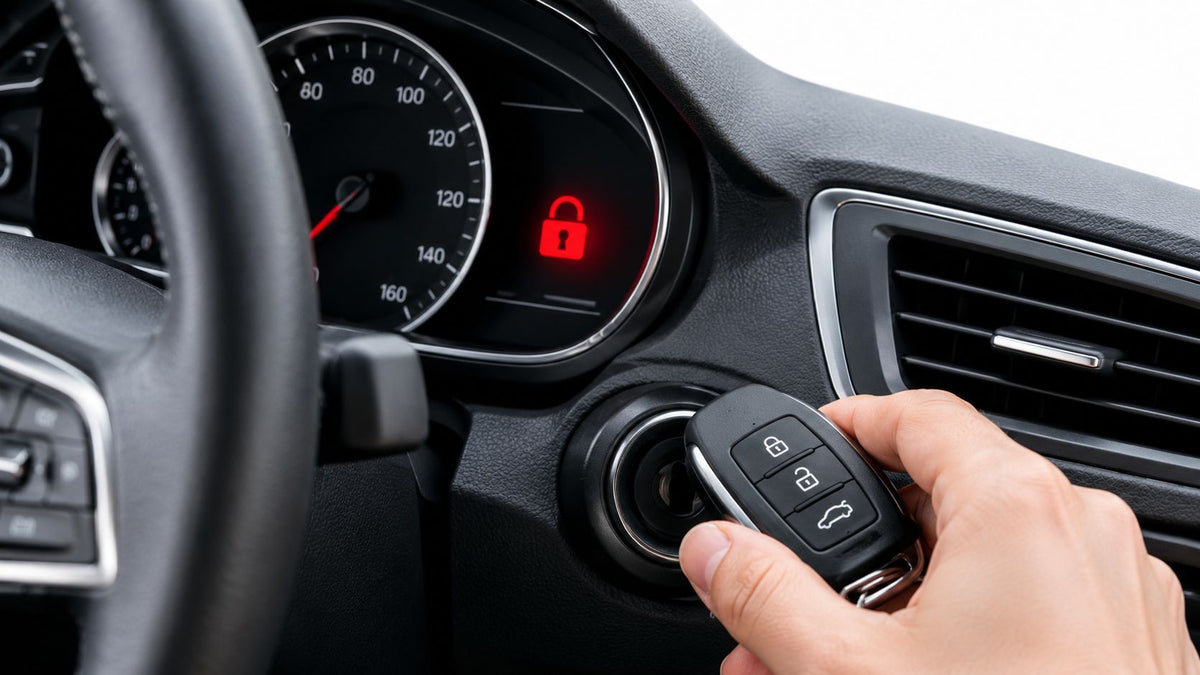
You're sitting in the driveway with the key in your hand, and there it is, a little lock light on the dash that won't stop blinking. The car looks fine, the battery seems fine, and yet the dashboard is talking to you in a language that feels way too vague for something this important. The good news is that this symbol is usually a status message, not a mystery, and once you know which system it belongs to, the next move gets much clearer.
Table of Contents
- Why a Lock Light Appears on Your Dashboard
- What the Car and Lock Symbol Actually Does
- Reading the Light, Armed, Self-Check, or Fault
- Quick Checks You Can Run Before Paying for Diagnostics
- When a Lock Light Points to a Post-Collision Seat Belt or SRS Issue
- Deciding Between Dealer Service, Locksmith, or Mail-In Repair
- Clearing Up the Biggest Lock Light Myths
Why a Lock Light Appears on Your Dashboard
A glowing padlock or car-and-lock icon can mean different things depending on the vehicle and the moment it appears. In many cars, it's the immobilizer indicator, a security system that decides whether the engine is allowed to start. In other situations, a lock-style icon can point to a seat belt pretensioner issue, a child lock, or a steering-related lock state after a door or ignition cycle.
The confusion starts because the symbol family looks similar even when the underlying system is different. Drivers often assume every lock-shaped light means theft protection, but that's too narrow. Some lights are normal self-checks, some mean the anti-theft system is armed, and some point to a fault that can leave the car stranded.
Three systems that often get mixed up
The first is the immobilizer, which controls engine start authorization. A second is the seat belt restraint system, especially after a collision when a belt pretensioner can lock. The third is a child safety or steering lock indicator, which is tied to a door event, a steering column cycle, or a vehicle function unrelated to engine start.
Practical rule: don't guess from the shape alone. Read the light's behavior, when it appears, and whether the car starts normally.
That distinction matters because the repair path changes completely. A flashing immobilizer light may call for key or module diagnosis, while a post-collision belt or SRS light may point toward reset or replacement of restraint components. Decoding the system first saves time, avoids unnecessary parts swapping, and helps you decide whether you can handle the issue at home or need outside help.
What the Car and Lock Symbol Actually Does
The car-and-lock icon is usually the immobilizer warning indicator, a visual sign that the vehicle is checking whether the right key is present. On many North American vehicles, this symbol has appeared on virtually every gasoline and hybrid vehicle sold since 2001, which is why it's become one of the most familiar dashboard security signals in modern driving automotoflux explanation of the car-and-lock symbol. It isn't just a warning light, it's a status lamp for start authorization.
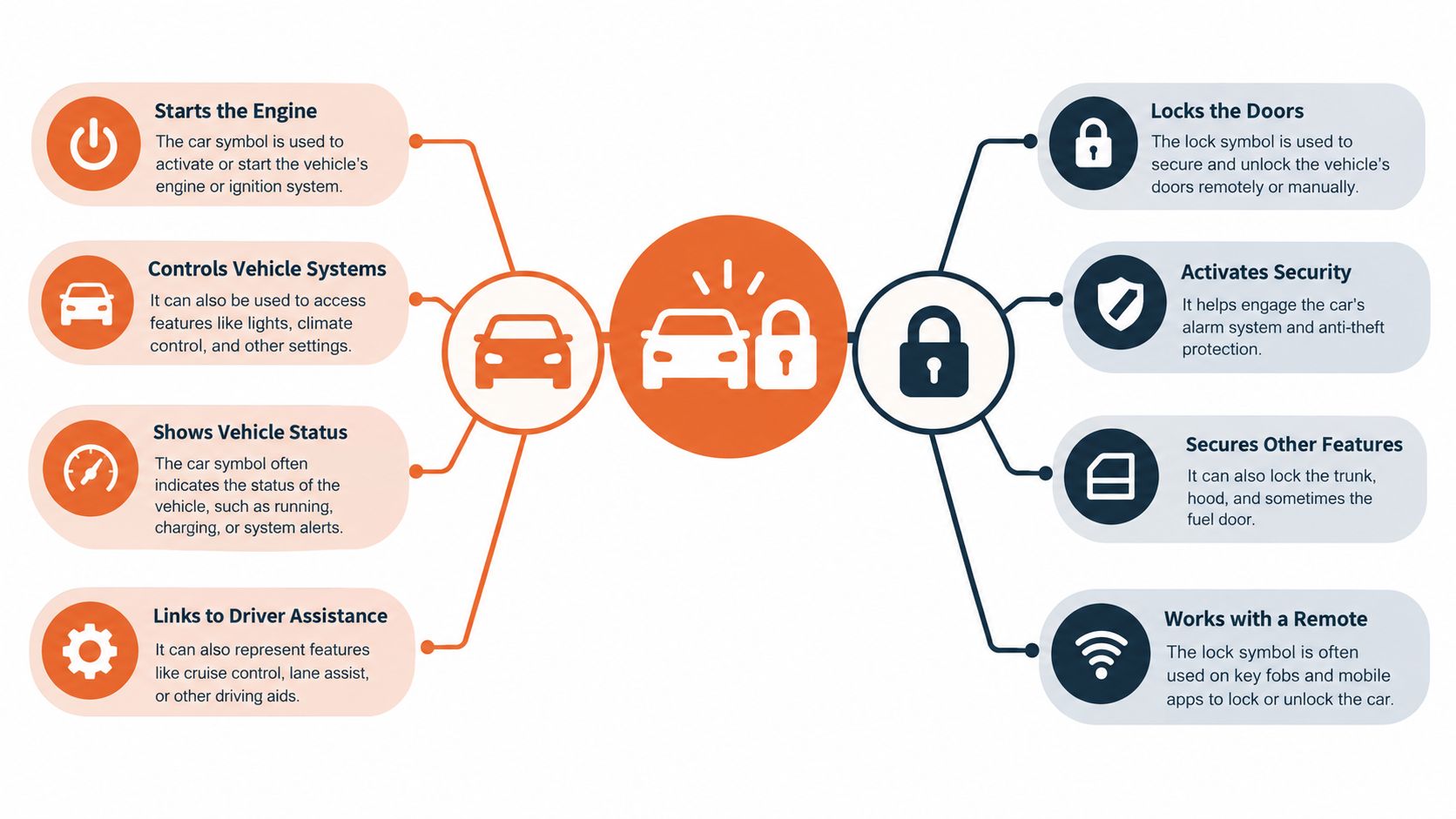
At its core, the immobilizer is an electronic handshake. The transponder in the key, the antenna around the ignition or start zone, and the ECU all exchange information before the engine is allowed to run. If the code matches, the light usually goes out quickly. If the match fails, the vehicle can block fuel or spark and refuse to start.
Why this matters more than a generic theft light
A generic alarm light tells you the car is protected. The immobilizer light tells you whether the car is willing to start. That's a big difference. One is about guarding the vehicle when it's parked, the other is about whether the control system has granted permission to move.
That's also why smart-key vehicles feel different from older systems. If you want a broader primer on keyless operation, understanding smart key benefits helps show how modern cars replace a metal-key assumption with a coded authentication process. The dash light is the visible side of that process.
A healthy immobilizer light often behaves like a quick check, not a drama. It should confirm the system is awake, then disappear when authentication succeeds.
That simple pattern is what separates normal operation from a real fault.
Reading the Light, Armed, Self-Check, or Fault
The easiest way to narrow down a lock light on dash issue is to watch when it appears. A slow flash with the key out or the doors locked usually means the immobilizer is armed, and that's normal. A solid or rapid flash while you're trying to start the car usually means the key wasn't accepted.
The middle case is the one many drivers miss. On some cars, the light comes on briefly at startup as part of the system self-check, then disappears. That's not a problem. The warning becomes useful when it stays on, flashes quickly, or comes back during cranking and the engine never catches.
| Lock Light Behavior and What It Signals | What It Signals | Likely Cause |
|---|---|---|
| Brief flash with key out | System armed and checking normally | Normal immobilizer status |
| Solid or rapid flash during crank | Start authorization failed | Wrong key, transponder mismatch, antenna or receiver fault, module communication issue |
| Persistent light after start | Stored fault in immobilizer or body control logic | Voltage drop, recent battery issue, synchronization problem, communication fault |
The reason this matters is simple. If the light is telling the ECU to deny authorization, the car can act dead even when the battery and starter are fine. That's why drivers sometimes replace parts that weren't bad in the first place.
For a repair-focused walkthrough of immobilizer behavior, South Wales immobiliser help gives a useful look at how the symptom patterns line up with fault types. It's especially helpful when the light behavior changes from one start attempt to the next.
The quickest takeaway is this. Armed means normal. During crank means authentication trouble. After start means there's likely a stored fault that deserves proper diagnosis.
Quick Checks You Can Run Before Paying for Diagnostics
Start with the spare key or spare fob if you have one. A chip inside the key can fail, and a different key immediately tells you whether the problem follows the key or stays with the car. If the spare works, you've narrowed the fault without spending a dollar.
Next, check the fob battery and the vehicle battery. A weak fob battery can stop the car from recognizing the signal, and a weak 12-volt battery can create low-voltage behavior that looks like an immobilizer fault. In smart-key vehicles, try holding the fob in the manufacturer-recommended start position if the manual allows it, because that can help if the battery inside the fob is dying.
Good habit: if the car lost power recently, assume synchronization may be part of the problem before you assume the entire security system failed.
Then try a normal lock and release cycle. That simple action can wake up a system that has become out of step after a battery disconnect or a low-voltage event. If the light changes behavior after you release and restart, the issue may be communication rather than a damaged module.
The checks you should avoid are just as important. Don't keep cranking the engine over and over, and don't wedge the key near the steering column or antenna area and hope for the best. That can waste battery power and muddy the diagnosis. If the spare key doesn't help and the light still behaves like a start-authorization fault, it's time to move from guessing to testing.
For drivers dealing with a belt problem rather than an immobilizer problem, the link between a locked belt and the broader restraint system matters too. If your seat belt won't retract or release, the guide on seat belt retractor troubleshooting is a practical next stop because the fault may be mechanical, not electronic.
The point of these checks is not to fix everything at home. It's to separate a bad key, weak battery, or sync issue from a deeper module fault before you pay for diagnosis.
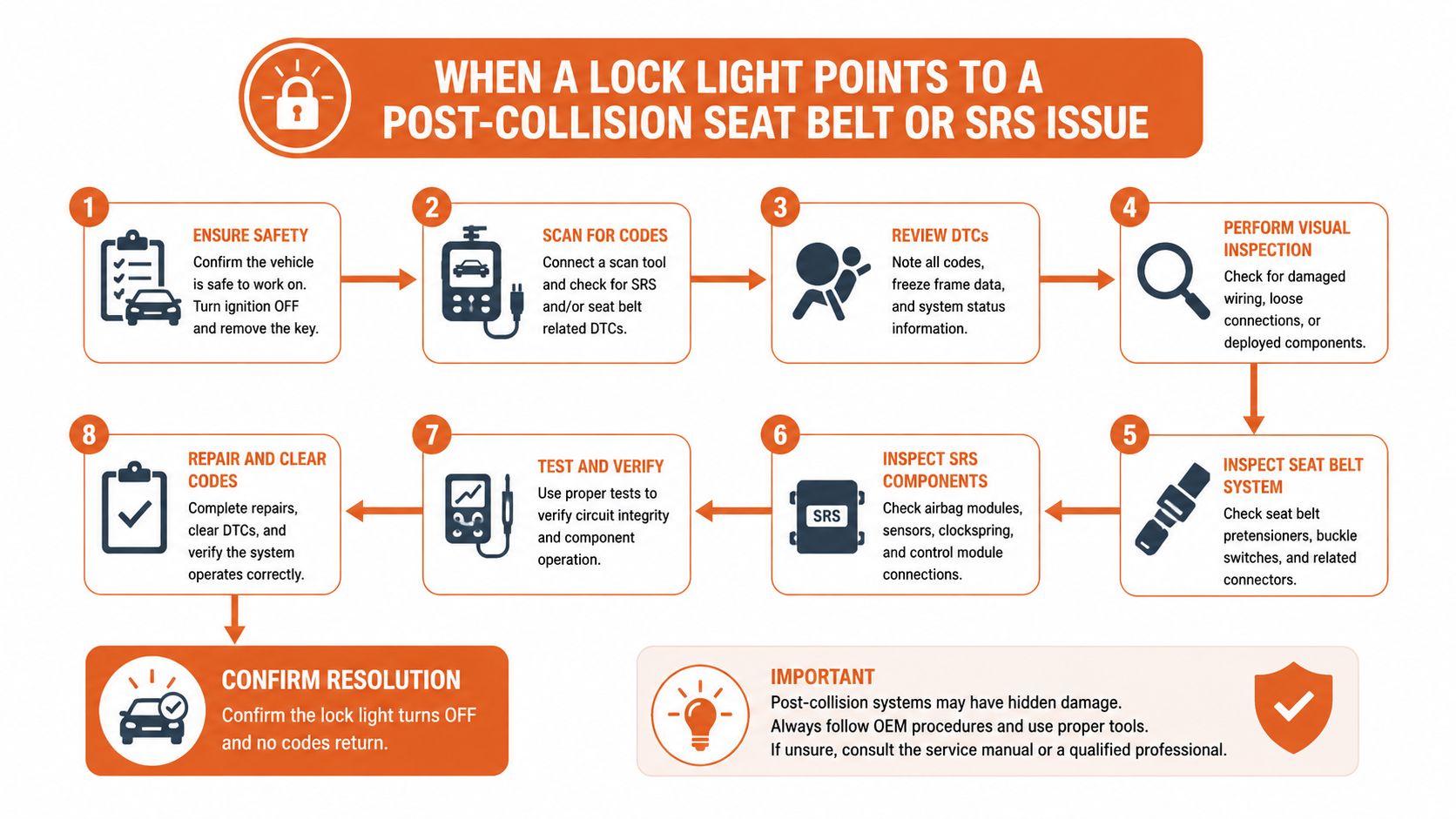
When a Lock Light Points to a Post-Collision Seat Belt or SRS Issue
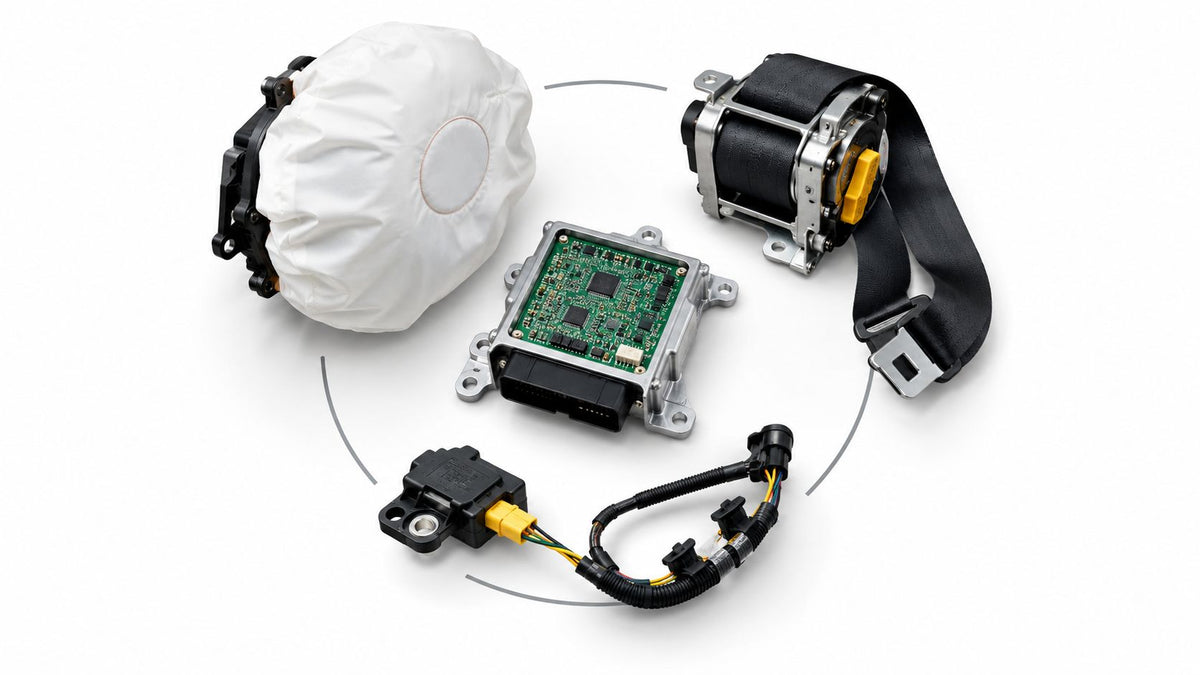
A lock-style warning doesn't always mean theft protection. After a crash, it can point to the restraint system, especially when the seat belt has locked hard and the airbag light stays on. In that case, the vehicle is telling you the safety system recorded a collision and hasn't returned to a ready state.
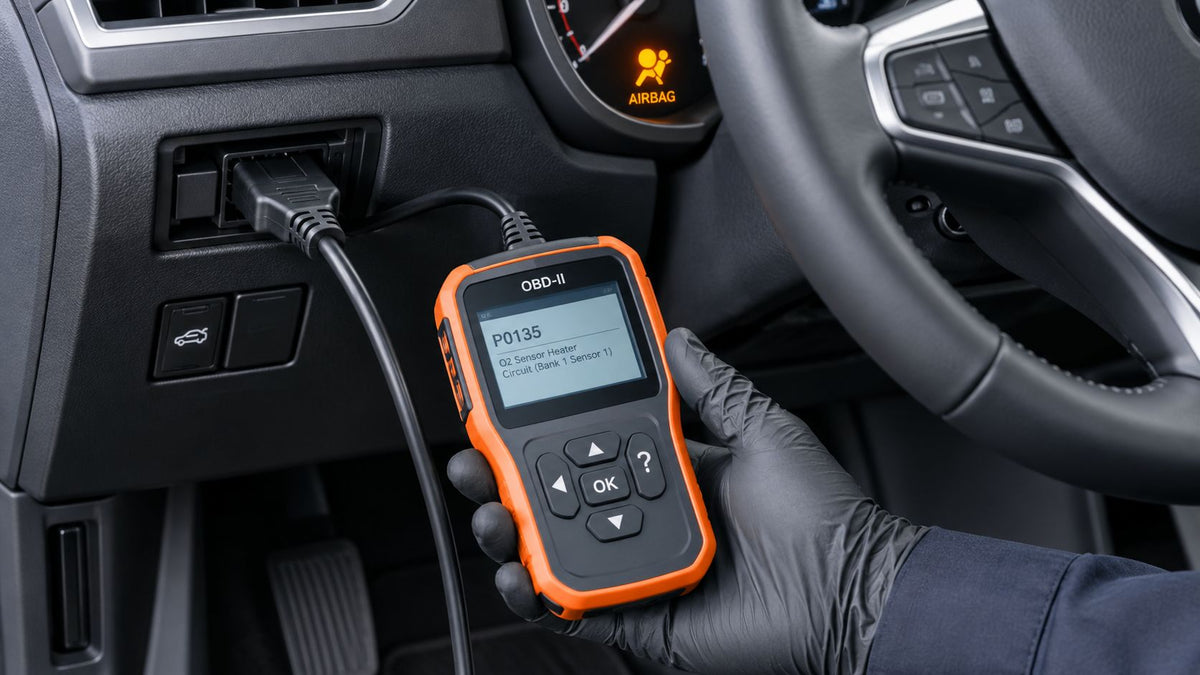
That's because many SRS modules store crash data in non-volatile memory, and the warning can persist until the module is repaired or reset. Disconnecting the battery usually won't erase that record. Neither will a basic scan tool in many cases, because the module may be holding a crash lock state until the stored event is cleared properly airbag and seatbelt pretensioner reset guide.
What happens in a post-collision belt fault
When a pretensioner fires, it can lock the belt instantly to protect the occupant. After that, the system may refuse to behave like a normal belt again until the underlying hardware and stored crash data are addressed. That's why some drivers think the whole assembly is ruined, when the actual issue is more specific.
A careful repair decision starts with inspection. The buckle, webbing, and inflator area need to be checked for visible damage, heat marks, fraying, or deployment evidence. If the hardware is still mechanically sound but the module holds crash data, a reset can be the smarter route than a complete replacement. In those cases, a mail-in service may clear the stored codes and restore the module to a ready state, which can make more sense than replacing every part tied to the event.
For a deeper look at that decision, why is my SRS light on breaks down the restraint side of the warning path in plain language. That's useful when the dash symbol seems to be talking about a lock, but the problem is really crash memory and belt lockout.
If the belt is locked after impact, the symptom isn't cosmetic. It usually means the restraint system did its job and now needs proper service before it can be trusted again.
That's the point where repair strategy matters. Replacing everything by default can be unnecessary. Resetting or repairing the right part can restore the system more efficiently, as long as the inspection confirms the components are still safe to return to service.
Deciding Between Dealer Service, Locksmith, or Mail-In Repair
The right repair path depends on what the light is reporting. A dealer makes sense when the vehicle needs encrypted immobilizer diagnostics, manufacturer-level programming, or warranty-related work. An automotive locksmith is often the faster route for lost keys, transponder pairing, or older vehicles where key reprogramming is straightforward. A mail-in restraint service is the stronger fit when the issue is in a locked seat belt or SRS module after a collision.
| Repair Path Comparison for Lock Light Issues | Best For | Typical Cost | Turnaround |
|---|---|---|---|
| Dealer service | Complex immobilizer faults, factory programming, warranty work | Usually highest | Often slower, especially with parts ordering |
| Automotive locksmith | Lost keys, transponder pairing, some start authorization issues | Usually lower than dealer | Often faster |
| Mail-in seat belt or SRS repair | Locked pretensioners, crash data, post-collision restraint faults | Often lower than full replacement | Typically quick once parts arrive |
Cost isn't the only factor. Downtime matters too, especially for collision shops, fleets, and rebuilders who can't afford to leave a vehicle waiting on one module. The best choice is the one that matches the failure, not the one that sounds most official.
Seat Belt Repair is one mail-in option for these situations. It handles seat belt pretensioner repair, webbing replacement, and SRS airbag module reset, which makes sense when the fault is in the restraint system rather than the immobilizer itself. That kind of service fits post-collision repairs where the belt is locked and the crash data needs to be cleared before the vehicle can return to service.
If you're comparing replacement versus repair after an impact, airbag system after a crash is a useful reference point. It helps separate what must be replaced from what can be reset.
Clearing Up the Biggest Lock Light Myths
The first myth is that any lock-shaped light means someone is trying to steal the car. That's not true. Many lock icons are routine self-checks, and a brief flash can be part of normal operation. The light only becomes a problem when its behavior changes from expected to persistent, rapid, or accompanied by a no-start.
The second myth is that the dealership is the only real fix. Dealers are the right answer for some encrypted immobilizer problems, but they're not the only path for every lock-style warning. Locksmiths can handle key issues, and mail-in restraint services can handle locked pretensioners and SRS module resets when the fault sits in the safety system rather than the ignition system.
What the light is not telling you
A fuse pull doesn't erase the underlying problem. If the key, antenna, module, or crash memory is still faulty, the warning returns. That's why temporary tricks often create false hope and wasted time.
The fourth myth is the one that causes the most confusion. A lock symbol does not always mean the engine is immobilized. Seat belt lock and child lock indicators can share the same visual theme while pointing to completely different systems. One affects start authorization, another affects restraint behavior, and another may only control rear door access.
The lock light is a status indicator, not a verdict. Read the behavior first, then match it to the system.
That mental shift helps drivers stop treating every dashboard lock as a theft scare or a dealer-only problem. Once you separate immobilizer, restraint, and child or steering lock meanings, the repair path becomes much easier to choose.
If your lock light on dash is tied to a locked seat belt, post-collision SRS fault, or a restraint system that won't return to normal, Seat Belt Repair handles mail-in pretensioner repair, webbing replacement, and SRS module reset. Visit Seat Belt Repair to review the service options and decide whether repair is the right next step for your vehicle.

Оставить комментарий
Этот веб-сайт защищается hCaptcha. Применяются Политика конфиденциальности и Условия использования hCaptcha.