
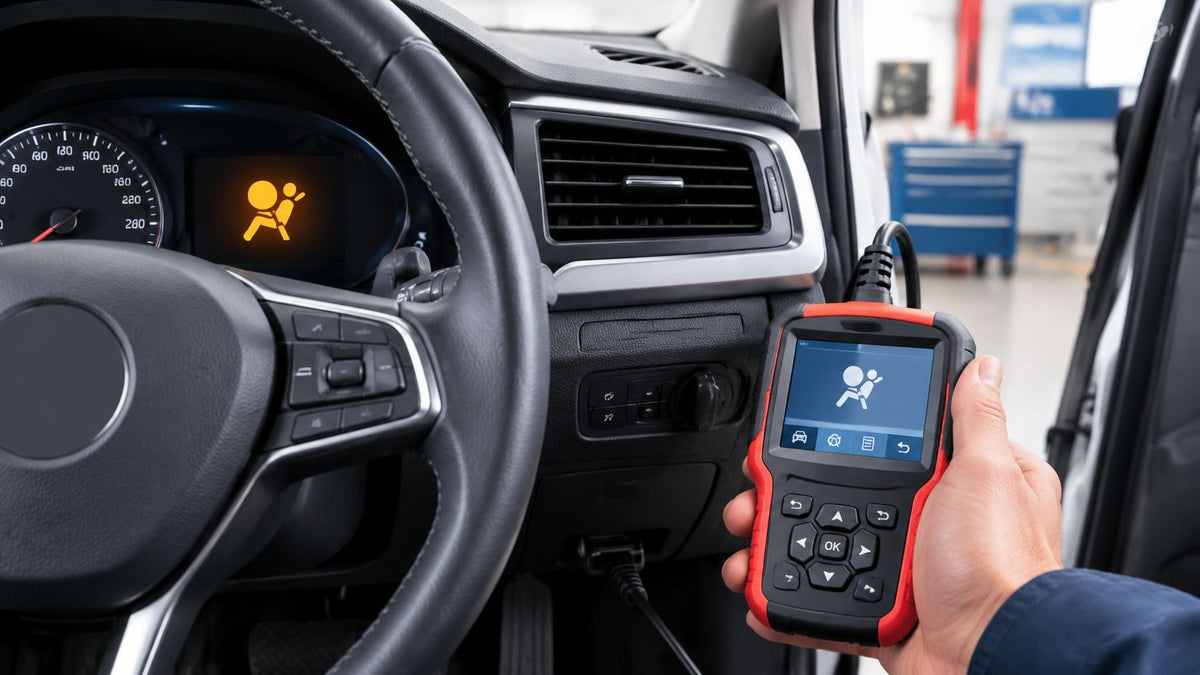
You back into a parking space, hear a dull bump, and the airbag icon stays lit after you restart. The car drives the same and the airbag covers look untouched. It's tempting to call it a leftover from a minor jolt and keep going. Don't do that.
The lamp isn't saying one airbag is bad. It's saying the restraint computer found a fault or stored an event somewhere in the system. A light that goes dark after a code erase doesn't prove anyone's protected. It only proves the telltale is no longer glowing.
Table of Contents
- What Your Airbag Light Is Really Telling You
- Crash-Related Causes Behind a Lit Airbag Light
- Non-Crash Faults That Turn the Light On
- How to Diagnose the Warning with an SRS Scan
- Checking Recalls and Crash History on Used Cars
- Choosing Between Reset, Replacement, and Dealer Repair
- Next Steps to Restore Your Airbag System Safely
What Your Airbag Light Is Really Telling You
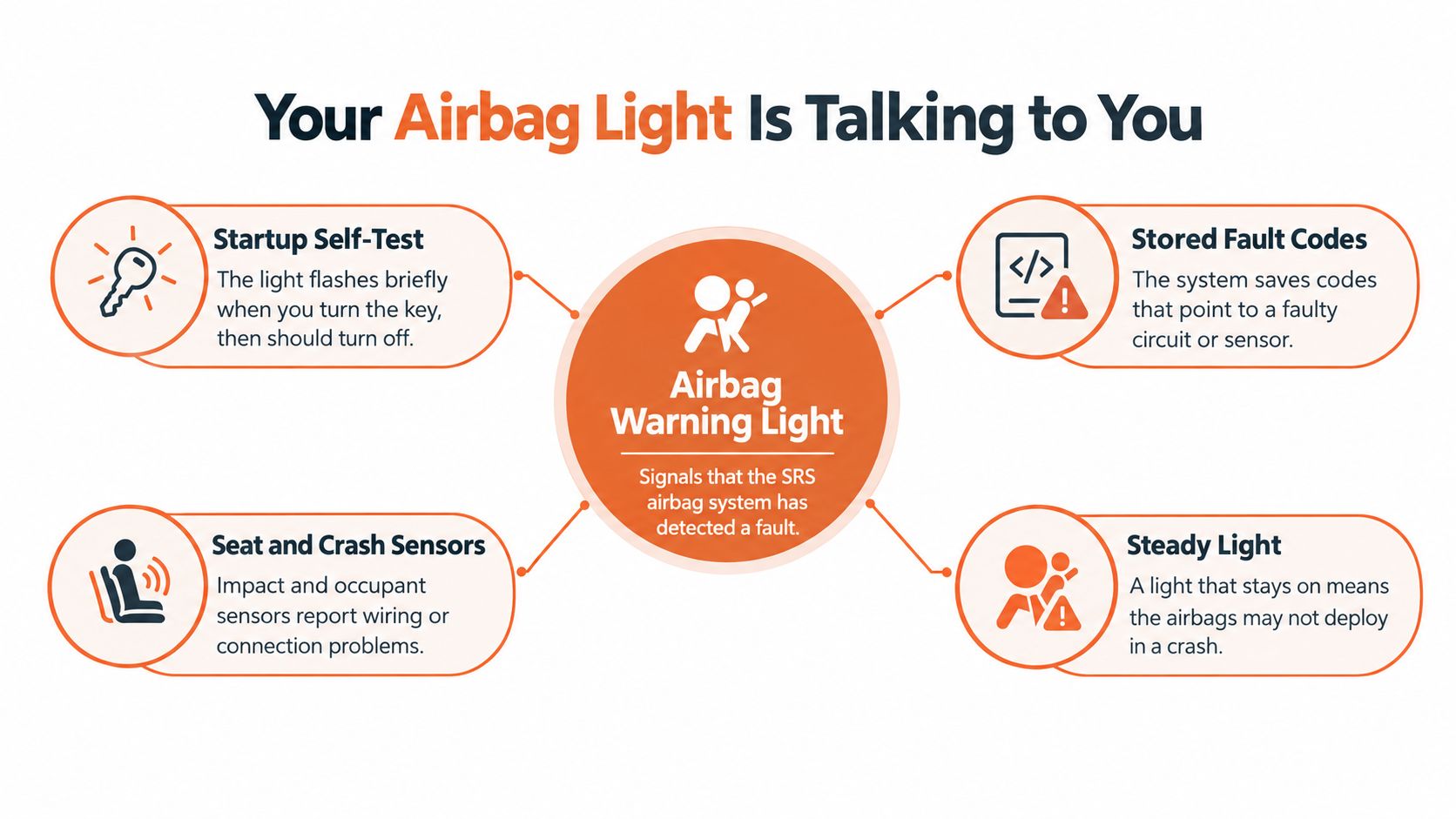
Think of the lamp like a smoke detector's test chirp. The chirp doesn't mean the kitchen's on fire. It means the detector checked itself. Your supplemental restraint system (SRS) does the same job every time you turn the key, watching the airbags, crash sensors, seat belt pretensioners, wiring, and control module.
In a manufacturer service bulletin hosted by NHTSA, the lamp is specified to illuminate for approximately 8 seconds at ignition, then turn off if the self-check finds no fault. Stored codes can remain in memory even after an intermittent electrical problem disappears. The lamp signals both that service is required and that trouble codes are waiting for a technician.
Three patterns that mean trouble
A normal startup is a brief glow, then darkness. Three other patterns point to a real fault.
- It stays on: The self-check failed or a hard code is already stored, so one or more restraints may not be available.
- It flashes abnormally: Some modules blink a pattern instead of holding steady. That pattern is still a fault signal, not a glitch.
- It returns after startup: The lamp goes out, then comes back on a later drive or over bumps. Intermittent opens often behave this way, and the module can keep the memory.
A light that finishes its brief startup check and stays dark means the system passed its test. Anything else is a stored event or live fault.
So when you're asking why airbag light on after a parking lot bump, start with the pattern. The icon can't name the failed part. It can only tell you the monitor caught something.
Crash-Related Causes Behind a Lit Airbag Light
A collision can leave evidence your eye misses. The cushion can stay in the dash while the module has already written a crash record, fired a belt, or lost a sensor. That's why a light can make sense even when nothing visibly deployed.
NHTSA crash-investigation documentation describes a 2011 Chevrolet Equinox in which the driver and passenger pretensioners were commanded about 21 milliseconds after the recorded crash event, logging code B0052-00. No one needed to see a bag leave the steering wheel for that lamp to have a reason to stay on.
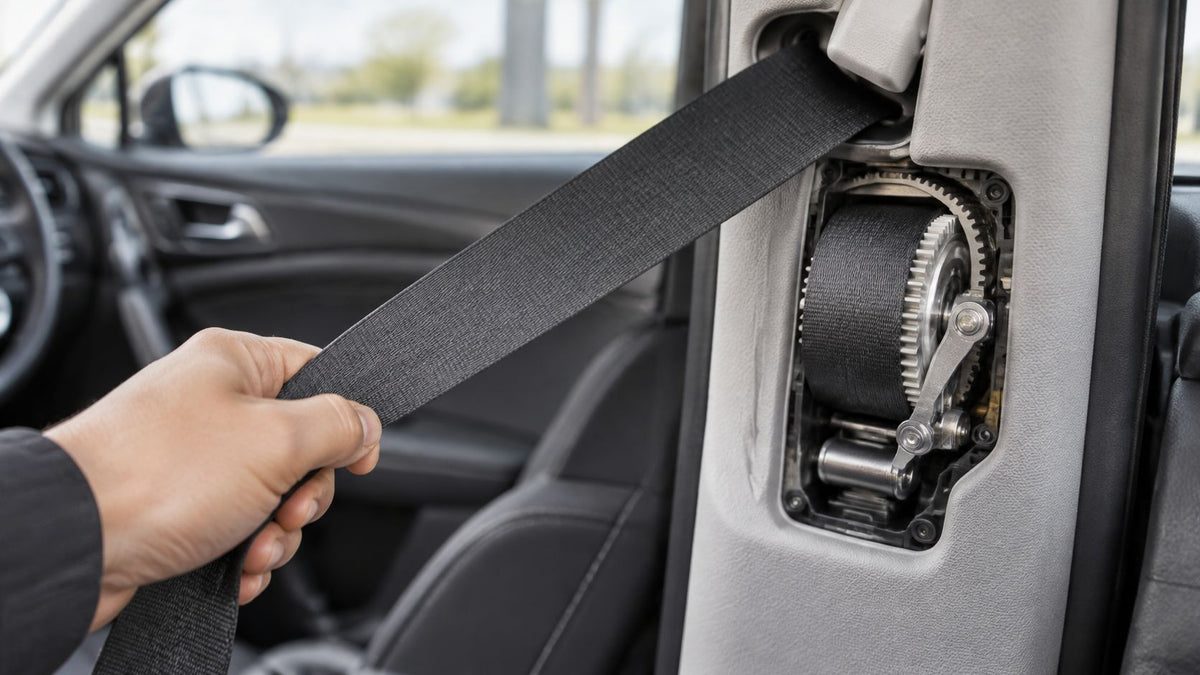
Pretensioners are pyrotechnic. They burn a small charge to pull slack from the belt almost instantly. Depending on design and crash direction, lap and shoulder stages can fire separately. Both may deploy in a frontal crash, while only the shoulder stage may fire in some side impacts or rollovers. Once fired, that part is spent and the circuit the module expects is gone.
What the impact leaves behind
| Cause | How It Triggers the Light | What Typically Fixes It |
|---|---|---|
| Deployed airbag | The module records deployment and sees an open circuit | Replace the cushion, then address module records |
| Fired pretensioner | A spent pyrotechnic stage no longer reads as ready | Replace that belt assembly |
| Crash data in the module | The controller stores the event and won't report ready | Clear records only after physical parts are corrected |
| Damaged impact sensor | The signal is missing, stuck, or out of range | Replace the sensor the code identifies |
| Pinched or torn connector | Impact or repair work opens the circuit | Repair the connector and harness, then recheck |
| Low-voltage event | A voltage dip during impact writes a stored fault | Confirm charging health, then repair the SRS fault |
Replacing only the visible airbag while leaving a fired pretensioner or crash record in place is why the lamp returns at the next key turn.
A low-speed hit can still store data. If the light appeared in the same minute as the impact, put crash history first on your list, then prove it with a scan instead of a guess.
Non-Crash Faults That Turn the Light On
Plenty of drivers never hit anything and still see the icon. The car idles, shifts, and stops as before, so the lamp feels optional. It isn't. The restraint computer is separate from the engine, and a steady light with a smooth drive can mean airbags or passenger occupant detection aren't available.
NHTSA recall records trace documented SRS faults to impact-sensor resistance, control-unit programming, occupant-classification modules, severe road vibration, and driving on a flat tire. Those records also describe warning-light faults under which multiple airbags could fail to deploy. No symptoms is not reassuring.
Faults from ordinary use
A failed buckle switch or occupancy mat often shows up after years of people climbing in and out. Corrosion under the seats works more slowly, especially after spills, wet clothing, or a leaking sunroof. The ribbon keeping the steering wheel airbag connected is another frequent open circuit. If the horn and wheel buttons died the same week, read about the clock spring before buying random sensors.
Software and occupant-classification faults need no bent metal. Rough-road vibration or limping home on a flat can push a marginal circuit over the line.
- When did it start? The same day as a battery swap or seat removal points away from a crash.
- Did anyone unplug a yellow connector? Interior and seat work often disturbs SRS plugs.
- Does it flicker over bumps? Flicker leans toward wiring. Steady from the first start leans toward a stored hard code.
- Did passenger airbag behavior change? That often tracks the occupancy or buckle circuit, not the driver cushion.
A car that runs normally with the SRS lamp on may already have part of its protection switched off. Don't wait for a drivability symptom this system won't give you.
How to Diagnose the Warning with an SRS Scan
A basic engine code reader is the wrong tool, and it creates false calm. Most entry-level scanners talk to the powertrain module and never open the restraint controller. No engine codes doesn't mean the airbags are fine.
NHTSA interpretation material supports diagnosing the controller itself, because stored airbag trouble codes and distinct self-diagnostic modes point to the exact circuit. Record the exact diagnostic trouble code and freeze-frame information, then inspect the connector, harness, sensor signal, and component that code names. Replacing a visibly damaged airbag without addressing fired pretensioners or module crash records leaves the warning active and the system not fully ready.
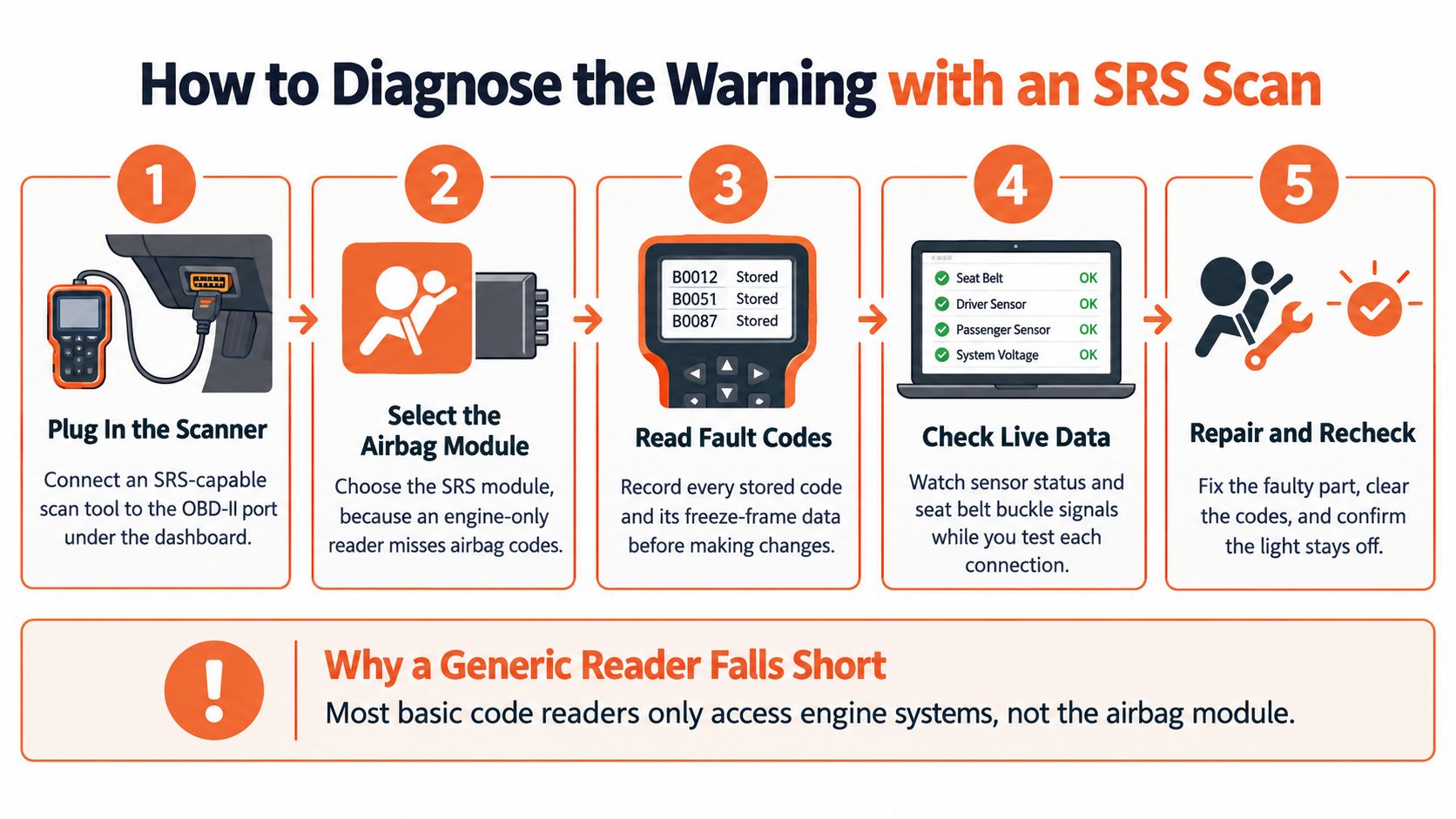
Do this in order
- Use an SRS-capable scan tool. Connect it and select the restraint module, not generic engine codes.
- Write down every code first. Save the full identifier and freeze-frame data before clearing anything.
- Match the code to one circuit. Inspect that connector, harness, and sensor while watching live status.
- Compare with manufacturer values. Resistance and signal checks on pyrotechnic circuits aren't guesswork.
- Repair, then clear and recheck. The lamp should complete a normal startup and stay off.
Pretensioners contain pyrotechnic initiators, so follow the maker's battery disconnection and wait-time procedures before unplugging yellow connectors. Don't use improvised resistor substitution to fool the monitor. It can hide a device that won't fire when needed. Clearing codes without repair does the same thing with a scanner.
This short walkthrough shows the scan and the parts commonly behind the code.
If your tool can't see the SRS module, stop there. Pay for a scan that can. Guessing from the icon leads to good parts being replaced while the actual open circuit stays under the seat.
Checking Recalls and Crash History on Used Cars
Auction cars, rebuilt titles, and quick private sales put two problems behind the same icon. One is an open safety recall. The other is crash data nobody cleared. Resetting the module before you know which problem you bought can hide the more dangerous one.
NHTSA's Takata recall spotlight reports approximately 67 million Takata inflators were recalled, linked to 28 confirmed U.S. deaths and at least 400 alleged injuries from exploding inflators. Heat, humidity, time, and moisture contribute to degradation. If the car lived in a hot, humid region, recall status comes before any reset.

Sort the light into three bins
Run the VIN for open recalls before clearing anything. A completed recall doesn't automatically fix every SRS light, and a cleared lamp doesn't replace a defective inflator.
- Open safety recall: It needs the manufacturer's remedy, not a code erase or junkyard airbag.
- Stored crash data or hard codes: Common on salvage buys, where the module remembers a deployment behind intact covers.
- True electrical fault: A sensor, pretensioner, wiring, or occupant-classification problem that still needs the exact code.
Rebuilt cars may also carry missing, mismatched, or incorrectly installed restraint parts. Before trusting the interior, apply a used car safety inspection mindset. Check matching connectors, belts that retract properly, intact covers, and plugs that haven't been bypassed.
If the light appeared the week you bought the car, don't reset first. Check the VIN, scan the module, then decide.
Choosing Between Reset, Replacement, and Dealer Repair
Once the scan and recall check are done, you're choosing a path for the module, not skipping the parts around it. Three routes cover most cases. They differ in programming needs, VIN pairing, turnaround, and overall expense, which you'll compare qualitatively for your vehicle. None replaces a deployed cushion or fired pretensioner.
Replace the module when the original is water-damaged, cracked, or won't communicate. A new unit usually needs programming and VIN pairing. A used module from another car is a gamble for the same reason. Turnaround depends on parts availability and a shop that can complete the setup.
Use dealer diagnosis and programming when the car is under warranty, a recall overlaps the fault, or you don't want to remove the module yourself. The dealer has factory tools and manufacturer-specific code access. That route costs more in labor and can take longer if a control unit is backordered.
Reset your original module when its hardware is sound and the problem is stored crash data or hard codes. You keep the unit the car already knows, so VIN pairing stays with it. Turnaround is often quicker than waiting for a new controller.
A reset removes crash data. It doesn't install airbags, belts, or sensors. Knowing what needs replacement versus what can be reset keeps you from hidden faults behind a dark lamp.
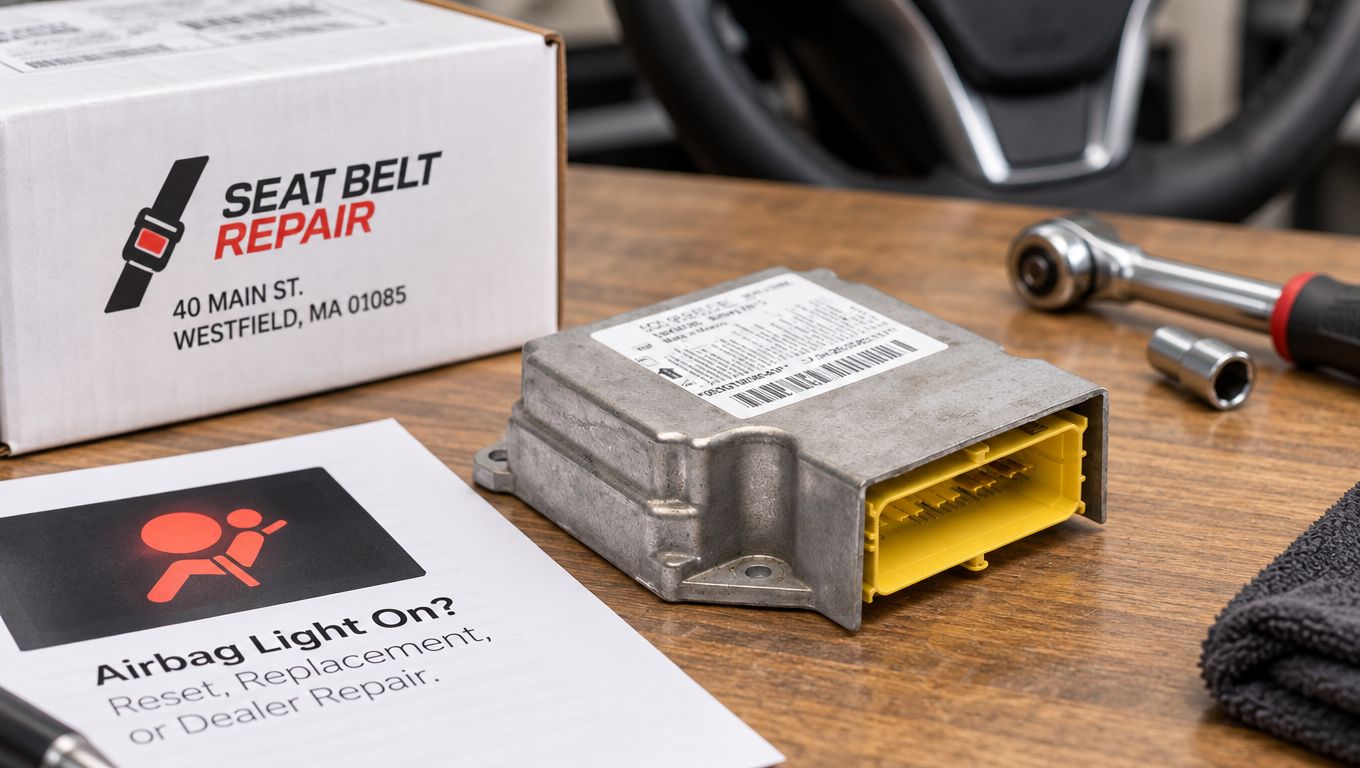
Seat Belt Repair operates a nationwide mail-in service for this third option. Through Airbag Light Reset - Mail in Your SRS Airbag Module After Accident, you ship your original SRS module and receive it reprogrammed to factory settings with crash data and hard codes cleared. The service uses OEM-level programming, includes functional testing before shipment, and typically returns modules within 24 hours of receipt. It doesn't include installation, deployed airbags, fired pretensioners, or damaged wiring.
Next Steps to Restore Your Airbag System Safely
Do these steps in order this week. Skipping ahead is how a dark lamp gets mistaken for a working system.
- Name the pattern. Note whether it's steady, flashing, or returning after startup, and when it first appeared.
- Scan the SRS module. Copy every code and freeze-frame line before anyone clears them.
- Check the VIN for recalls. Complete open remedies before treating this as an ordinary electrical repair.
- Replace used or damaged parts. That includes deployed airbags, fired pretensioners, failed sensors, and broken wiring.
- Decide on the module last. Reset the original if crash data remains. Replace and program it if the hardware is damaged.
A lamp that goes out isn't proof of protection. It's proof the telltale is off. A cleared warning on a car with a spent pretensioner, missing cushion, or open recall can hide the failure the system was built to announce.
After every physical component is corrected, reinstall the reset module, start the car, watch the startup check finish, and confirm the icon stays dark.
Seat Belt Repair resets SRS airbag control modules and repairs seat belt pretensioners by mail for drivers and shops dealing with a crash-related airbag light. If your codes point to stored crash data and the deployed parts are already replaced, visit Seat Belt Repair to start a module reset and return the restraint system to a ready state.

Laisser un commentaire
Ce site est protégé par hCaptcha, et la Politique de confidentialité et les Conditions de service de hCaptcha s’appliquent.