
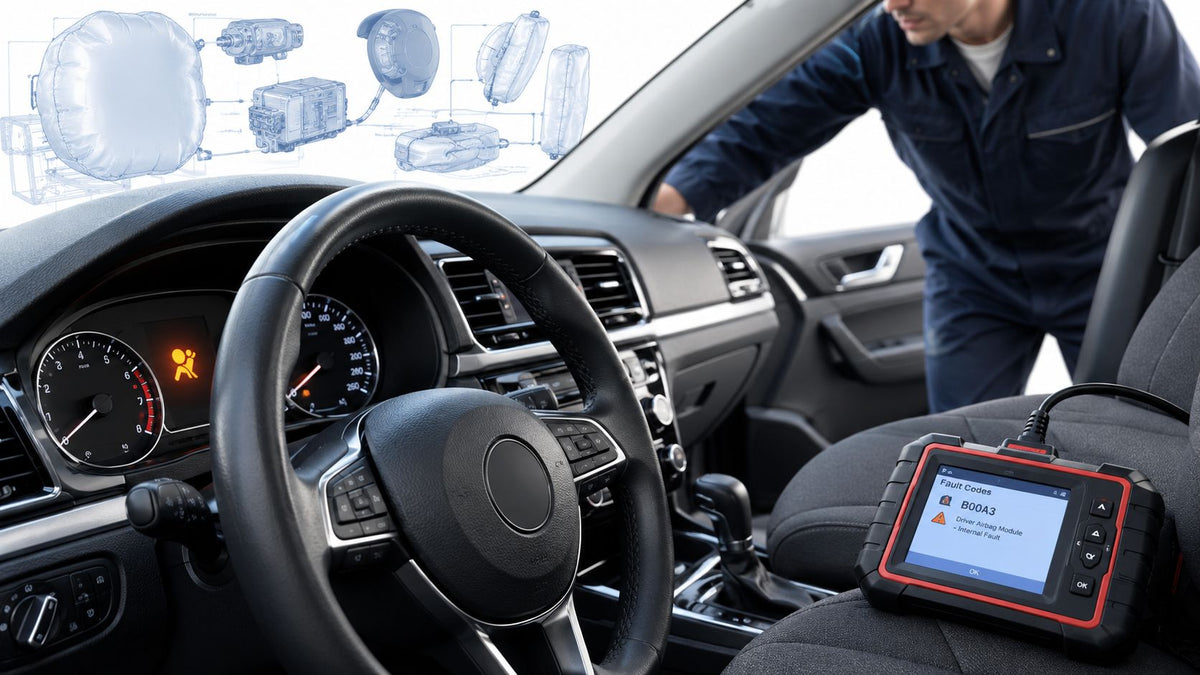
You start the car, glance at the dashboard, and notice the airbag symbol hasn't gone out. Maybe it appeared after a minor collision, after a repair, or on an ordinary commute with no obvious cause. The car seems to drive normally, but the light leaves an unsettling question: would the safety system work if you crashed?
Treat an airbag warning differently from a routine dashboard reminder. It means the restraint system has detected a fault, and you can't tell from the lamp alone which part is affected or whether a particular airbag or seat-belt pretensioner will function as designed. A proper diagnosis can turn that uncertainty into a clear next step: identify the fault, repair the cause, and verify the system rather than switching off the warning.
Table of Contents
- Why That Little Light on Your Dashboard Demands Attention
- What the Airbag Warning Light Actually Means
- The Most Common Reasons the Airbag Light Comes On
- How a Technician Diagnoses an SRS Fault Step by Step
- Why the Light Stays On After a Collision
- Dealership Replacement vs Professional Reset and Repair
- Real Situations Drivers and Shops Run Into
- Your Next Step and What to Avoid
Why That Little Light on Your Dashboard Demands Attention
A driver might first notice the light while pulling away from a body shop. Another might see it after sliding the passenger seat forward to vacuum, or after buying a rebuilt vehicle that looks tidy but has a complicated repair history. In each case, the immediate temptation is the same: hope it's a harmless sensor glitch and keep driving.
The concern is justified. The Supplemental Restraint System (SRS) includes airbags and seat-belt pretensioners, which are designed to help protect occupants in a crash. NHTSA estimates that frontal airbags reduced occupant fatalities by 14% for people not wearing seat belts and 11% for people wearing them. The agency also estimated 2,790 lives saved in 2017 and 50,457 lives saved from 1987 through 2017 (NHTSA's frontal-airbag effectiveness report).
Those figures explain why an SRS warning deserves attention, but they don't tell you what's wrong with your car. The lamp can't identify the failed component, and the vehicle may still start, steer, and brake normally even when part of its restraint system has a fault.
Practical rule: Don't treat a dark or ordinary-looking dashboard as proof that the restraint system is ready. Get the fault identified before relying on it.
The right next step isn't to panic or to guess. It's to find out what the SRS module has recorded, then distinguish a repairable wiring or component issue from a post-collision module condition. That difference matters especially when parts have already been replaced, but the warning remains.
What the Airbag Warning Light Actually Means
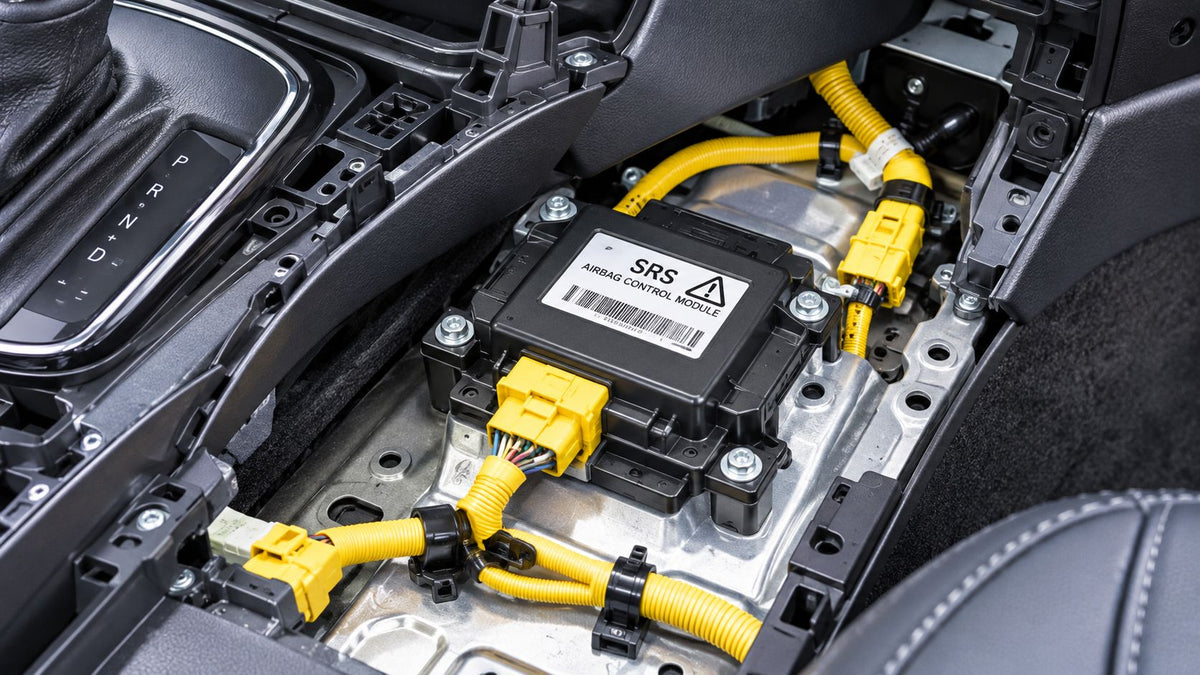
Think of the SRS as a network, not a single airbag. Depending on the vehicle, the network can include airbags, crash sensors, seat-belt pretensioners, passenger-seat occupant detection, the steering-wheel clockspring, wiring, and an SRS control module. The dashboard uses one warning lamp to report a problem detected somewhere in that system.
That's why the light doesn't name the failed part. A connector beneath a seat and an internal module fault can both turn on the same symbol, but they need different tests and repairs.
Self-test or retained fault
When you switch on the ignition, many vehicles illuminate the airbag lamp briefly as part of a system check. It commonly goes out after approximately 6–8 seconds (SRS system and warning-light guidance). That brief illumination is the vehicle checking the indicator. It isn't the same as a warning that stays lit.
If the lamp remains on after the self-test, returns once you've started driving, or flashes, the SRS has detected a condition that needs diagnosis. A flashing pattern may carry information, but don't assume you can identify the fault just by watching it. The correct interpretation depends on the vehicle and its diagnostic system.
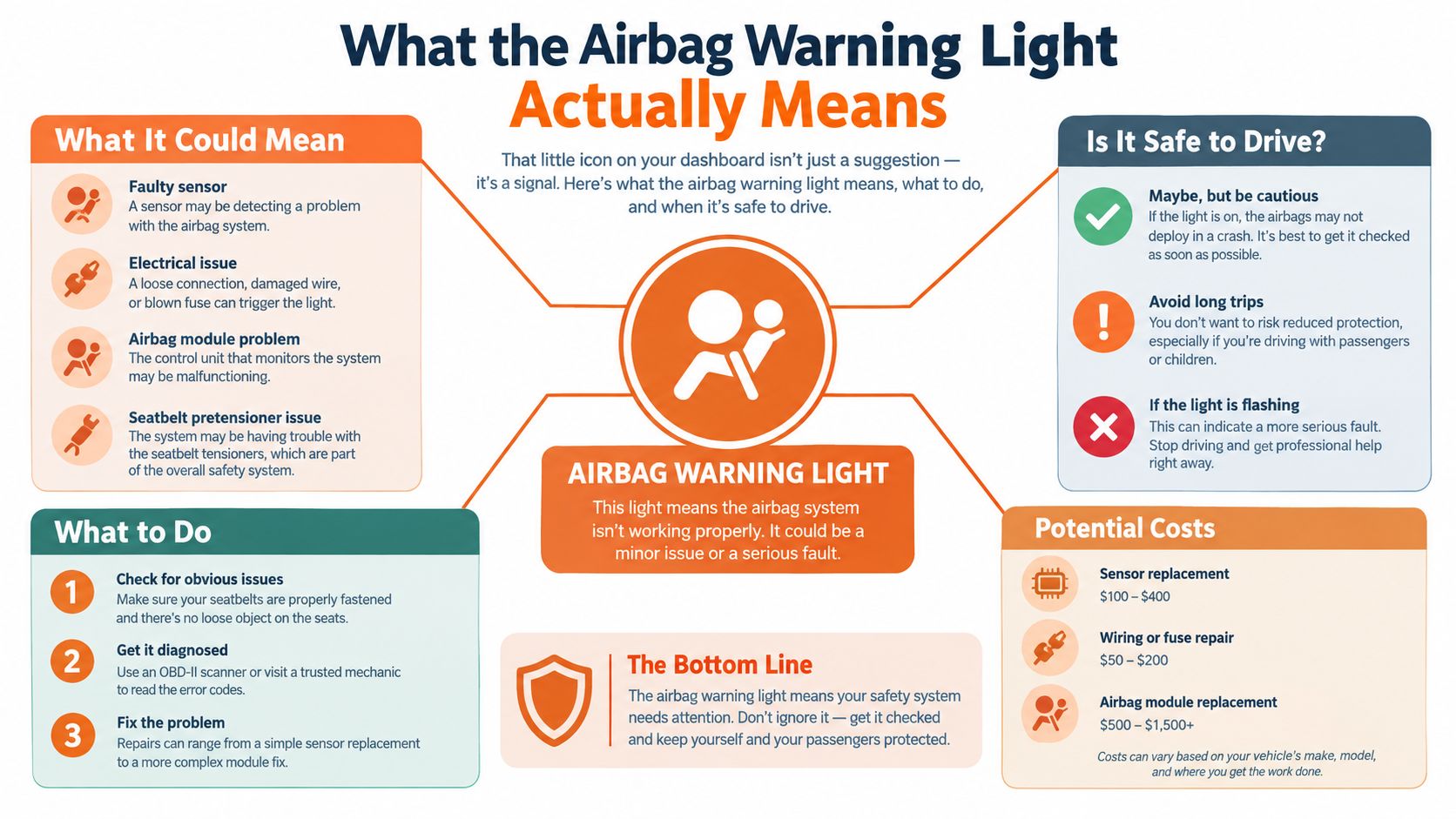
An illuminated warning doesn't prove that every airbag has stopped working, and it doesn't confirm that any specific one will deploy. It means the system has recorded a fault, so you shouldn't count on the restraint system operating normally until someone diagnoses it.
That uncertainty is the reason to scan the SRS module rather than replace the part that seems most likely. A technician needs the stored fault information to determine whether the issue sits in a circuit, a sensor, a restraint component, or the module itself.
The Most Common Reasons the Airbag Light Comes On
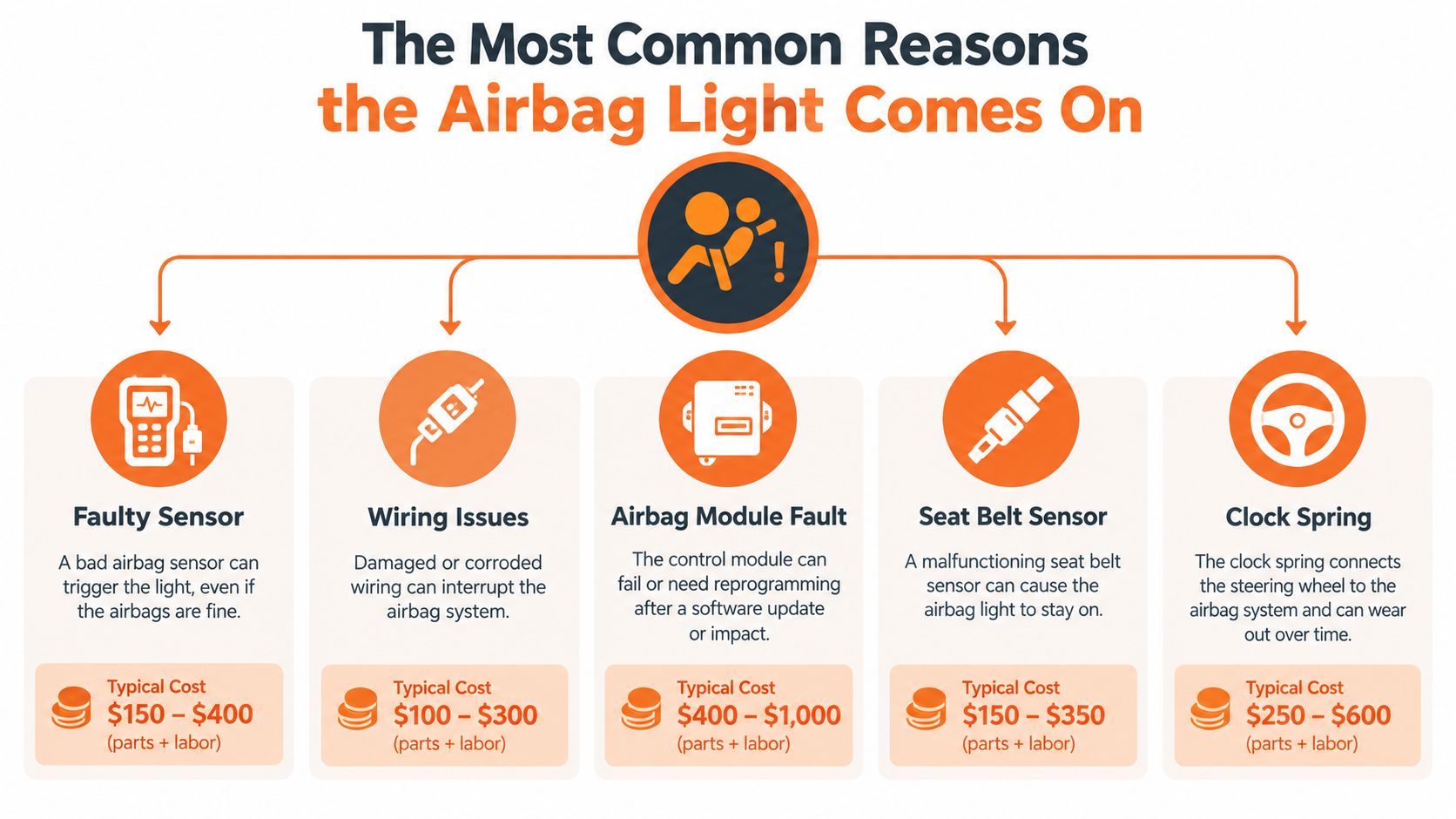
A warning can begin with something as ordinary as a seat being moved. Under-seat connectors can be disturbed during cleaning or repair, and wiring can be damaged or corroded. If the light appeared after someone removed a seat or worked in the cabin, ask the technician to inspect those connections. Don't reach under the seat to unplug or test an SRS connector yourself.
The steering wheel has its own moving electrical connection, called a clockspring. It keeps the driver-airbag circuit connected as the wheel turns. Wear, damage, or contamination can create a fault. If the horn or steering-wheel controls also stop working, mention that to the technician; a closer look at what a clockspring does can help explain why those symptoms may appear together.
A crash sensor or its wiring can also be affected by impact, even when the collision looks minor from outside. A driver might leave a parking-lot bump without a deployed airbag, then see the SRS lamp later. That timing doesn't establish a cause, but it makes a collision-related scan and inspection sensible.
Seats and restraints can trigger the same warning
A passenger-seat occupancy system helps the vehicle determine whether someone is seated there and how the restraint system should operate. A fault in the sensor, its wiring, or the seat's condition can trigger the warning. A child seat, heavy object, aftermarket seat cover, or recent seat replacement may be relevant context, but only a scan can show whether the occupancy system has logged a fault.
Seat-belt pretensioners are another possible source. They tighten the belt during a crash; if one has fired, it may need replacement under the vehicle's repair procedures. A belt that still buckles and retracts doesn't prove its pretensioner is ready for another collision. Manufacturer procedures treat deployed airbags and deployed pretensioners as distinct post-crash conditions, so both need attention when the codes or inspection indicate deployment (post-collision SRS diagnosis guidance).
An internal SRS control-module fault is possible too, particularly after a collision or when a replacement module isn't compatible with the vehicle. But several common causes are connectors, wiring, sensors, or physical restraint parts. A warning light alone isn't a reason to condemn the module.
How a Technician Diagnoses an SRS Fault Step by Step
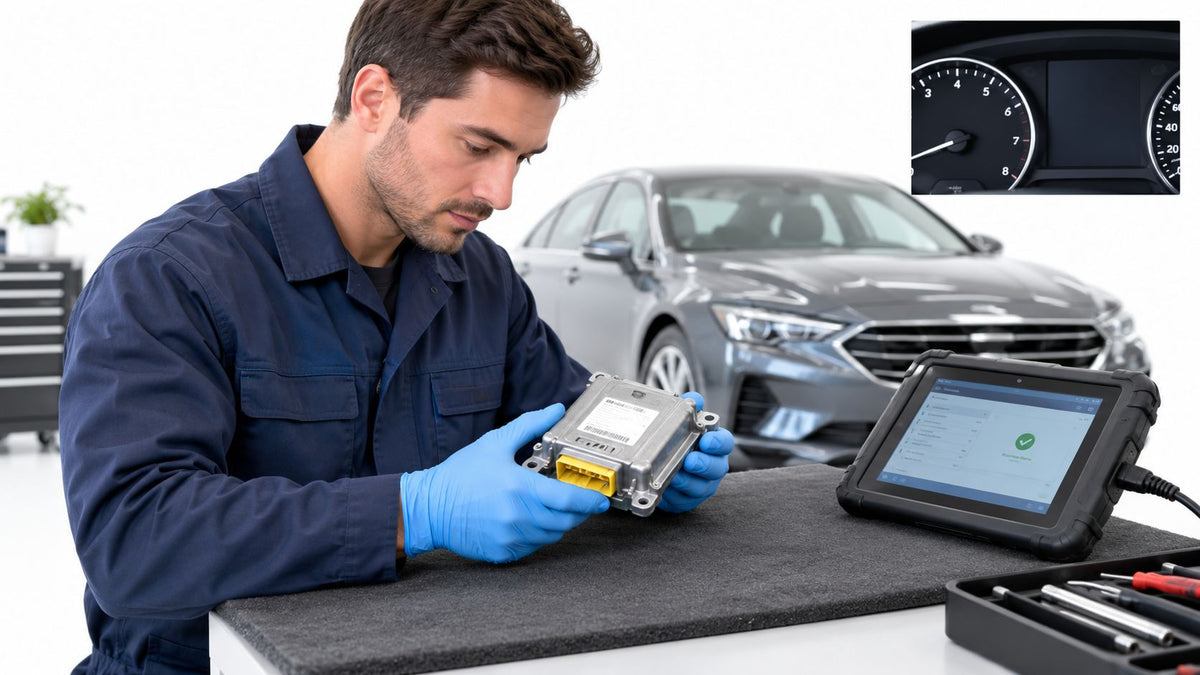
Diagnosis starts with the right tool. A basic engine-code reader may not communicate with the SRS module, so a scan that shows no engine faults doesn't establish that the airbags or pretensioners are fault-free. The technician needs a diagnostic tool that can access the vehicle's SRS system.
What the shop should check
First, the technician retrieves and records the manufacturer-specific SRS codes. Those codes may point toward an open or shorted airbag circuit, a pretensioner wiring fault, a sensor issue, a warning-lamp circuit problem, or an internal module fault. The code is a starting point for testing, not permission to replace a part without confirming the cause.
Next comes a physical inspection guided by the scan results. The technician may check connectors and harnesses beneath both front seats, look for impact damage or corrosion, inspect the clockspring and relevant steering-column wiring, and examine areas affected by collision repairs. Rodent damage or a connector left unplugged after interior work can also explain a circuit fault.
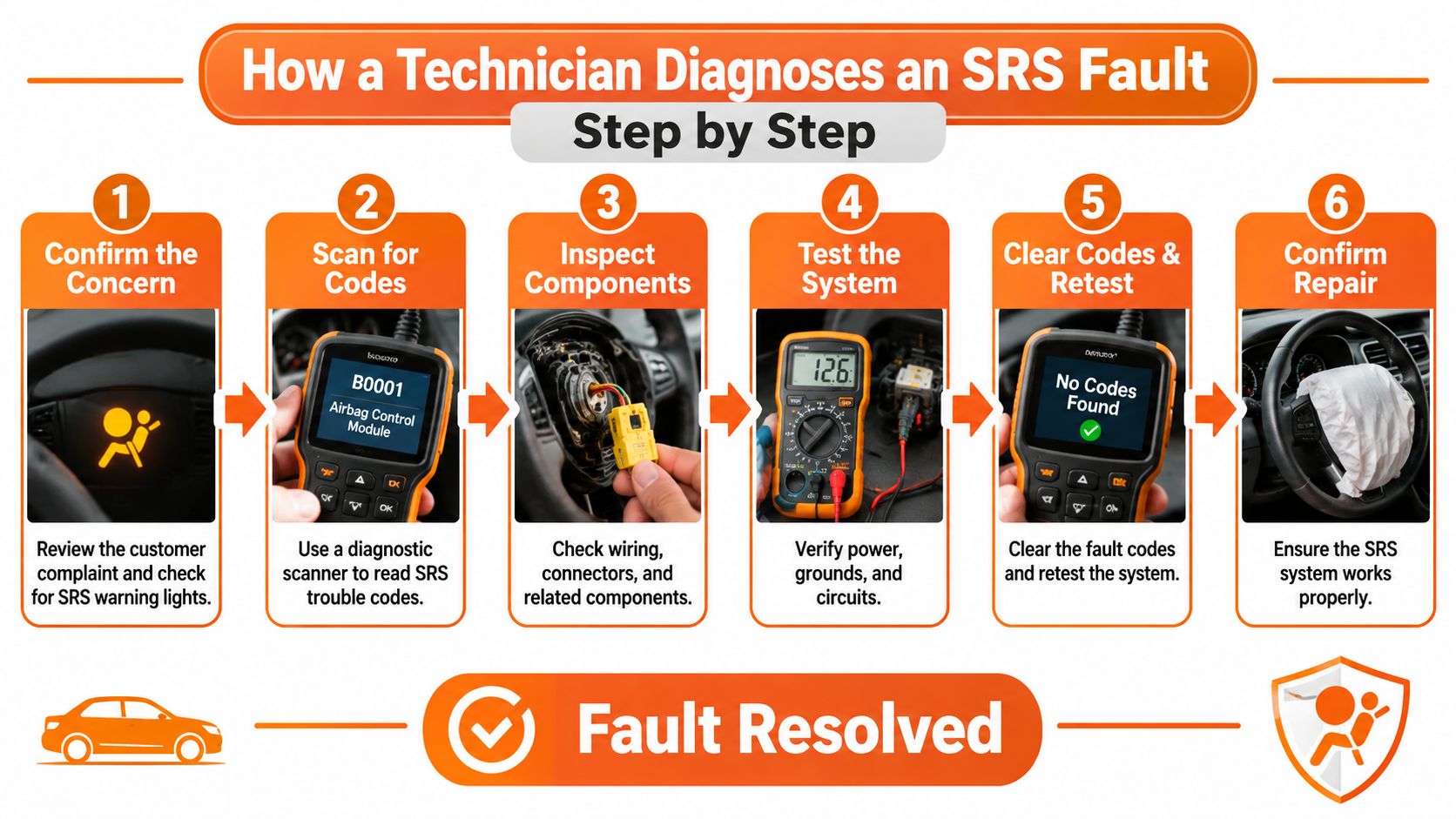
Battery condition matters too. The technician verifies voltage rather than assuming the module is defective, because unstable or low voltage can complicate SRS diagnosis. If a code points to a control-module issue, the shop can determine whether it's an active electrical fault, stored crash information, or a damaged module, using procedures appropriate to the vehicle.
Safety warning: Never probe yellow SRS connectors with a conventional test light or ohmmeter. Airbag and pretensioner circuits contain pyrotechnic initiators, and improper testing can trigger deployment.
A battery disconnect isn't a dependable way to erase crash data or repair an active circuit problem. The module may retain information, and the underlying fault can remain. A guide to the restraint control module can clarify the module's role, but diagnosis still needs vehicle-compatible equipment and a technician who can interpret the codes.
The important distinction is what the scan identifies. A wiring fault calls for finding and repairing the circuit problem. Stored crash data or unresolved post-collision codes call for a different path. Clearing a code before understanding it can erase useful diagnostic information without restoring the restraint system.
Why the Light Stays On After a Collision
After a collision, drivers often expect the warning to disappear once a deployed airbag has been replaced. It may not. The SRS control module can retain crash-event information, and the system may also have faults involving a fired pretensioner, damaged sensor, disconnected wiring, or another restraint component. Replacing one visible part doesn't automatically restore everything the module monitors.
Disconnecting the battery isn't a reliable shortcut. It won't repair an open circuit, confirm that a pretensioner is serviceable, or necessarily clear stored crash data. If the light remains on, the vehicle needs an SRS scan that identifies what's still unresolved.
Repair first, then restore the module
A sound post-collision workflow begins by recording the SRS codes and identifying all deployment-related faults. The technician then checks the components and circuits named by those codes, verifies which restraints deployed, and replaces or services parts as required by the vehicle manufacturer. A seat belt that still seems to work may contain a deployed pretensioner, so its operation by feel isn't enough to confirm it's safe.
Only after the physical and electrical issues are addressed should the shop decide whether the module needs a professional reset, reprogramming, or replacement. Code clearing removes a warning or stored fault through a scan tool. System restoration means correcting the cause and confirming that the module and connected restraints are back in a ready condition. One isn't proof of the other.
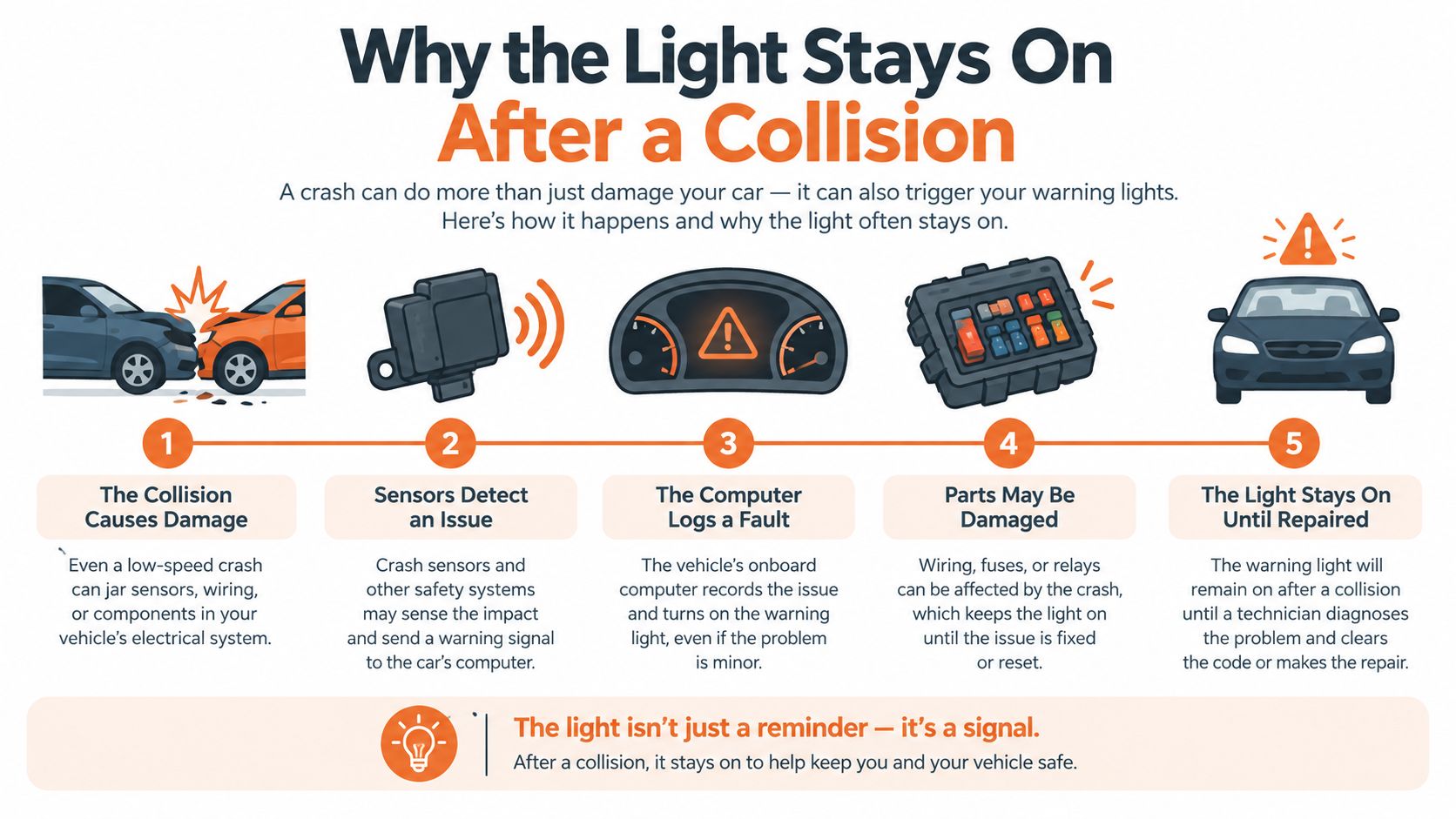
This distinction matters for rebuilt and salvage vehicles. A replacement module may carry crash information from another vehicle, or it may not match the car's equipment. A warning that stays on after parts installation may therefore point to compatibility or unresolved data, not a faulty dashboard lamp.
If a collision has also raised questions about documentation, insurance, or what to do next, AskLegally on next steps may help you understand the broader issues. For the vehicle itself, keep the repair focused on the codes, the parts, and the module's final operating condition.
Dealership Replacement vs Professional Reset and Repair
A dealership can diagnose the vehicle, install a new OEM module when needed, and handle programming or VIN coding as part of the repair. That route can make sense if the original module is physically damaged, incompatible, or cannot be restored under the manufacturer's procedures. It also gives the owner a single place to manage diagnosis and installation, though replacement parts, labor, programming, and parts availability can affect the total bill and wait.
A professional reset or repair is a different option when the existing module remains serviceable and the issue is stored crash data or hard codes that can be addressed through a module-specific process. Seat-belt assemblies may also need professional repair if a pretensioner has deployed. The right choice depends on the diagnosis, not on which option sounds simpler.
| Factor | Dealership Replacement | Mail-In Reset and Repair |
|---|---|---|
| Best fit | A damaged, incompatible, or non-restorable module, or a repair requiring full in-person service | A serviceable module with crash data, or a belt assembly eligible for repair |
| Parts approach | New replacement parts and vehicle-specific programming where required | Works with the original module when it can be professionally restored; belt repairs use appropriate replacement components |
| Installation | The dealership handles installation and programming | The module or belt is sent in; the owner or local shop reinstalls it |
| Cost and timing | New parts and labor can raise the total, and parts availability can add waiting | Avoids replacing a serviceable module, but shipping and local reinstallation still factor into the process |
| Next step | Ask for the scan results and a parts-and-labor estimate | Confirm the diagnosed fault and service eligibility before removing parts |
A mail-in service isn't a substitute for diagnosing a sensor, connector, or damaged harness. It handles the component sent for service, while the owner or local shop remains responsible for correct removal, installation, and vehicle-level verification. Before choosing a path, review what may need replacement or reset after a crash and ask the technician to explain which fault the repair will address.
Real Situations Drivers and Shops Run Into
A salvage rebuilder buys a vehicle at auction. The body panels look repaired, but the airbag light stays on. Rather than order a module immediately, the shop scans the SRS and finds stored crash information from an earlier collision. It confirms that the installed restraints and wiring are correct, then determines whether the original module can be professionally reset or needs replacement. Without that scan, the rebuilder could spend money on parts that don't address the actual fault.
A body shop finishes collision work and installs replacement airbags, yet the warning returns during startup. The new airbags aren't the whole system: a pretensioner may have fired, a sensor circuit may still be open, or the module may retain crash data. The shop records the codes, checks every related restraint and circuit, then deals with the module only after the physical repairs are complete.
A daily driver notices an intermittent lamp after a minor parking-lot impact. Because the light comes and goes, the driver assumes it's unimportant. But intermittent faults can still indicate a restraint problem, and some vehicle recalls involve faults that can deactivate a passenger airbag. For example, a NHTSA recall described a sporadic fault that could deactivate the front passenger airbag, and the agency advised that no one sit in that position until the repair (NHTSA recall report).
The same dashboard symbol can reflect very different histories. The useful question isn't whether the lamp can be turned off; it is whether a scan, inspection, and final verification show that the restraint system has been restored.
Your Next Step and What to Avoid
If the airbag warning is lit, take it as a reason to arrange diagnosis, not as proof that every restraint has failed. Until a technician identifies the affected circuit or component, avoid relying on the system as though it's confirmed ready. If a recall notice or manufacturer guidance identifies a particular seating position as unsafe, keep everyone out of that position until the repair is complete.
Use this immediate checklist:
- Check for recalls: Look up the vehicle identification number through the manufacturer or the official recall service. Follow any instructions about which seats to avoid.
- Book an SRS scan: Ask for the manufacturer-specific codes and an explanation of what each one points to. An ordinary engine-code scan may not read the restraint module.
- Leave yellow connectors alone: Don't probe or unplug airbag and pretensioner wiring as a DIY test.
- Don't rely on a battery reset: Disconnecting the battery won't reliably erase crash data or fix an active fault.
- Repair, then verify: Have the cause addressed and confirm the warning stays off through the complete startup self-test, with no unresolved SRS faults.
The airbag light is information, not noise. The useful fix isn't making it disappear; it's finding out what the SRS recorded, correcting the cause, and confirming the system's condition.
Seat Belt Repair offers mail-in service for eligible SRS airbag control modules and seat-belt pretensioners, including module resets and pretensioner repairs using OEM components. If a collision left your warning light on after physical repairs, visit Seat Belt Repair to review its services and determine whether your module or belt assembly is a fit.

Laisser un commentaire
Ce site est protégé par hCaptcha, et la Politique de confidentialité et les Conditions de service de hCaptcha s’appliquent.