
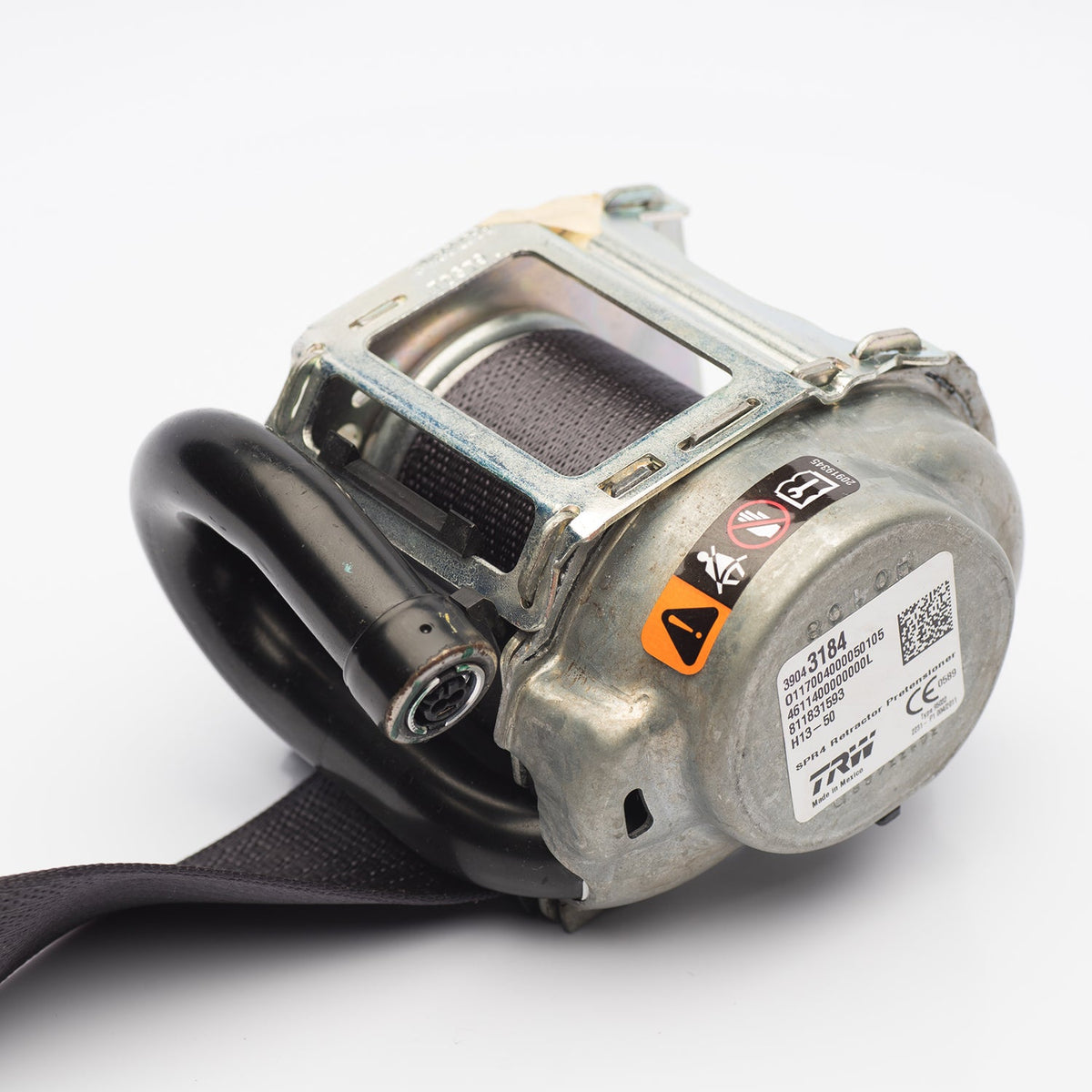
A seat belt that’s stuck, locked, or won’t pull out can be caused by anything from a simple twist in the webbing to a deployed seat belt pretensioner after an accident.
The good news? Not every locked seat belt needs to be replaced.
Before spending hundreds of dollars on a new OEM seat belt assembly, here are the most common causes of a stuck seat belt, starting with the easiest and least expensive fixes.
Why Is My Seat Belt Stuck?

A seat belt retractor is designed to allow the webbing to move freely during normal driving while locking during sudden movement or a collision.
If your seat belt won’t pull out, won’t retract, or only moves an inch or two before stopping, one of several things may be happening.
1. Twisted or Jammed Seat Belt Webbing
Typical cost: $0
Start with the simplest possibility.
Seat belt webbing can twist as it retracts and become wedged against the retractor, trim panel, or anchor point.
Pull the belt out as far as possible and inspect the webbing for twists or folds. Also check the opening where the belt passes through the interior trim.
If you can straighten the webbing and the belt begins moving normally again, no repair may be necessary.
2. Dirt or Debris Around the Retractor
Typical cost: $0–$20
Dirt, dust, pet hair, crumbs, and other debris can interfere with the seat belt retractor mechanism.
If the belt feels sluggish or stops intermittently, inspect the retractor opening and surrounding area.
Avoid forcing the belt or spraying oily lubricants into the mechanism. Seat belts are safety equipment, and anything affecting the webbing or internal components should be treated carefully.
3. Vehicle Is Parked at an Angle
Typical cost: $0
Seat belt retractors use an inertia-sensitive locking mechanism.
If the vehicle is sitting on a steep incline, lift, ramp, or uneven surface, the retractor may remain locked because of the vehicle's angle.
Move the vehicle onto level ground and try the seat belt again.
4. Worn or Damaged Retractor
Typical cost: varies
If the seat belt pulls out normally but retracts very slowly—or doesn't retract at all—the retractor mechanism may be worn or damaged.
This is more common on older or high-mileage vehicles.
Because the retractor is part of the vehicle's occupant-restraint system, a malfunctioning assembly should be professionally inspected, repaired, or replaced.
5. Inertia Lock Has Been Triggered
Seat belt retractors are specifically designed to lock when they detect sudden movement.
Sometimes the mechanism can remain locked after transportation, a hard impact, or unusual positioning even though the collision pretensioner itself has not deployed.
Place the assembly in its normal installed orientation and gently test the belt.
If it continues hitting a solid stop, especially after an accident, the problem may instead be a deployed pretensioner.
6. Frayed, Cut, or Damaged Seat Belt Webbing
Damaged webbing can bunch inside the retractor and prevent the seat belt from extending or retracting properly.
Inspect as much of the webbing as possible for:
- Cuts
- Fraying
- Burns
- Tears
- Severe staining
- Pet damage
- Excessive wear
Never splice, sew, or patch damaged seat belt webbing.
SeatBeltRepair.com provides professional seat belt webbing replacement, allowing the original seat belt assembly to be restored without purchasing an entirely new assembly.
7. Seat Belt Locked After an Accident

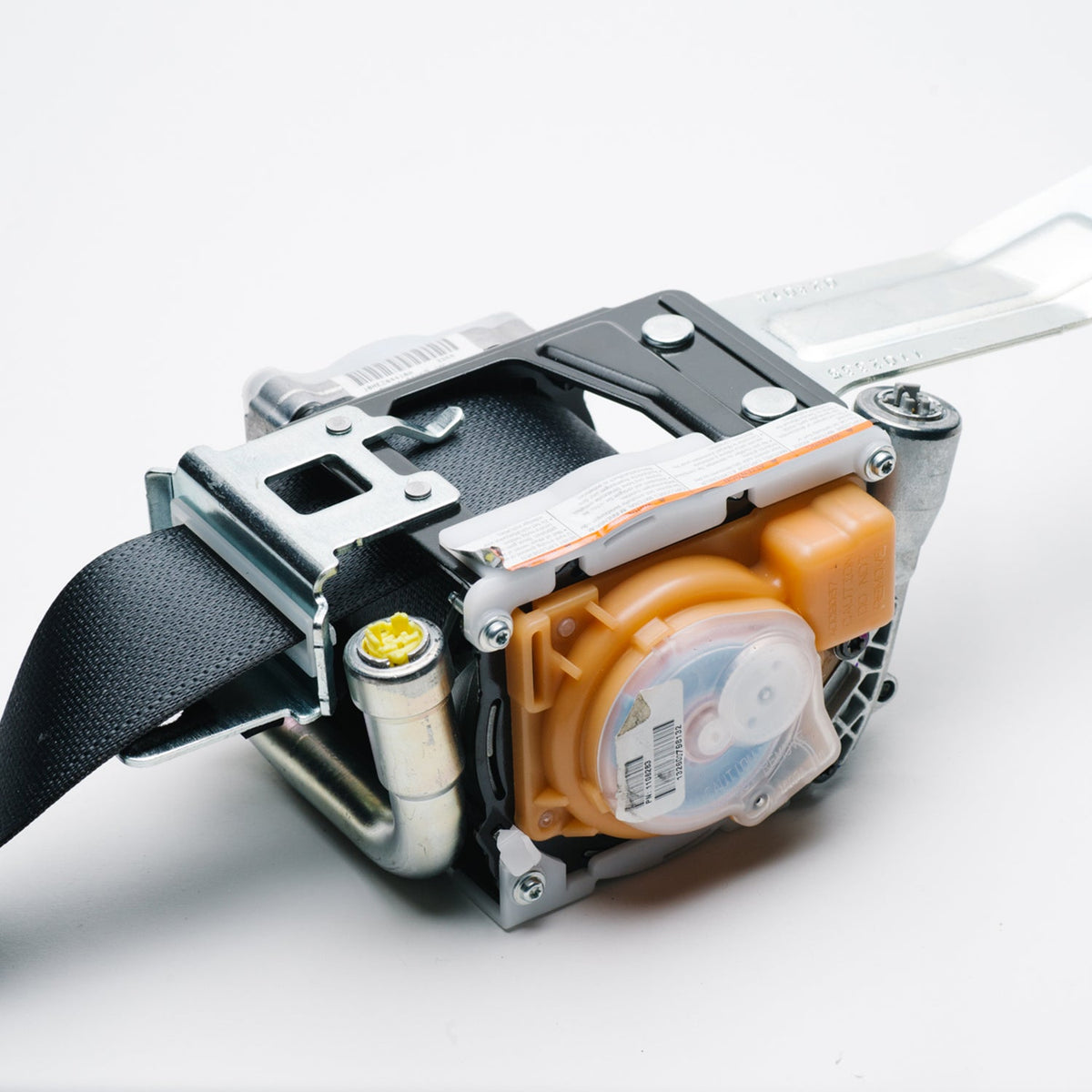
If your seat belt became completely locked after a collision, there is a strong possibility that the seat belt pretensioner deployed.
This is especially common when:
- The vehicle was involved in an accident
- Airbags deployed
- The SRS/airbag warning light is illuminated
- The belt retracts completely but will not pull back out
- The belt moves only slightly before hitting a hard stop
During a collision, the pretensioner activates to rapidly tighten the seat belt and help secure the occupant.
Once activated, the pretensioner requires professional service before the seat belt can function normally again.
Do You Need to Buy a New Seat Belt?
Not necessarily.
Dealerships and body shops may quote hundreds of dollars for a complete replacement seat belt assembly.
Instead, you can mail your original locked seat belt assembly to SeatBeltRepair.com for professional seat belt pretensioner repair.
You keep your original OEM seat belt assembly while avoiding the cost of buying a complete replacement.
How to Tell If a Seat Belt Pretensioner Deployed
A few signs strongly suggest pretensioner deployment:
The seat belt won't pull out.
It may move an inch or two and then hit a firm stop.
The problem started immediately after an accident.
A collision is one of the strongest indicators that the pretensioner activated.
The SRS or airbag light is on.
The vehicle may have stored crash-related faults associated with the restraint system.
Multiple seat belts are locked.
Depending on the collision and vehicle, more than one pretensioner may deploy.
If the seat belt locked immediately following an accident, professional inspection and repair should be your next step.
Seat Belt Repair vs. Replacement

Replacing an entire OEM seat belt assembly can get expensive—especially when several belts deployed in the same accident.
Professional repair allows the original assembly to be serviced rather than automatically replacing the entire unit.
This is particularly valuable for:
- Collision repair shops
- Auto body shops
- Salvage rebuilders
- Copart and IAA vehicle buyers
- Used-car dealers
- Automotive repair facilities
- DIY vehicle rebuilders
What NOT to Do With a Locked Seat Belt
Don't keep yanking on it.
If the pretensioner deployed, pulling harder won't restore it.
Don't cut the webbing.
Cutting or modifying seat belt webbing can compromise the restraint system.
Don't splice damaged webbing.
Seat belt webbing is safety-critical and should be professionally replaced.
Don't attempt to defeat the locking mechanism.
The seat belt is part of the vehicle's supplemental restraint system and must function correctly to protect an occupant.
For Body Shops and Salvage Rebuilders
Locked seat belts are extremely common when rebuilding collision vehicles.
Instead of automatically ordering expensive replacement assemblies, remove the affected seat belts and send them to SeatBeltRepair.com for professional repair.
This can significantly reduce parts costs when rebuilding vehicles with multiple deployed restraint components.
It also lets shops retain the vehicle's original seat belt assemblies rather than searching for matching used belts or waiting for expensive OEM replacements.
Frequently Asked Questions
Why won't my seat belt pull out after an accident?
The seat belt pretensioner may have deployed during the collision. Once activated, the belt can remain completely locked and require professional repair or replacement.
Can a locked seat belt be repaired?
Yes. Depending on the condition of the assembly and the cause of the failure, a professionally serviced seat belt pretensioner can allow you to retain the original seat belt assembly rather than purchasing a complete replacement.
Why is my seat belt locked even though the airbags didn't deploy?
Seat belt pretensioners and airbags do not necessarily deploy together in every collision. Depending on the impact and vehicle's restraint-system strategy, a pretensioner may activate even when an airbag does not.
Can damaged seat belt webbing be replaced?
Yes. If the webbing is frayed, cut, burned, worn, or otherwise damaged, professional seat belt rewebbing can replace the webbing while retaining the original assembly when appropriate.
Should I buy a used seat belt from a salvage yard?
A used assembly may have an unknown accident history, deployment history, or internal condition. Repairing your vehicle's original seat belt assembly eliminates the uncertainty of buying an unknown used unit.
How long does seat belt repair take?
SeatBeltRepair.com specializes in fast mail-in seat belt repair. Remove the affected assembly from your vehicle, ship it in for service, and it is professionally repaired and returned to you.
The Bottom Line
If your seat belt is stuck and won't move, start with the simple possibilities: twisted webbing, vehicle angle, debris, or an improperly positioned retractor.
But if the seat belt became locked after an accident and hits a hard stop when you try to pull it out, the seat belt pretensioner may have deployed.
That doesn't automatically mean you need to purchase an expensive new seat belt assembly.
SeatBeltRepair.com specializes in professional mail-in seat belt repair, pretensioner repair, and seat belt webbing replacement.
Keep your original seat belt assembly. Avoid unnecessary replacement costs. Get your seat belt professionally repaired and back on the road.
Visit SeatBeltRepair.com to get started or call/txt 413-564-1242

Leave a comment
This site is protected by hCaptcha and the hCaptcha Privacy Policy and Terms of Service apply.