
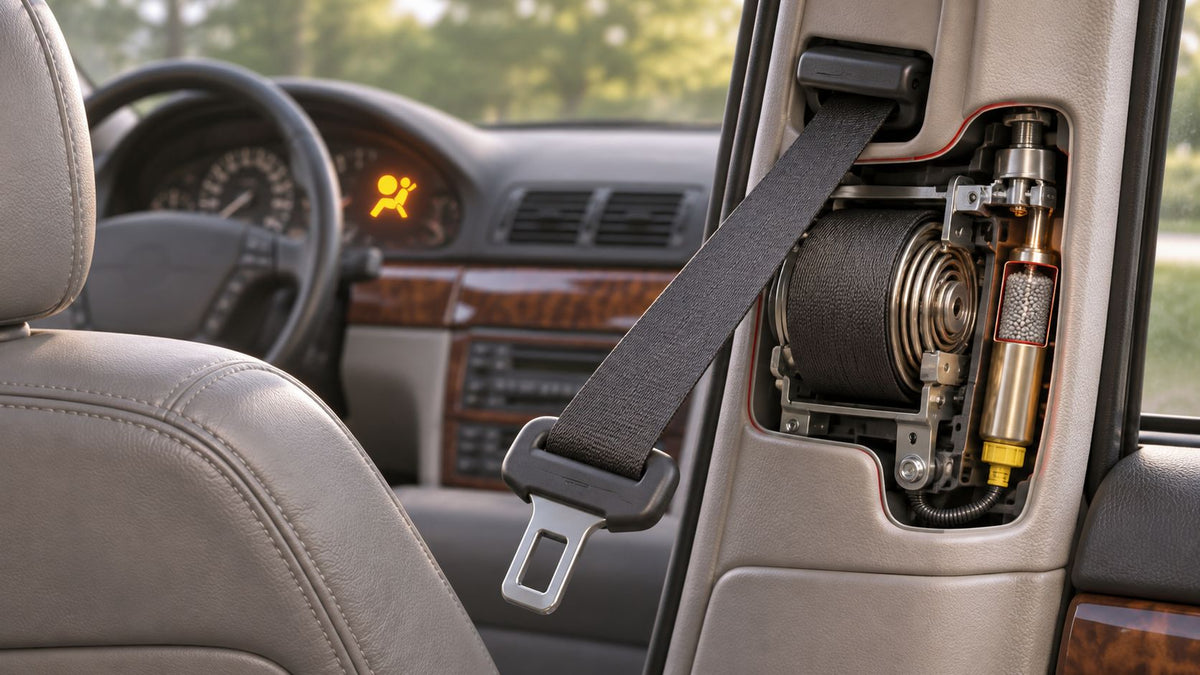
A fired E39 seat belt pretensioner stays locked until its gas cartridge is rebuilt, and a scan tool can't recharge it. If your belt suddenly won't pull out after a collision, treat it as a restraint-system fault, not a glitch you can clear from the dashboard.
Maybe the belt still slides, but the buckle won't release. Or it moves normally while the SRS light stays on. Those clues can point to different problems: the belt that moves and the module that remembers a crash are separate parts of the diagnosis. Don't rely on belt movement alone to decide that the pretensioner is sound.
Table of Contents
- Signs a Deployed E39 Pretensioner Shows
- How the E39 Seat Belt Pretensioner Fires
- Collision Damage and the SRS Warning
- E39 Positions and Pretensioner Stages
- Repair or Replace the E39 Belt Assembly
- Mail-In Pretensioner Repair Done Safely
Signs a Deployed E39 Pretensioner Shows
Start with what the belt does. If it won't extend after a crash, the retractor pretensioner may have fired and locked. Clearing a fault code won't restore it.
| What you see | Likely meaning | Safe next step |
|---|---|---|
| Belt will not extend after a crash | Fired retractor pretensioner | Stop driving on it and plan a rebuild |
| Pays out a little then locks, or will not retract | Spent spool or return path | Rebuild the retractor; don't force it |
| Buckle will not latch or release, or stalk looks short | Buckle pretensioner deployed | Service the buckle unit separately |
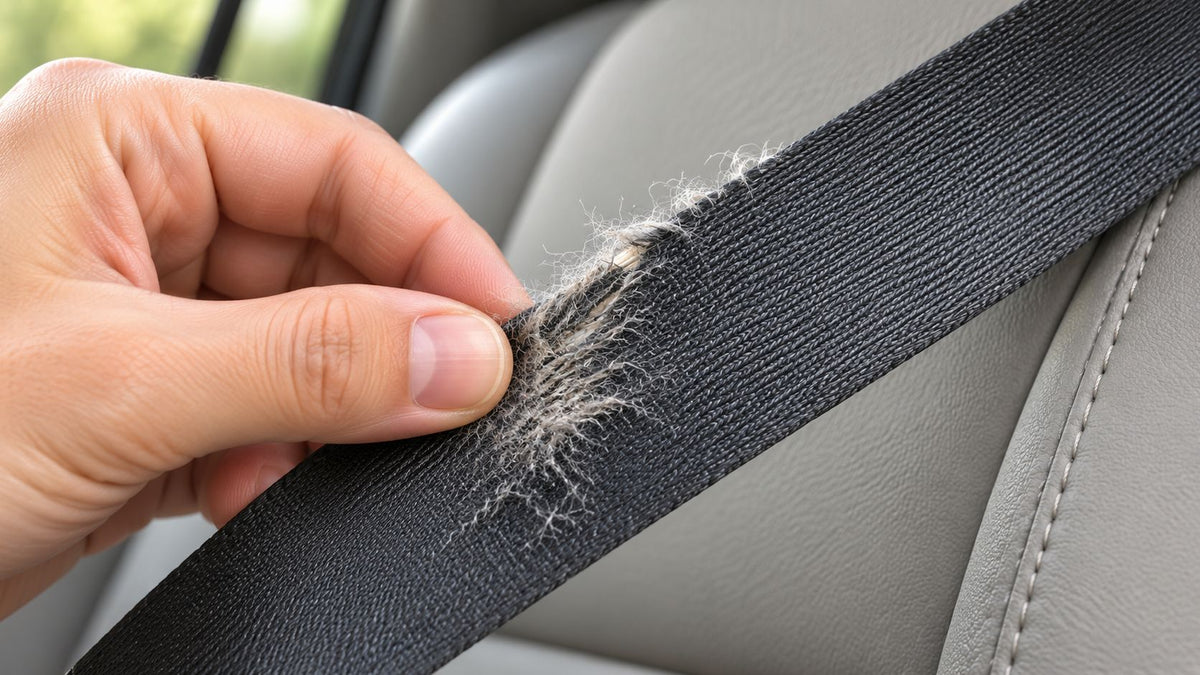
| Webbing cut, frayed, melted, or chewed | Webbing damage; cartridge may also be spent | Replace webbing and check the pretensioner |
| Belt travels normally but SRS light stays on | Stored crash data or a circuit fault | Scan before assuming the cartridge is good |
| Full travel and no SRS light | Pretensioner likely intact | No pretensioner repair indicated |
A belt that won't leave the B-pillar after a collision is a strong sign of a locked retractor. A belt that pays out only a little before stopping, or refuses to wind back, belongs to the same spent-spool family. Don't yank it harder or pry the housing open; forcing the mechanism won't make it safe.
A buckle fault is a different job. If the buckle won't latch or release, or its stalk sits shorter than the other side, the buckle pretensioner may be involved even when the retractor works. Treat cut, heat-marked, frayed, or chewed webbing as its own repair too. A spool that turns doesn't make damaged webbing safe.
A belt that travels fully while the SRS light stays on doesn't prove the cartridge is healthy. The warning could point to stored crash data or a circuit problem. Scan the restraint module before ordering parts. Conversely, if the belt moves fully and the SRS light is off, these symptoms alone don't indicate a pretensioner repair.
Don't drive on a belt that won't travel fully. Don't open the retractor or install a used assembly with an unknown crash history.
How the E39 Seat Belt Pretensioner Fires
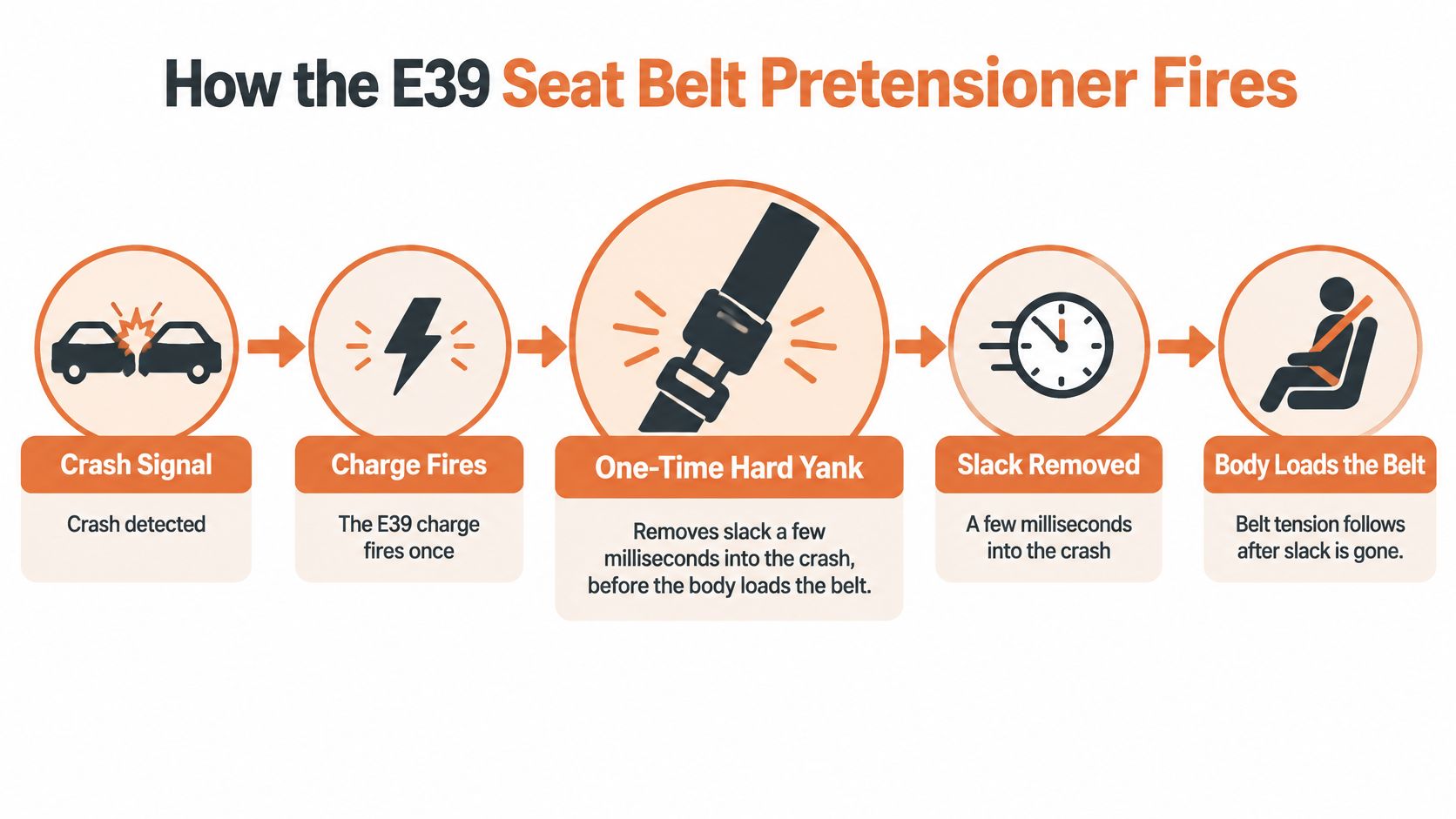
A pretensioner is a one-time hard yank on the belt. It removes slack a few milliseconds into a crash, before the occupant's body loads the belt. In a typical front-seat setup, the charge sits in the retractor at the B-pillar; many cars also have a buckle pretensioner under the seat.
The sequence is direct. Crash sensors send a signal to the SRS module. The module fires the igniter, gas drives a piston or spool, and the mechanism pulls webbing in. The retractor then holds the belt. The cartridge fires once and cannot be reset.
The retractor housing often survives deployment, which makes rebuilding the original assembly a practical alternative to replacing the whole unit. An intact-looking shell does not mean the internals are reusable, though. The igniter and the locking path have been spent and must be renewed. Seat Belt Repair describes its rebuild as replacing the pretensioner's igniter/inflator and rebuilding the retractor with OEM parts, which matches what a fired cartridge needs.
A pretensioner takes up slack. A force limiter, where fitted, does the opposite job under extreme load: it lets a little webbing pay out to control how hard the belt holds the chest. Two different mechanisms, two different failure modes. A belt that stays locked after deployment will not provide proper restraint in a later crash, even if the webbing looks untouched.
Many E39 front retractors run one connector, with the buckle on its own. Identify the exact part before ordering service rather than assuming every connector belongs to the retractor. If the SRS light stays on after the belt has been handled, the module may still carry a deployment record even with a healthy replacement cartridge installed. The belt moves, but the module remembers.
That split is what a mail-in rebuild is built around. A locked or non-retracting assembly after a collision is the kind of unit covered by a service such as Fix a Stuck Seat Belt After Accident – OEM Seat Belt Repair Service, which rebuilds the mechanism rather than replacing the full assembly.
Collision Damage and the SRS Warning
An E39 can come back from collision repair with a working-looking cabin and an SRS light that returns after a battery disconnect. That can happen because the SRS module retains crash information and hard faults. Disconnecting power isn't the same as repairing or resetting the system.
A collision may leave different kinds of work behind:
- Fired belt and stored deployment record: The belt needs mechanical rebuilding, and the module needs its crash data addressed.
- Belt still moving, warning still lit: A crash-related circuit fault, such as damaged wiring or a connector, may keep the warning on.
- No known collision: A clock spring, occupancy mat, under-seat connector, or low battery can also trigger a restraint warning. Don't condemn the cartridge based on the lamp alone.
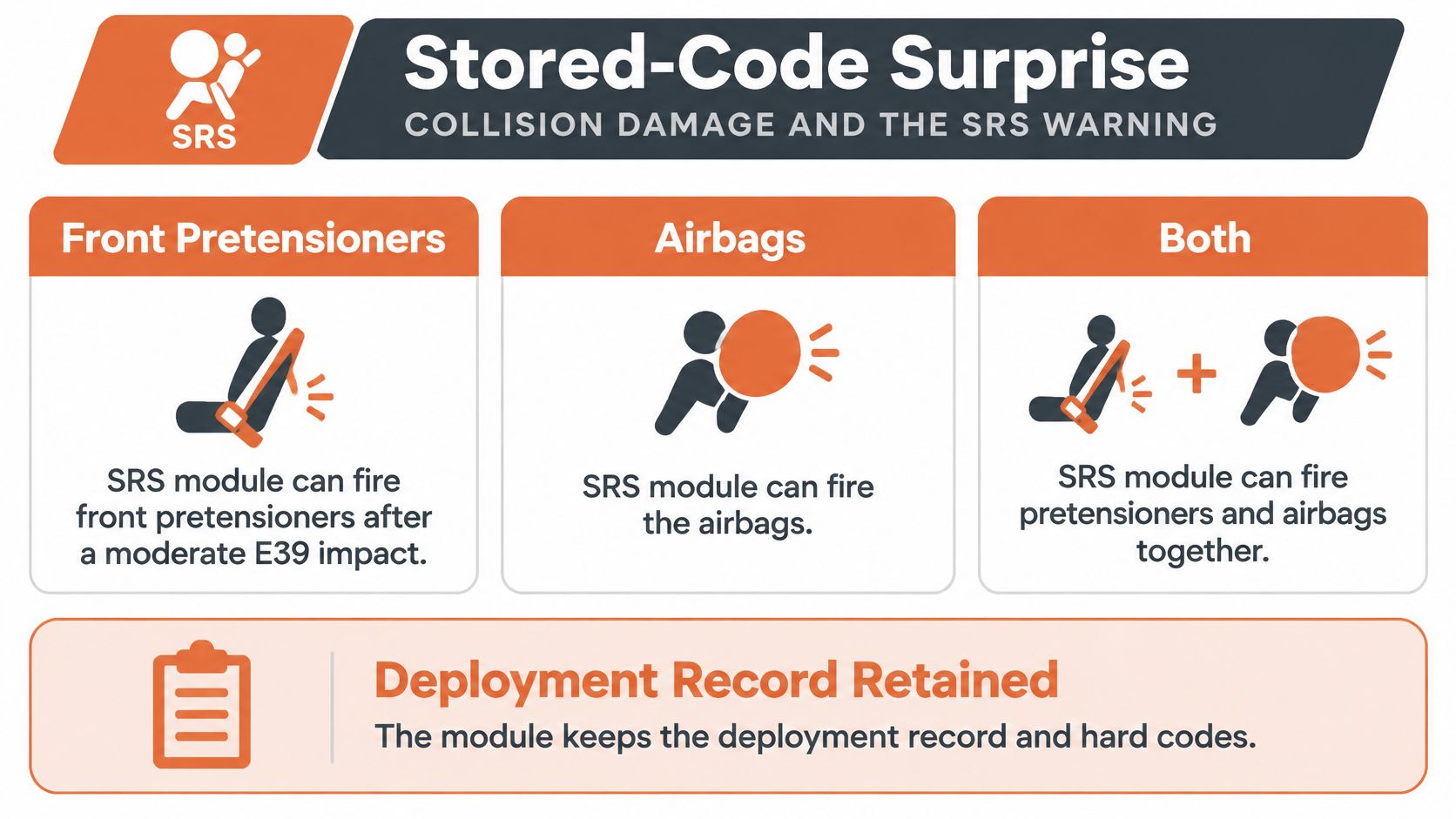
Use a BMW-capable SRS scan tool to identify what the module has recorded. A generic engine-code reader may not give enough detail to distinguish a deployment record from a present circuit fault. The warning light alone can't tell you which restraint component needs work.
The order matters: rebuild or replace the affected belt first, then have the module reset to factory specification so its deployment records and hard codes can be addressed. Clearing a code doesn't renew the igniter. With the warning light on, the system may not fire the remaining restraints as intended, so don't treat the car as fully protected. For a closer look at possible causes, see this guide to why an SRS light may stay on.
Treat the belt and module as a pair whenever a car has been in a collision. Restoring only one can leave the restraint system incomplete.
E39 Positions and Pretensioner Stages
A belt that slides freely can still hide a spent cartridge, so position and connector type matter more than symptoms when ordering service. Start at the driver's B-pillar retractor, then check the passenger retractor. Next, inspect the front buckle pretensioners on the seat-side stalks. Rear belts on many E39s use simpler retractors without a pyrotechnic unit, but confirm the actual assembly before ordering.
Connector count is the stage clue: one plug indicates single stage, two plugs dual stage, and three plugs triple stage. Front outboard retractors are commonly single-stage, but the reliable check happens on the bench. Unplug the connector on the removed part, count the pins inside, and match that count to the service option.
The buckle is identified separately. It sits on a short stalk beside the seat and carries its own connector, usually under the seat trim. A driver belt can retract normally while its buckle cartridge is spent, so free belt movement tells you nothing about the buckle unit.
Two common shop situations show why position labels matter. If both front belts are locked and the airbag lamp is off, each belt is still a separate assembly, and the module can hold crash data even when the lamp looks clear. If only the driver buckle has failed, service that buckle unit rather than ordering a retractor by mistake.
Rear-center belts need careful identification, and any belt with cut or chewed webbing needs webbing repair or replacement alongside the pretensioner check. Label every assembly by seat position and stage before packing it. That simple step keeps a driver retractor, passenger buckle, or rear belt from being mistaken for another part.
Repair or Replace the E39 Belt Assembly
A dealer quote often starts with a complete new belt assembly. That can be the right call when the structure is damaged, but it can also mean replacing a sound shell and webbing just because the internal cartridge fired.
| Path | What you keep | Best when | Main limit |
|---|---|---|---|
| New dealer assembly | Nothing from the old belt | Housing bent or webbing destroyed | Highest cost and possible parts wait |
| Mail-in OEM rebuild | Original shell and sound webbing | Cartridge fired but structure intact | Owner or shop must reinstall |
| Used E39 belt | Another car's unknown unit | Only as a last-resort parts donor | May already be deployed |
| Scan tool code clear | The fired cartridge | Never as the belt repair | Does not recharge the igniter |
In most post-deployment cases, the metal housing is undamaged, the webbing is intact, and the mounting points are secure. When those parts have survived, a rebuild can retain the original assembly while renewing the spent internal components. Repair is intended to cost far less than a new OEM assembly per belt, which matters when a salvage car needs more than one.
Choose a new assembly if the retractor shell is cracked, the anchor is bent, or the webbing is cut or heat-damaged beyond a webbing repair. A used belt may look like a bargain, but its crash history can be unknown and its cartridge may already be spent. A scan-tool clear isn't another repair option; it can't put a fresh igniter in the belt.
For a broader comparison of replacement and repair choices, read this guide to new, used, and repaired seat belt assemblies. The practical rule is simple: if the shell and webbing are sound, rebuild; if the structure is bent or the webbing is ruined, replace. Don't install a used pretensioner with unknown history.
Mail-In Pretensioner Repair Done Safely
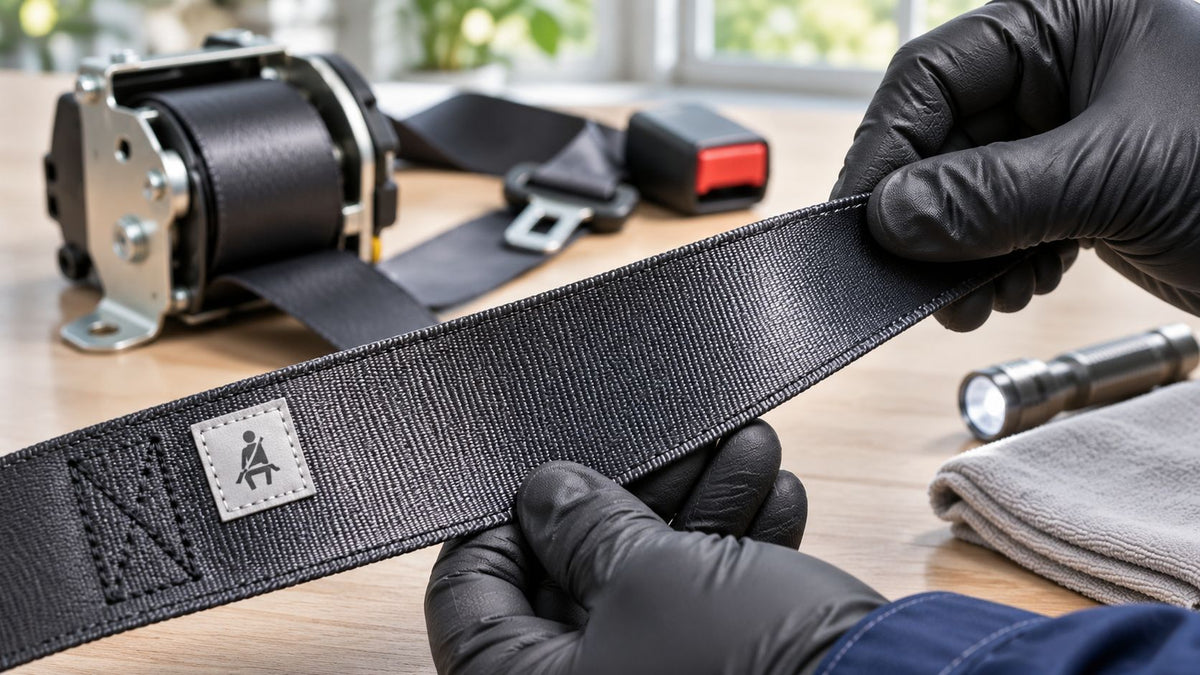
Removing an SRS part is not an ordinary trim job. If you're unsure about the vehicle's service procedure, have a qualified shop remove the assembly. Don't probe, test, or open a pyrotechnic cartridge.
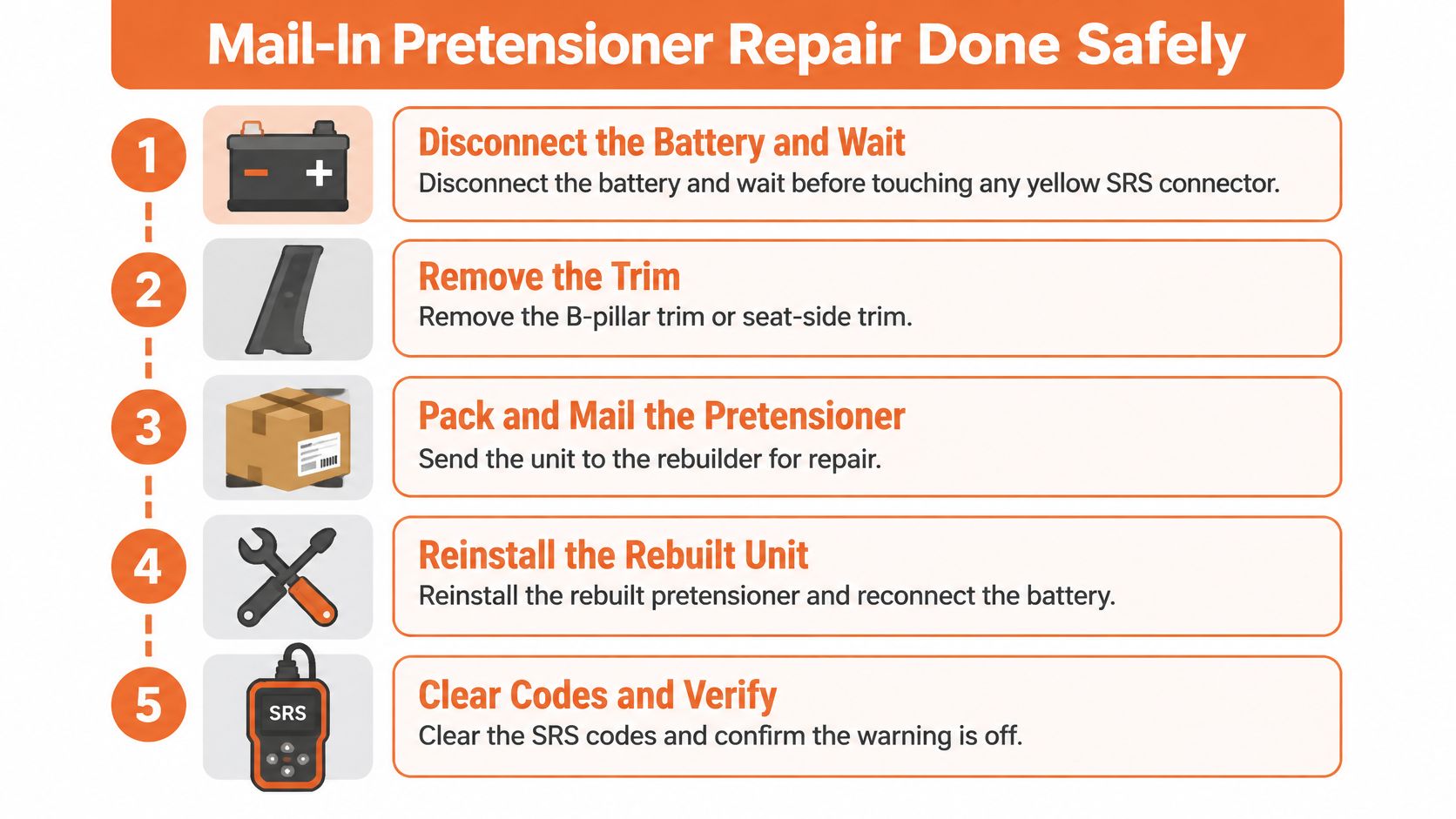
- Make the vehicle safe. Follow the BMW service procedure for disconnecting the battery and waiting before handling SRS connectors. Don't touch a yellow connector with the system powered.
- Expose the mounting points. Remove the B-pillar trim or seat-side covers with plastic trim tools, taking care not to tear the trim or pull on wiring.
- Disconnect and remove the identified part. Unplug the appropriate connector and unbolt the retractor or buckle from the body. Keep the wiring and connector intact.
- Leave the cartridge closed. Don't cut the webbing to make packing easier, and don't disassemble the gas cartridge. Those actions can damage a repairable assembly or create a serious hazard.
- Label and pack it. Tag each unit by seat position and stage, bag its loose fasteners, and ship only the assembly being serviced. Include a note if the webbing is torn or otherwise needs replacement.
Before sending anything, check that the connector isn't damaged and that the webbing hasn't been cut for shipping. Order the service that matches the part removed: one plug for single stage, two for dual stage, three for triple stage, or a buckle pretensioner if the stalk failed. Don't choose by year alone.
Seat Belt Repair provides step-by-step removal instructions and can help with identification when needed. The service rebuilds driver, passenger, rear, and center belts, including single-, dual-, and triple-stage units. Its retractor repair starts from $64.97. A mail-in repair doesn't include installation, so you or a local shop must reinstall the assembly.
The mail-in seat belt repair process describes how a removed unit is handled for rebuilding. After reinstallation, verify that the belt extends fully and retracts smoothly, the buckle latches and releases correctly, and the SRS warning stays off after any required module work. Don't put the seat back into service if the belt still binds or the warning returns.
A paired module reset is relevant only when crash data remains stored. The belt repair and the module work address separate parts of the same restraint system; completing one doesn't automatically complete the other.
For a visual overview of the mail-in process:
Seat Belt Repair rebuilds deployed pretensioners, replaces damaged webbing, and resets SRS modules when crash data needs to be cleared. If your E39 belt is locked or its buckle has failed, visit Seat Belt Repair to review the repair options for the part you removed.

Leave a comment
This site is protected by hCaptcha and the hCaptcha Privacy Policy and Terms of Service apply.