
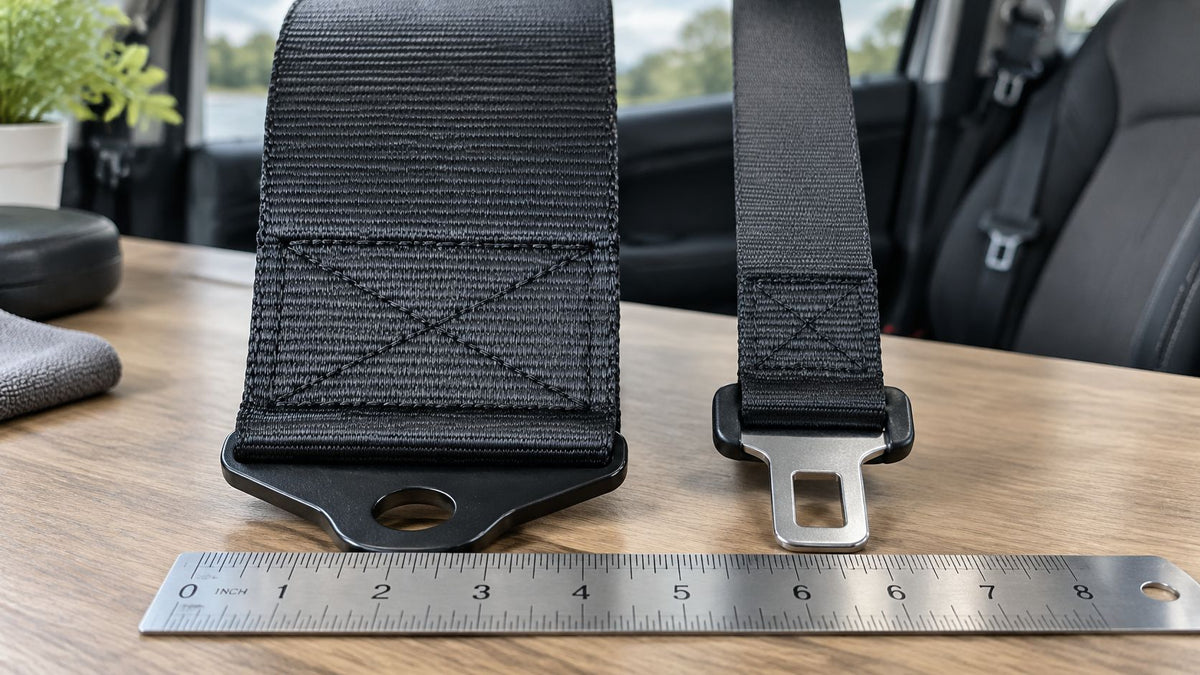
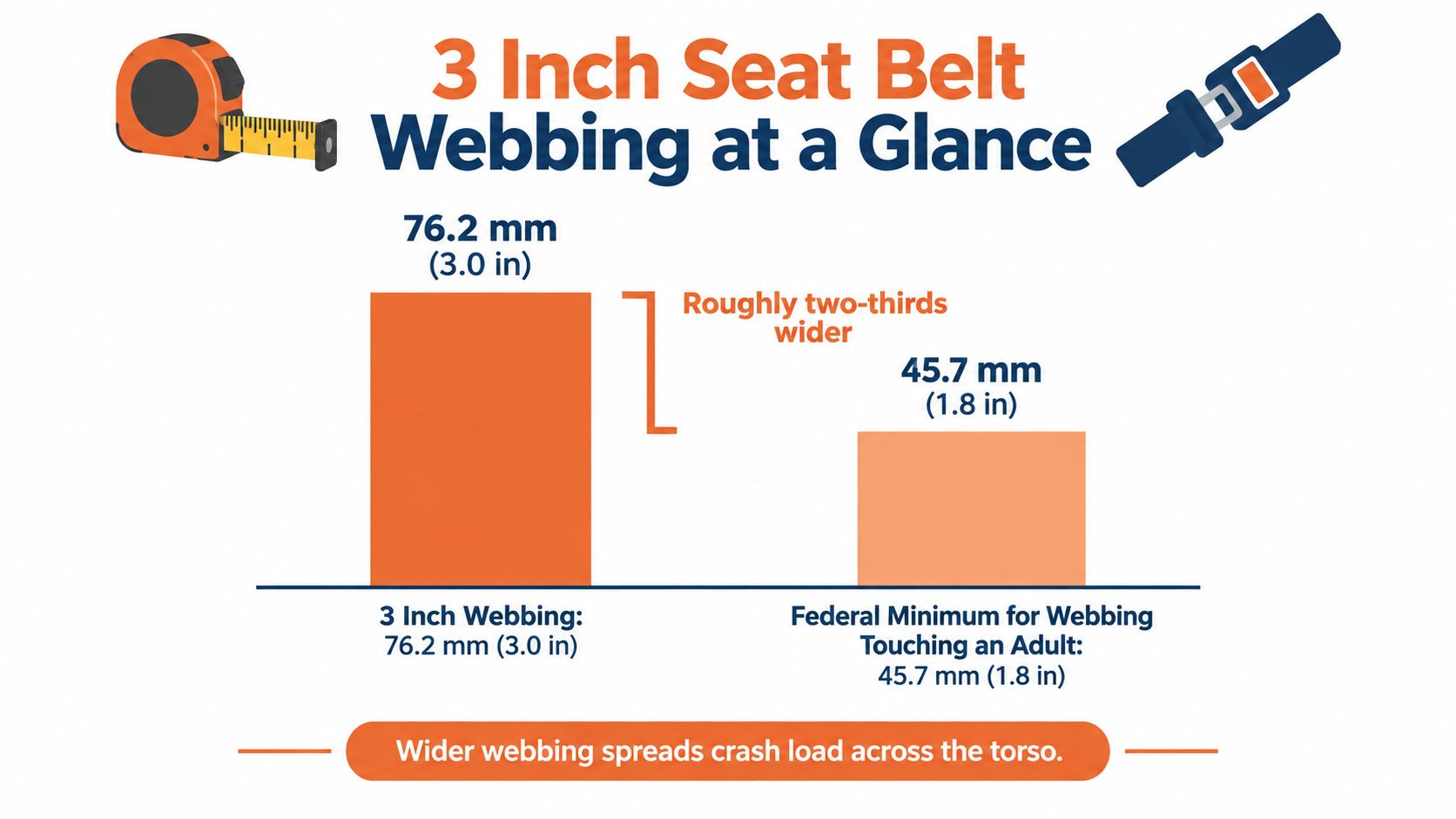
Three-inch seat belt webbing is about 66.7% wider than the 1.8-inch federal minimum for webbing that contacts an adult occupant, according to NHTSA's explanation of FMVSS No. 209. That difference can spread crash load across a larger area, but it doesn't make a three-inch strap a safe or approved replacement for every vehicle.
Table of Contents
- 3 Inch Seat Belt Webbing at a Glance
- Why Wider Webbing Spreads Crash Load and Where It Misleads
- How to Measure and Identify Your Webbing
- Matching 3 Inch Webbing to OEM Belts
- Signs Your Webbing Needs Repair or Replacement
- Choose Repair, Replacement or a Mail-In Service
3 Inch Seat Belt Webbing at a Glance
Three-inch webbing measures 76.2 mm (3.0 in) across. That measurement identifies the width, not the strap's construction or intended use.
| Common webbing widths compared to the federal minimum | Millimetres | Typical use | Versus 1.8 in minimum |
|---|---|---|---|
| 1.8 in | 45.72 mm | Federal minimum for occupant-contact seat belt webbing under FMVSS No. 209 | Baseline |
| 2.0 in | 50.8 mm | Reference width; not a default passenger-belt size | About 11% wider |
| 3.0 in | 76.2 mm | Cargo tie-down and harness-style straps; not a default passenger-belt size | About 67% wider |
The table compares dimensions, not compatibility. A correctly measured three-inch strap can still be the wrong part if its weave, strength, elongation, stitching, or fit does not match the belt assembly.
For a first check, compare the original belt's label and width with the table. Then use the seven-step measurement procedure later in this article before ordering. Confirm the full assembly's fit and requirements, not width alone.
Why Wider Webbing Spreads Crash Load and Where It Misleads
A belt has to pass cleanly through its guides and latch plate, then feed onto and off the retractor without binding. A three-inch strap may not fit those parts. Even if it threads through, it can fold differently on the spool and retract unevenly, affecting how the belt moves and locks.
Webbing spreads crash load across the body. NHTSA explains that the occupant-contact width requirement is intended to distribute crash loads over more of the body and reduce force concentration on the torso. The rule applies to seat belt assemblies installed by vehicle manufacturers and to assemblies added after purchase, as NHTSA's interpretation of FMVSS No. 209 explains.
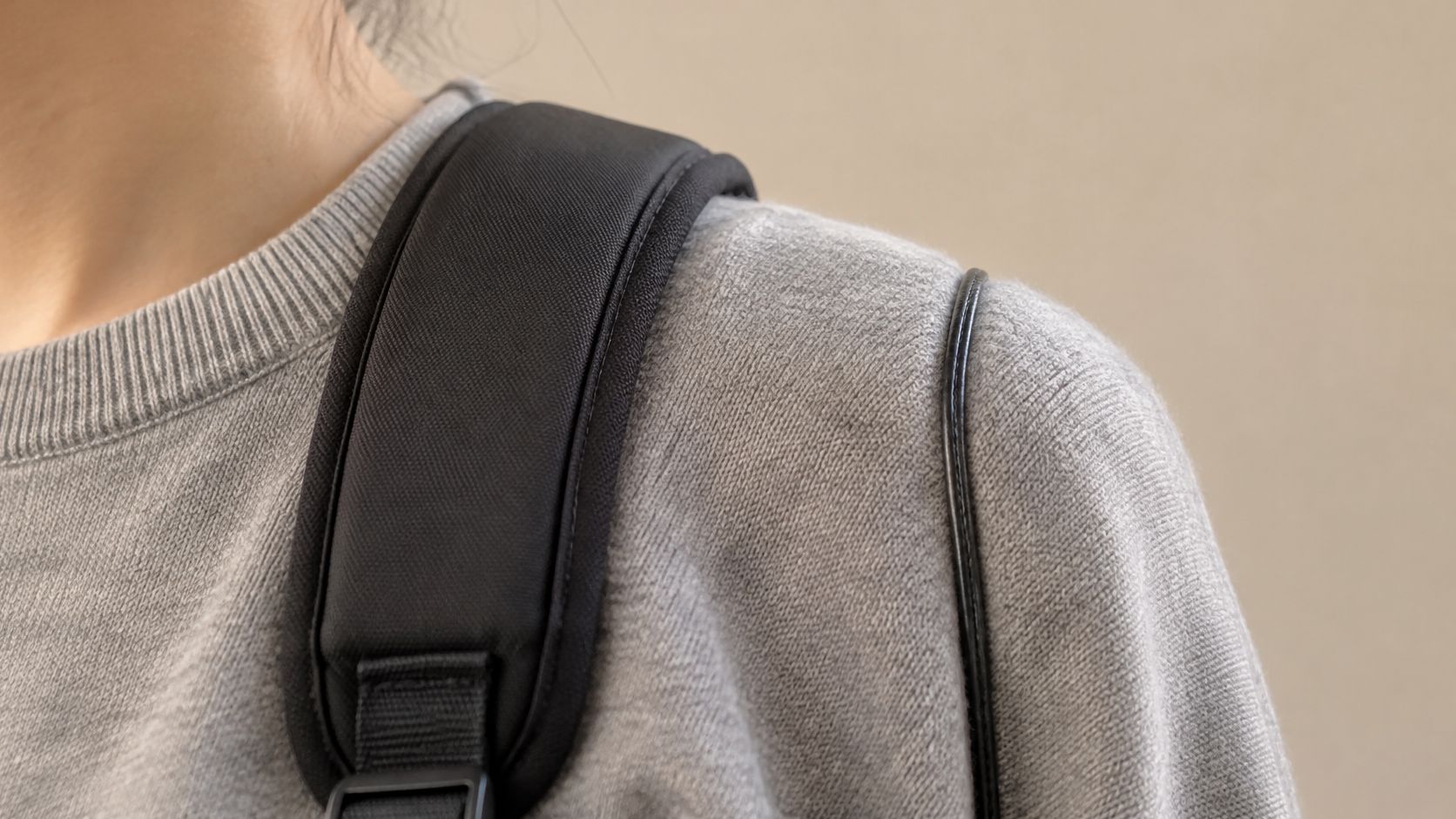
Width is one part of the restraint's design. Webbing strength and elongation, stitching, retractor, latch plate, anchors, and vehicle-specific certification all affect how the assembly carries load. At the anchor, the stitching secures the webbing and transfers load into the belt assembly.
Where wider webbing can fail to fit
A belt that looks secure while stationary can still bind or behave incorrectly under load. Check how the webbing passes through the guides and latch plate, and how it winds onto the retractor. A mismatch in any of these parts can prevent proper movement.
A classic-car owner may see a roll advertised as “seat-belt-style” webbing and assume it suits a factory restraint. The wording alone doesn't establish that. For example, a 2026 Custom Tie Downs listing describes a 300-foot roll of three-inch polyester webbing with an 8,000-pound break strength and a 2,667-pound working load limit. Those ratings describe the listed cargo product; they don't establish fit in a passenger vehicle.
Choose by application, not appearance
Three-inch webbing may suit cargo tie-downs, competition or off-road harness-style products designed for those uses, and custom non-restraint work. Those applications use different hardware and design requirements from a factory passenger belt.
Practical rule: For an occupant restraint, choose a replacement only when the complete assembly is validated for that vehicle. Check the original specification and the fit of the guides, latch plate, and retractor. A strap that matches the width can still be the wrong part.
How to Measure and Identify Your Webbing
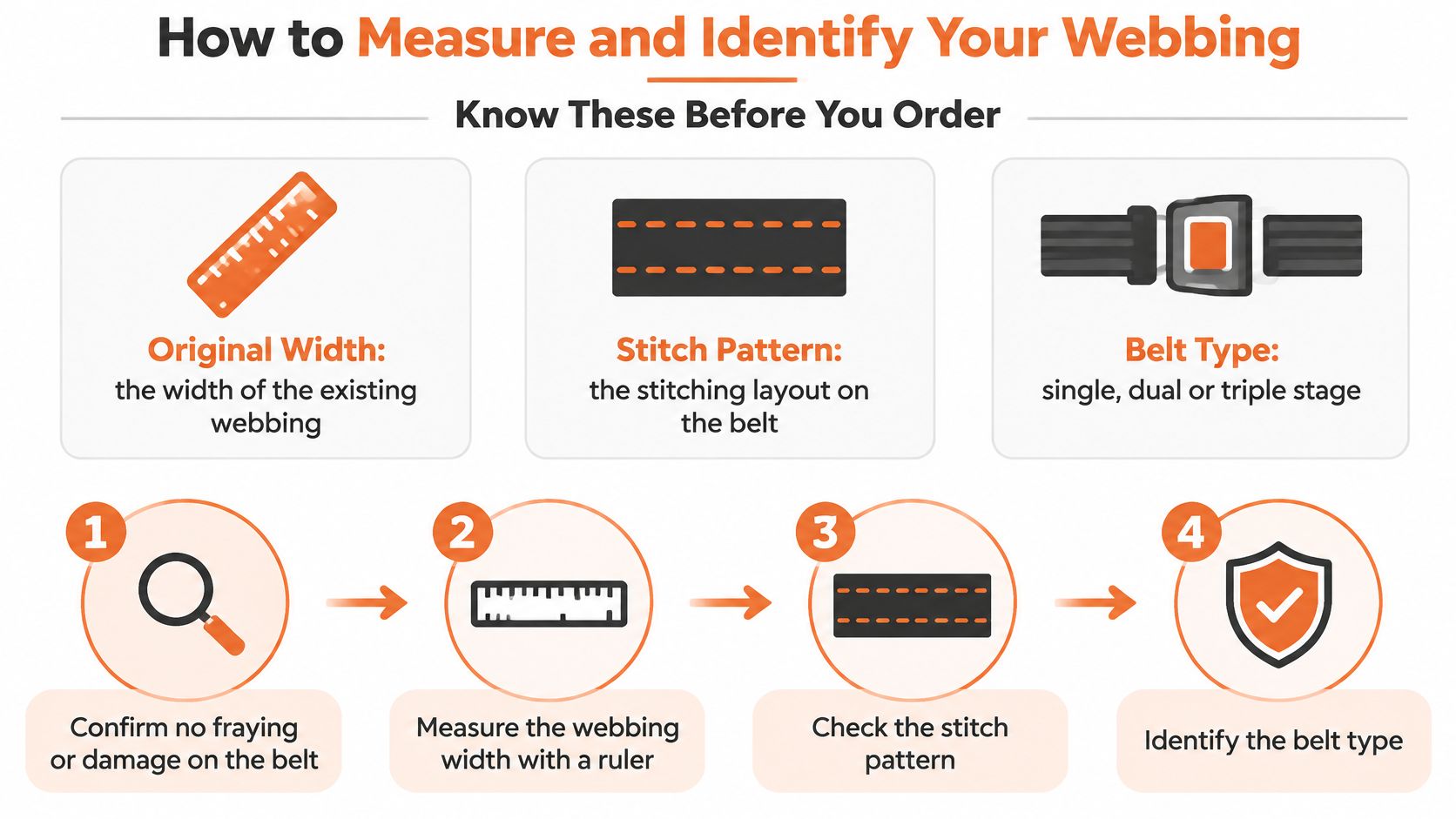
Before ordering, identify the original width, stitch pattern, and belt type, such as single-, dual-, or triple-stage. Those details help distinguish a suitable like-for-like replacement from a strap that merely looks similar. NHTSA's FMVSS No. 209 test procedure specifies measuring webbing width under a 5-pound (2.3 kg) longitudinal tension. It also makes clear that width alone doesn't establish performance.
- Check the restraint system first. Confirm that the pretensioner hasn't deployed and that no SRS warning is active. If the belt is locked or the warning light is on, stop and arrange service before treating this as a webbing-only job.
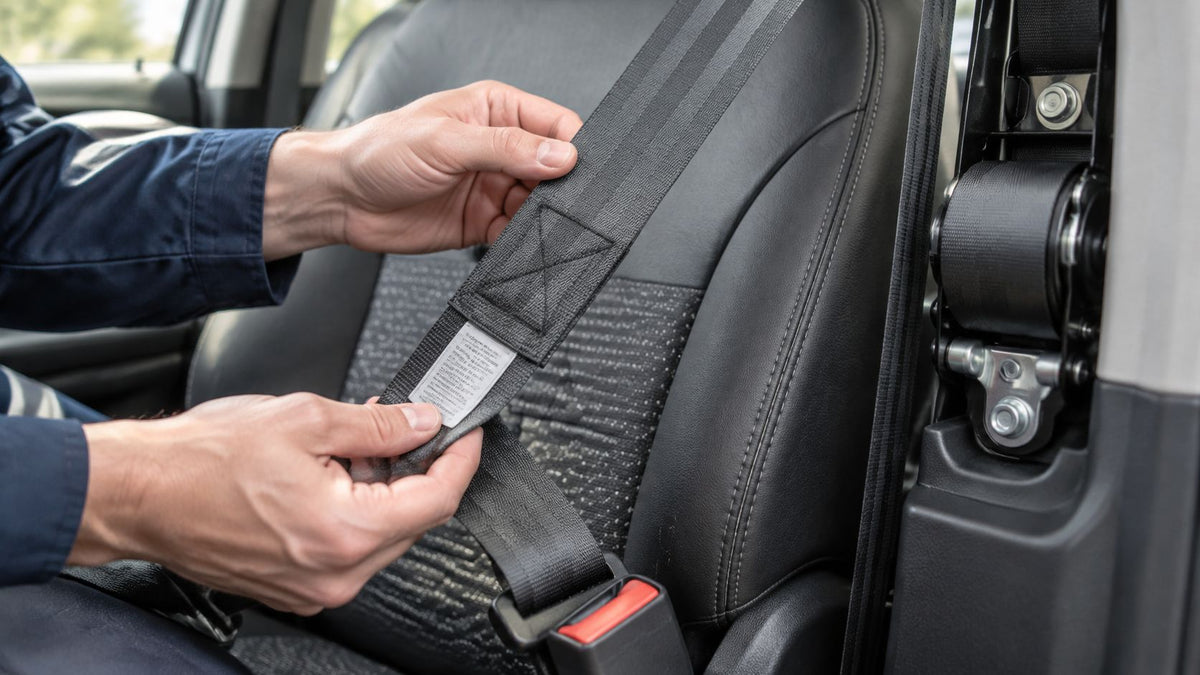
- Look for an identification tag. Pull the belt out and check for a printed label, part number, or manufacturer tag. It can identify the original assembly and help you match the correct specification.
- Lay the webbing flat. Use a clean surface, away from folds and the anchor, so a wrinkle doesn't distort your measurement.
- Measure under light tension. Use a steel rule and apply about 5 pounds of longitudinal tension. Measure at three points, then record the lowest and highest readings rather than relying on a loose or stretched section.
- Inspect the edges. Note whether the edge has a woven selvage or appears cut. Edge construction is one clue to how the webbing was made and finished.
- Photograph the stitching. Take clear pictures at the latch plate and anchor, including any bar tacks and box stitching. The sewing pattern and reinforcement are part of the restraint, not decoration.
- Record the hardware and location. Note the buckle, retractor, latch plate, and seat position, as well as whether the belt is single-, dual-, or triple-stage.
A measured width that matches the original specification, a matching stitch layout, and a legible tag support a like-for-like replacement. If you can't identify the belt or verify those details, don't choose a replacement by width alone.
The video below provides another visual reference for identifying and measuring webbing.
Matching 3 Inch Webbing to OEM Belts
A 3-inch measurement confirms only the width. The replacement must also match the belt's strength requirements, stitching, hardware path, and application to the vehicle and seat position.
| Factor | Original OEM belt | 3 inch replacement must show |
|---|---|---|
| Width | Specified width for the seat position | Measured width under the same load, matched to the specification |
| Breaking strength | Meets FMVSS No. 209 minimums for its belt type | Test results showing it meets the applicable requirement |
| Stitch pattern | Factory pattern and reinforcement at anchor and latch plate | Matching pattern and reinforcement at each stress point |
| Hardware fit | Passes freely through guides, latch plate, and retractor spool | Fits the same guides and latch plate without binding |
| Retraction and locking | Retracts and locks normally | Functions correctly after reassembly |
| Certification | Approved for the vehicle and seat position | Documentation for that vehicle and seat |
NHTSA's interpretation of seat belt assembly requirements cites a minimum breaking strength of 17,793 newtons, approximately 4,000 pounds-force, for Type 2 upper-torso-restraint webbing under FMVSS No. 209. That requirement applies to webbing used in the restraint system. A three-inch width or a cargo-product rating alone does not establish that a replacement meets the applicable requirement.
Check the full assembly before buying. Confirm the intended vehicle and seat position, then compare the hardware path and stitch layout with the original. Guidance on collision repair parts and compatibility can help frame those checks.
If you're comparing repair with replacement, this comparison of new, used, and repaired seat belt assemblies outlines the options. Ask what webbing is used, how the original stitching is reproduced, and how the reassembled belt is checked. A correct width by itself doesn't confirm a compatible, functioning assembly.
Signs Your Webbing Needs Repair or Replacement
Frayed edges are an obvious warning, but webbing can lose strength while it still looks intact. Abrasion, ultraviolet exposure, heat, moisture, contamination, and poor stitching can reduce load capacity or change how the belt retracts. Federal test procedures condition webbing before measuring it, and the federal restraint requirements include a durability requirement for child-restraint webbing to retain at least 85% of its applicable new-webbing breaking strength after specified microorganism exposure. That requirement is for child-restraint webbing, but it illustrates why appearance alone isn't a strength test.
| Symptom | Likely cause | Action |
|---|---|---|
| Frayed edges or fibres pulled loose | Abrasion or wear over time | Replace the webbing |
| Chewed or gnawed sections | Pet damage | Replace the webbing |
| Cut or torn webbing | Sharp object or impact | Replace the webbing; don't sew it |
| Fading or sun-bleached colour, no visible wear | UV exposure | Cosmetic change; replace if strength is in doubt |
| Stains or discolouration reaching the fibres | Fluid or chemical contamination | Replace the webbing |
| Frayed stitching at anchor or latch plate | Stitch failure | Replace the webbing |
| Belt locked or not retracting after a crash | Deployed or locked pretensioner | Pretensioner service, not webbing alone |
| Airbag or SRS warning light with intact webbing | Module fault or crash data stored | Module reset and inspection |
A cut, frayed, or pet-chewed section calls for webbing replacement, not a home sewing repair. A belt that locked during a crash or an illuminated SRS warning is different: the pretensioner or module may need service, and new webbing alone won't resolve the fault. For a more detailed functional check, see these seat belt functional testing requirements.
Choose Repair, Replacement or a Mail-In Service
The right fix depends on what failed. If the webbing is damaged but the belt still locks and retracts correctly, webbing replacement addresses the strap. A locked pretensioner or illuminated SRS light needs attention to the pretensioner or module; replacing webbing alone will not resolve those faults.
Before arranging service, record the belt's identifying details:
- Photograph the identification label and stitching.
- Measure the webbing and note the belt type.
- Count the belts that need work.
- Choose the original color or request a custom color.
The Seat Belt ReWebbing Service - Any Custom Color costs $89.97 per seat belt. Each quantity selected covers one belt. The belt is disassembled, rewebbed with OEM-grade material, and restitched with reinforced stitching; original manufacturer tags are preserved whenever possible. The service is mail-in only, so you or a local shop handles removal and reinstallation. Confirm the webbing width and fitment with the provider before shipping.
Pack each belt with its measurements and photos, and confirm the shipping destination before sending it to 40 Main St., Westfield, MA 01085. A separate trade, aluminum welding for truck trailers, is unrelated to occupant-restraint repair. For help weighing your options, read this comparison of new, used, and repaired seat belt assemblies. Check that the replacement matches the full assembly, not just the strap width.
Seat Belt Repair provides mail-in webbing replacement, pretensioner repair, and SRS module resets. Review the service options and submit the belt's fitment details before sending it in.


Leave a comment
This site is protected by hCaptcha and the hCaptcha Privacy Policy and Terms of Service apply.