
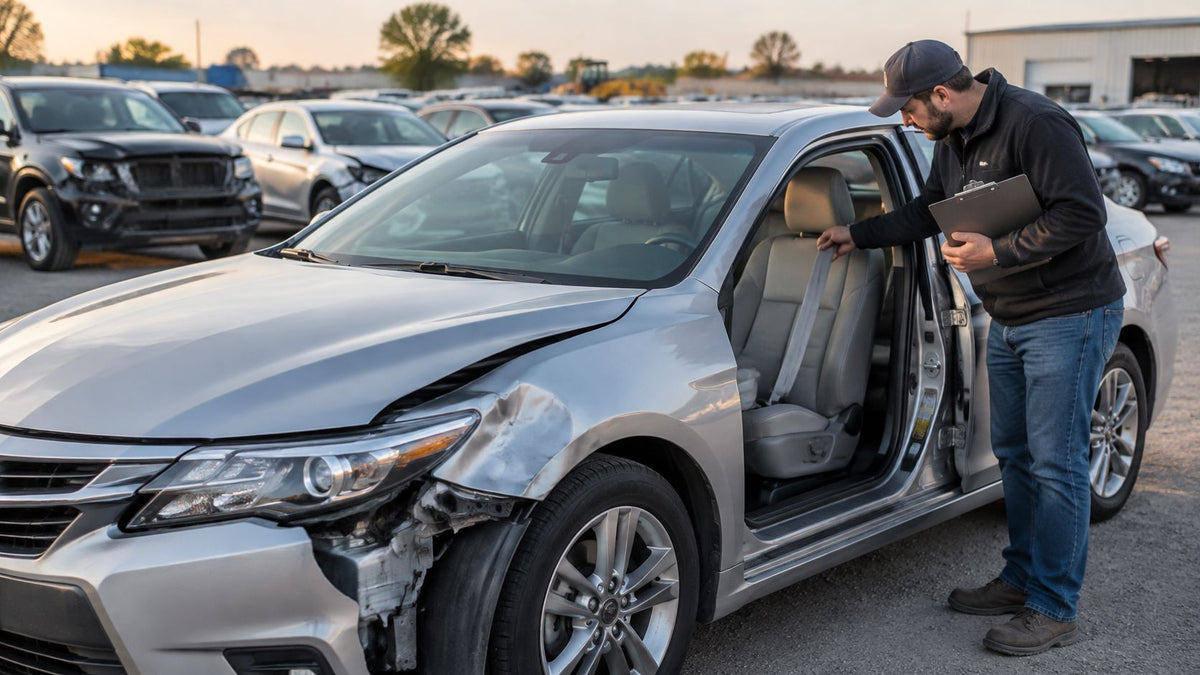
The usual advice for buying at auto auctions is to set a budget and stick to it. That's incomplete. A cheap winning bid isn't a cheap car, and a bidding limit means little if you haven't priced the locked seat belts, stored SRS crash data, freight, fees, and title work.
Price the vehicle as a finished, documented project before you bid. The useful number isn't what you can afford to pay the auction. It's what you can pay while still funding the repairs that make the car safe, registrable, and worth owning.
Table of Contents
- Which Auto Auction Fits the Car You Want
- Price the All-In Bid Before You Click
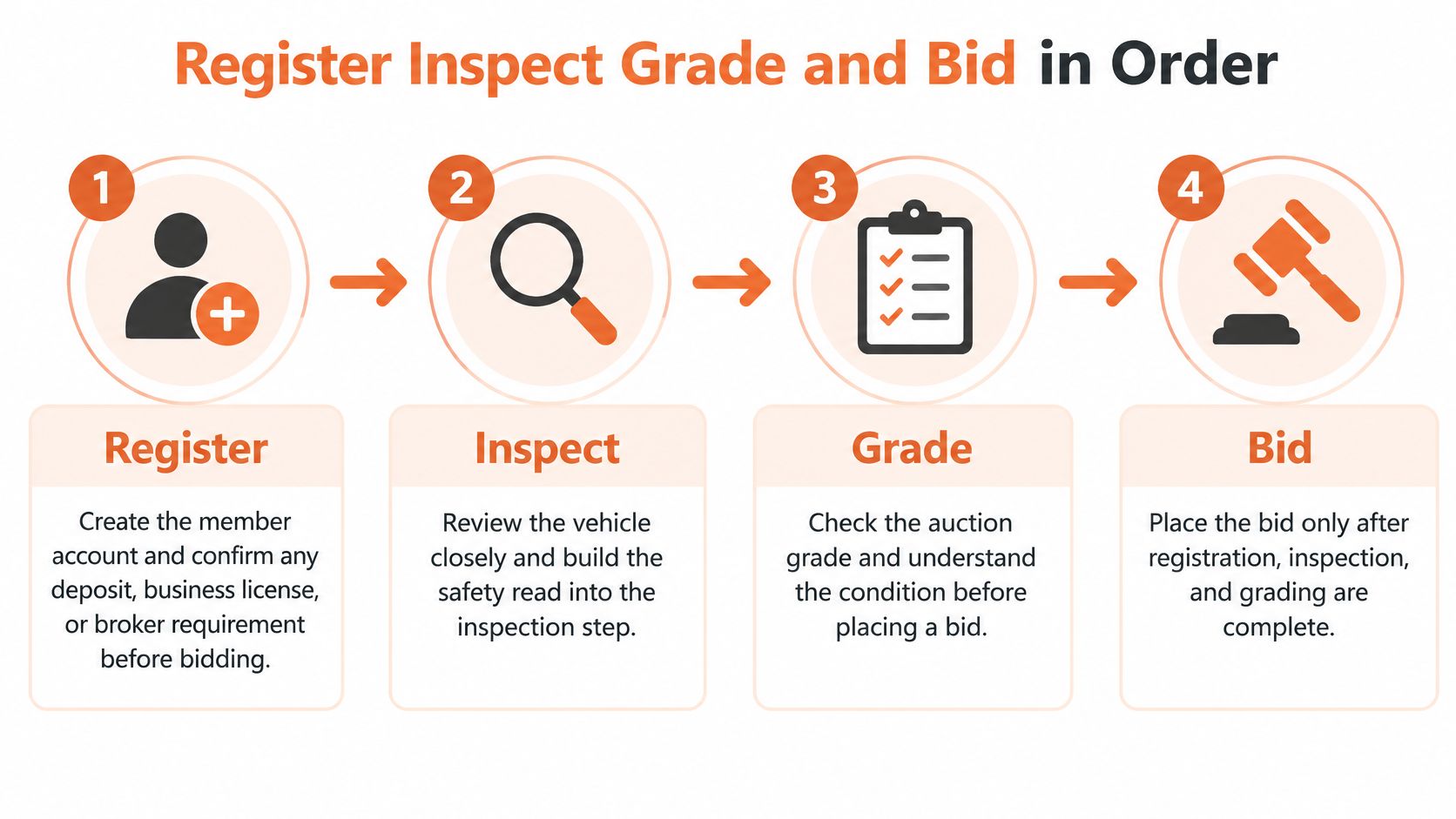
- Register Inspect Grade and Bid in Order
- Handle Title Fees and Transport
- Send Belts and Modules for Repair
Which Auto Auction Fits the Car You Want
Choose the auction channel to match your repair capability, not the other way around. If you need transportation rather than a rebuilding project, buying collision inventory because the photos look manageable can turn a purchase into an unfinished job.
Insurance salvage is a distinct supply stream. Insurance-company sellers supplied 81% of the vehicles Copart processed in fiscal 2025, according to Copart's fiscal 2025 filing. That seller mix is a reason to approach its inventory with a collision-repair mindset, including questions about restraint systems, electrical damage, and documentation.
Copart, IAA, local, and dealer auction lanes
| Lane | Who can bid | Typical inventory | Title pattern | What you can verify |
|---|---|---|---|---|
| Copart | Registered members; public eligibility is set by the lot, location, and licensing rules | Insurance totals, collision, theft, flood, and some clean-title units | Often salvage or another brand; confirm the exact designation | Photos, damage codes, condition reports, and permitted yard or third-party inspections |
| IAA | Registered members; public access requires eligible inventory and compliance with local rules | Insurance and salvage inventory | Often branded; registration eligibility follows the issuing and destination jurisdictions | Photos, damage notes, and whatever preview access the branch permits |
| Local public or government sale | Public buyers meeting the seller's identification and payment requirements | Used cars, fleet leftovers, impounds, and damaged vehicles | Clean, rebuilt, salvage, or other documents specified in the announcement | Available records and permitted previews; don't assume a detailed photo history |
| Dealer wholesale | Licensed dealers meeting the auction's requirements | Trade-ins, rentals, fleet, and manufacturer inventory | Dealer inventory sold under the announced title status | Lane announcements and dealer-oriented condition reports |
IAA is another insurance-auction route worth checking when comparing available projects. Don't assume an account automatically qualifies you to buy every vehicle at either national platform. Membership, bidding eligibility, and registration eligibility are separate questions.
Local public and government sales deserve attention when your priority is a usable vehicle rather than collision-repair inventory. You may find a fleet car with useful records, but an impound with no meaningful history belongs in a different risk category. Read the individual sale terms instead of treating “government auction” as a condition guarantee.
Match the lot to the tools you have
A body shop with measuring equipment, diagnostic access, and established parts suppliers can evaluate projects that an individual working in a driveway shouldn't take on. Neither buyer benefits from an undocumented title or restraint damage they can't assess.
First filter: If the title won't support your intended use, or you can't establish a defensible safety-system repair scope, leave the lot alone.
A clean-looking body doesn't compensate for missing information. Choose the channel that gives you enough access to make a decision, even if another auction advertises lower starting bids.
Price the All-In Bid Before You Click
Complete a worksheet for the specific lot before entering a bid. Use written quotes where you can, documented assumptions where you can't, and a separate allowance for unresolved damage. Unknown isn't the same as free.
All-in auction bid worksheet
| Cost line | Planning assumption | Pass if |
|---|---|---|
| Winning bid | Your cap after funding every line below | The live price reaches your cap |
| Buyer and internet fees | Use the auction's current calculator for your account and price band | You haven't read the applicable fee schedule |
| Storage and late pickup | Apply the yard's charges after its stated collection window | You can't arrange timely collection |
| Transport | Obtain a written quote from that yard to your shop | You're planning to price freight after bidding |
| Title, bond, and inspection | Confirm destination requirements and applicable charges | The documents can't support your intended registration |
| Body and structure | Estimate visible repairs and allow for concealed rail, floor, or mounting damage | Essential structural parts or repair methods remain unconfirmed |
| Seat belts and pretensioners | List each seating position, its observed condition, and its unresolved components | Multiple suspect belts have no repair or replacement allowance |
| Airbags, sensors, and SRS module | Price deployed or missing components, diagnostics, and possible stored crash data | You can't establish a legitimate restoration path |
| Calibration and labor | Include removal, installation, scanning, aiming, and required calibration | No qualified facility will complete the work |
| Contingency | Reserve funds for unresolved wiring, water, structural, and diagnostic findings | The purchase only works with no contingency |
The overlooked line is usually restraint-system scope. List retractors, buckle pretensioners, airbags, relevant sensors, wiring, and the control module separately. Don't buy a collection of vaguely described “airbag parts” and expect the installation shop to resolve compatibility later.
Remote buying makes this discipline more important. Grand View Research's online salvage-auctions market report identifies concealed mechanical and electrical damage, along with limited physical inspection, as risks buyers must address. Photographs can support an estimate, but they can't establish the condition of every connector or internal mechanism.
Calculate backward from a realistic finished value
Use this relationship:
Maximum bid = realistic finished value minus fees, logistics, repairs, documentation costs, contingency, and your required margin.
Recalculate the auction fees at the resulting bid because the fee schedule may change with the purchase amount. For a personal-use vehicle, keep a savings allowance rather than pretending your time, inconvenience, and unresolved risks cost nothing.
Say a collision car needs visible front-end work and has deployed airbags. Build separate scenarios for confirmed repairable belt assemblies, assemblies requiring replacement, and unresolved module faults. If the purchase is attractive only under the cheapest scenario, it isn't ready for a bid.
International buyers also need a destination worksheet. For a Kenya-bound purchase, the Brill Motors guide to imported cars is a useful starting point for destination-side questions, separate from the auction invoice. Confirm import eligibility and local compliance before treating a U.S. purchase price as a landed cost.
A contingency reserve is money you expect to need, not extra bidding capacity.
Don't shrink that reserve because someone else wants the car. Another bidder's willingness to pay tells you nothing about their repair costs, intended use, or understanding of the damage.
Register Inspect Grade and Bid in Order
A repeatable buying process prevents a tempting listing from becoming an exception to your own rules. Complete the registration, inspection, and grading work before the bidding screen becomes the focus.
Keep the purchase sequence visible while reviewing lots.
Establish access and legal eligibility
-
Create the account and confirm your buying authority.
Check identification, deposits, payment requirements, business-license restrictions, and whether a broker is necessary for the selected lot. Read the broker's charges and responsibilities before authorizing a purchase.
Make sure the account name, invoice buyer, and intended title recipient fit the transaction. Fixing a mismatch after winning can interfere with payment or release.
-
Read the actual title designation.
Record the VIN, issuing jurisdiction, document type, and any brand shown. Check the destination motor-vehicle authority's requirements for that exact document, not just the broad category displayed in the search results.
Salvage, rebuilt, flood, and non-repairable designations aren't interchangeable. Drop a vehicle that can't legally become what you intend to own or sell, even if its physical damage looks straightforward.
Build the safety read into the inspection
-
Read the damage codes, then examine every photograph.
Primary and secondary damage descriptions are screening clues, not a complete repair order. Look for open or taped airbag doors, torn steering-wheel or dashboard covers, disturbed pillar trim, missing seats, and disconnected restraint wiring.
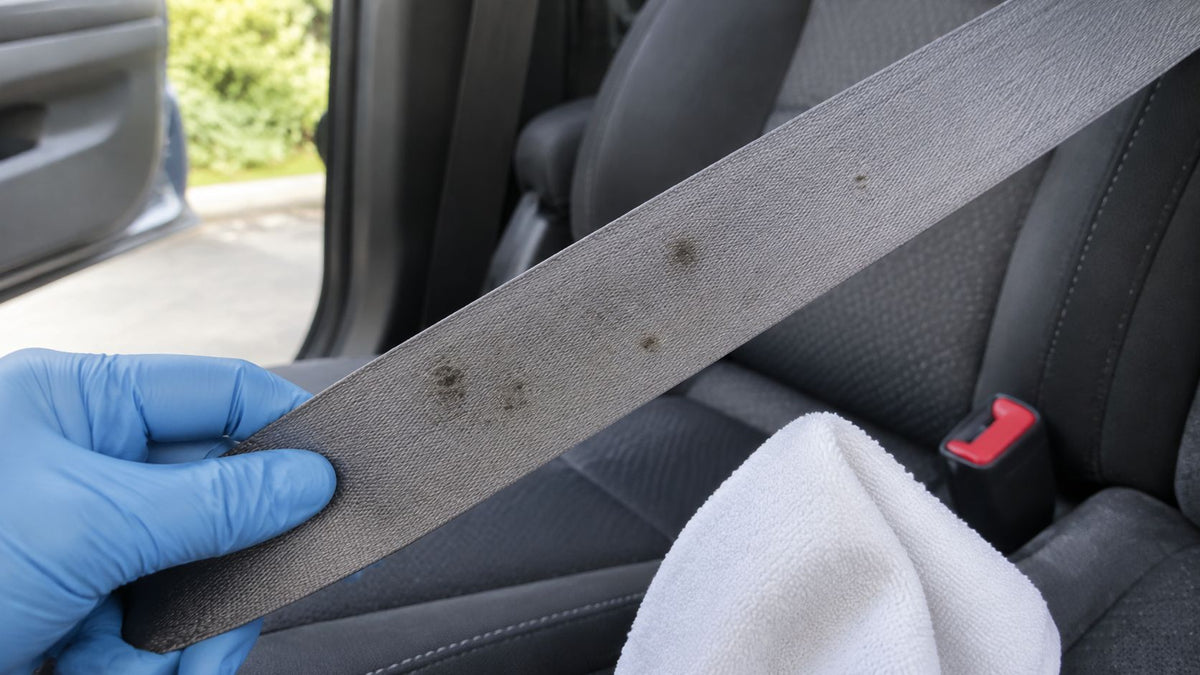
Inspect belt webbing for cuts, fraying, chewing, or obvious stretching. Note belts shown fully extended or trapped against trim, but don't diagnose deployment from a photograph alone. An installed retractor can also resist movement because of its orientation or locking mechanism.
Look for water lines, sediment beneath seats, mud around connectors, and corrosion where wiring enters floor areas. A warning-light photograph is useful, but the absence of a visible SRS light doesn't prove the system is intact.
The Copart member guide warns that “run and drive” doesn't guarantee operation at pickup, roadworthiness, or legal drivability, and reported damage may be incomplete. Don't translate an engine-start label into permission to drive the car home.
-
Inspect in person or commission an independent inspection.
Request the condition report and follow the yard's preview rules. Where access permits, have an inspector examine the underside, structural attachment points, restraint components, and electrical condition. Don't attempt a test drive unless the auction explicitly authorizes it.
Ask for an SRS-capable scan, not just a generic engine-code check. The report should identify the vehicle, record diagnostic trouble codes, and distinguish observed damage from the inspector's assumptions. A scan helps define the job, but it doesn't replace physical inspection or manufacturer repair information.
Mark each finding repair, replace, or unknown. For belts, record the seating position and whether the assembly, buckle, webbing, mounts, and connectors are intact. For the module, record identification and diagnostic findings rather than assuming every warning light means crash data.
Use a used-car safety inspection checklist to keep the review broader than cosmetic damage. Have a qualified technician handle pyrotechnic restraint components; don't probe their circuits or improvise electrical tests.
Turn the grade into a decision
An auction grade helps organize information, but it isn't your repair estimate. Copart UK's vehicle-grading process describes a 50-point physical inspection followed by image review and engineering approval. That process has a defined scope, and it shouldn't be treated as a universal certification for every auction listing.
Separate your assessment into safety systems, structure, powertrain, cosmetics, and documents. A cosmetic defect can sometimes wait. A compromised belt mounting point cannot.
For a buyer considering alternatives to a rebuild, it's useful to compare used vehicle options in NZ through Nomu Finance Limited before committing to auction inventory. Compare a finished, usable vehicle with the completed project, not with its hammer price.
The bidding demonstration below provides another view of the purchase process.
-
Finish the estimate and write down the bid cap.
Transfer the inspector's findings into the worksheet, including removal labor and unresolved diagnostic work. Keep mandatory repairs separate from optional paint improvements so cosmetic choices can't crowd out the safety budget.
Record both the maximum hammer bid and the corresponding total acquisition cost. That avoids confusing a fee-inclusive spending limit with the amount you can enter online.
-
Bid without revising the project assumptions.
Follow the sale's rules for preliminary, live, or timed bidding. Understand whether your entry is a maximum proxy bid and whether seller approval or a reserve affects the outcome.
Stop at the written limit. Don't assume you'll recover an overbid by finding cheaper safety components afterward.
-
Pay within the stated window.
Save the invoice, payment instructions, and collection deadline immediately. Confirm payment through the auction's official account or portal, and verify any changed banking instructions independently.
Assign payment and pickup to a named person if you're buying for a shop. A vehicle isn't secured for collection merely because someone has started a transfer.
Handle Title Fees and Transport
The post-sale job is a coordination problem: payment must clear, the vehicle must be released, the documents must support the intended registration, and the carrier must arrive equipped to move it. Handle those tasks together rather than paying first and investigating everything else later.
Auto auctions are organized distribution channels, not informal storage arrangements. Manheim reports approximately 8 million vehicles offered to dealers annually, a useful indication of why buyers need to follow established payment and release procedures rather than expect exceptions.
Clear payment and documents together
Use an accepted payment method and retain confirmation showing the invoice and lot number. Check that the auction has posted the payment, not merely that your bank has sent it. Book collection against the yard's actual release status.
Confirm the exact document you'll receive and whether it is available or pending. Ask the destination authority whether the brand remains, what inspections are required, and whether a missing-title bond is an available route for that particular case. Don't assume a bond can cure every documentation problem.
Keep a pickup folder containing:
- Release authority: The gate pass, release document, or transporter authorization required by that yard.
- Buyer identification: The account and identification details needed for collection.
- Payment evidence: The paid invoice and confirmation that the vehicle is released.
- Vehicle details: VIN, lot number, keys status, and known loading limitations.
- Collection arrangements: Carrier contact information, appointment, and permitted pickup window.
For planning the work after delivery, our Copart rebuild guide can help organize the project file. Keep title paperwork with the repair records rather than scattered across email accounts.
Book for the vehicle's actual condition
Get the carrier's quote in writing, including the origin yard, destination shop, and loading assumptions. Tell the carrier whether the car rolls, steers, brakes, has keys, or has flat tires. A winch alone won't solve every loading problem, particularly with damaged suspension or inaccessible wheels.
Choose open or enclosed transport according to the vehicle's exposure, condition, and value. Confirm who supplies loading assistance and whether the receiving shop can unload an inoperable car.
Release check: Photograph the car at handover and delivery, including loose parts, interior condition, and existing damage.
Record discrepancies on the transport paperwork before accepting delivery. That gives the buyer and carrier a shared record instead of competing recollections.
For overseas shipments, separate domestic yard collection from port handling and international carriage. African Import Export Solution's information on US car imports for Nigerian businesses offers destination-specific planning context. Confirm document acceptance, shipping requirements, and import eligibility independently before sending the vehicle toward a port.
If release papers or registration eligibility remain unresolved, don't begin irreversible repairs that assume the administrative problems will disappear.
Send Belts and Modules for Repair
After purchase, decide what can legitimately be restored before ordering complete assemblies. Repairability is a component-level decision, not a promise that every crash-damaged part can be reused. Follow the vehicle manufacturer's collision-repair procedures and have a qualified technician assess the restraint system.
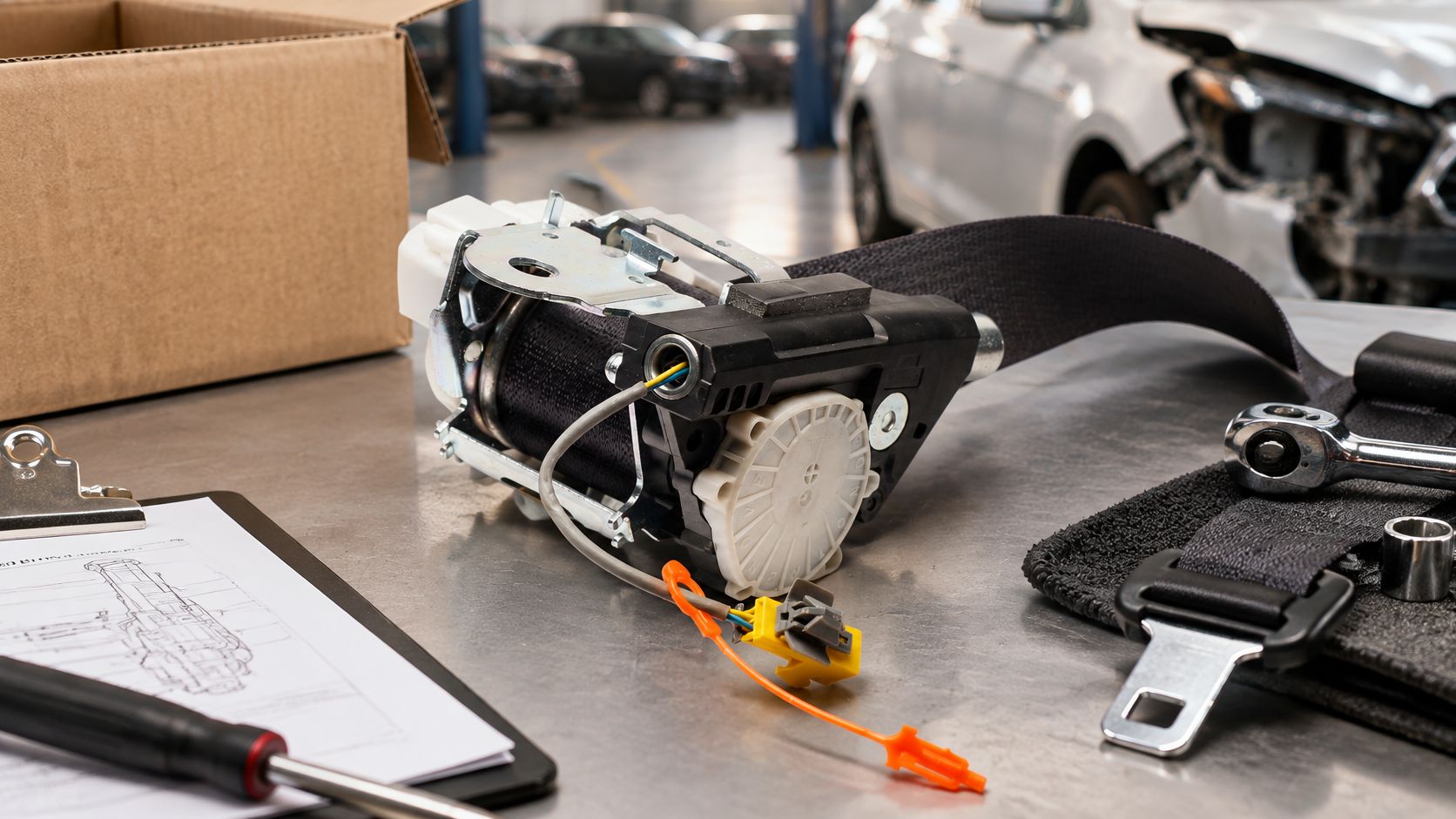
An intact original belt assembly with a deployed internal mechanism presents a different problem from a cracked housing, damaged mounting point, or heat-affected unit. Damaged webbing also needs its own assessment and replacement scope. Don't force a locked belt, lubricate its mechanism, or expect a scan tool to reverse a physical deployment.
The service shown below concerns the removed component, not installation or complete vehicle certification.
Price the repair against the replacement scope
Our Locked Seatbelt Repair Service – Fix Stuck Seat Belt After Accident is listed at $64.97; our SRS airbag module reset is currently listed at $49.97, with a listed regular price of $799.00. Posted prices exclude taxes, shipping, handling, customs, and import charges unless expressly stated.
We restore original assemblies using OEM components, and our mail-in process serves customers nationwide. A module reset addresses stored crash data and applicable module faults; it doesn't replace missing airbags, repair damaged wiring, or establish that the complete system is safe.
Have the technician determine whether the module is eligible for service and which components require replacement under the applicable repair procedure. Our salvage-car repair guidance provides context for organizing that wider repair job.
Prepare a traceable shipment
Remove components using the manufacturer's isolation and removal procedure, preferably through the local shop handling reinstallation. Label each belt by seating position and protect connectors during packing.
- Include identification: Pack your name, return address, and phone number with the components.
- Ship securely: Send the package to SEAT BELT REPAIR, 40 Main St, Westfield, MA 01085.
- Plan the schedule: The stated repair turnaround is 24 hours after receipt; transit time is separate.
- Arrange installation: We don't install components. The buyer or local repair facility handles reinstallation and final diagnostics.
After installation, complete the required inspections, diagnostic checks, and calibrations. A cleared warning light alone isn't a complete restraint-system acceptance test.
Update the worksheet with the confirmed repair scope, freight, removal, installation, and testing costs before your next auction bid. Use actual repair decisions to improve the estimate, not an assumption that every component will qualify for the cheapest option.
Seat Belt Repair offers nationwide mail-in seat belt restoration and SRS airbag module reset services for eligible components from auction rebuilds. Visit Seat Belt Repair to review the service options and prepare your shipment, then put the complete repair cost on your worksheet before bidding again.

Оставить комментарий
Этот веб-сайт защищается hCaptcha. Применяются Политика конфиденциальности и Условия использования hCaptcha.