
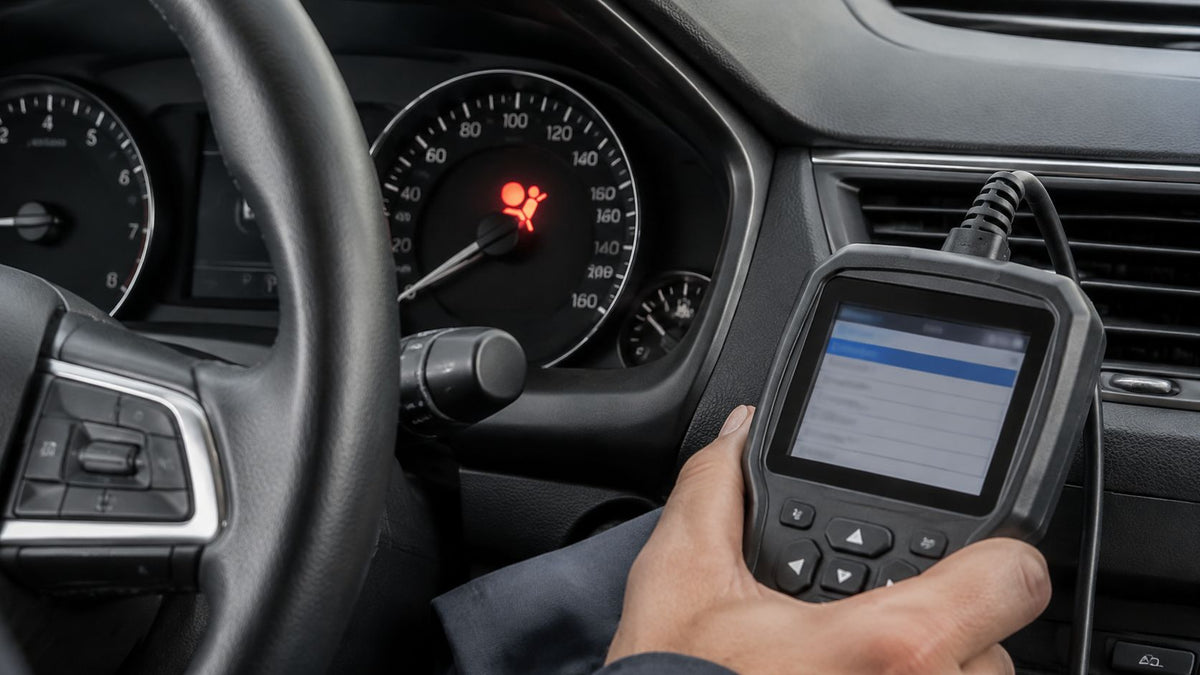
You started the car, waited for the dashboard lights to clear, and one didn't. The seat belt reminder went out, the check engine light went out, but the small figure with a circle in front of it stayed lit. That moment creates two immediate questions. Is the car safe to drive, and is this going to be expensive? Don't guess at either one, because when your airbag light is on, the lamp itself doesn't name the failed part. It tells you the restraint system sees a problem and wants a proper diagnosis first.
Table of Contents
- Why an Airbag Light That Stays On Deserves Attention
- What the Airbag Light Is Really Telling You
- Common Reasons the Light Stays On
- Clues That Point to a Specific Fault
- Checking Recalls and Codes Before Any Repair
- Reset or Replace Restraint Components
- Verifying the Repair and Taking the Next Step
Why an Airbag Light That Stays On Deserves Attention
A driver calls after a low speed parking lot bump. The bumper cover looks fine, nobody was hurt, and the car drives straight. The only sign anything changed is that light, still glowing miles later. Another caller has just bought a salvage car at auction. The engine sounds healthy, the panels line up, but the airbag light is on before the car even leaves the lot.
Both drivers are in the same position. They can't tell from the dashboard whether they're looking at a loose connector under a seat, a fired seat belt pretensioner, damaged wiring, or a control module still holding crash data from the impact. Guessing leads to buying parts you may not need. It can also leave a real fault untouched.
The Worries Behind the Light
Most worried owners ask three things first. Can I drive it today, will the airbags work if I need them, and does this always mean the module has to be replaced? The honest answer is that the car usually drives normally because the restraint system runs separately from the engine. Normal driving feel tells you nothing about whether an airbag or pretensioner will deploy in a crash.
Practical rule: Treat a lit airbag light as reduced protection until a scan proves what's wrong, not as a cosmetic annoyance you can clear and forget.
Replacement isn't automatic either. Some faults are physical, like a deployed pretensioner or torn wiring. Others live in stored data after a collision. Some come down to a worn connector in the steering column. Each path has a different fix and a different cost, which is why sorting the cause before buying parts matters.
If the light appeared right after a collision, after seat or interior work, or on a car with unknown history, get it looked at promptly. You don't need to panic or park the car in fear. You do need to stop treating the lamp as background noise and find out which part of the safety system flagged it.
What the Airbag Light Is Really Telling You
Think of the lamp like a pilot's preflight check. Before takeoff, the crew confirms the safety gear is ready, not after something goes wrong. Your car's Supplemental Restraint System, called SRS for short, does a small version of that every time you turn the key.
In normal operation, the light comes on briefly when you switch the ignition on. That's the system checking its sensors, circuits, and control module. After several seconds, a healthy system turns the light off, as described in NHTSA interpretations of the federal restraint readiness indicator. That on, then off pattern is your baseline.
Why the Light Exists at All
This indicator isn't an optional convenience a manufacturer added for style. Under Federal Motor Vehicle Safety Standard No. 208, vehicles must have a readiness indicator that monitors systems such as airbags, and it must be clearly visible from the driver's seat, a requirement detailed in the same federal interpretation linked above. You, the driver, are meant to see it and act on it.
The word supplemental helps too. Airbags and pretensioners supplement your seat belts, they don't replace them. The lamp reports on that whole team of parts, not just the bag in the steering wheel.
Two Patterns That Both Mean Trouble
- Light stays on after startup: The control unit finished its check and found a fault, so it keeps the warning lit.
- Light never comes on at startup: The bulb check didn't happen, which can hide a fault because the system can't show you a warning.
A lamp that fails to light during the startup check is not good news. It's a warning system that may not be able to warn you.
Owners often assume a steady light means one specific airbag has failed. It doesn't work that way. The lamp is a summary, like a fire alarm panel showing trouble somewhere in the building. It confirms the system may not be operating as designed, but it doesn't point at the room. That's why a technician reads the stored fault code next instead of replacing the most visible part.
Watch your own dash tomorrow morning. If the lamp lights, pauses, and goes out, that's the healthy pattern you want after any repair. If it stays on, blinks in a pattern, or never appears, you've already learned something useful to tell the shop.
Common Reasons the Light Stays On
Useful diagnosis starts by sorting faults into groups. Some are electrical, some are mechanical damage from a crash, and some are data stored in the module after an impact. The same dashboard lamp covers all three, which is why two cars with identical warnings can need completely different repairs.
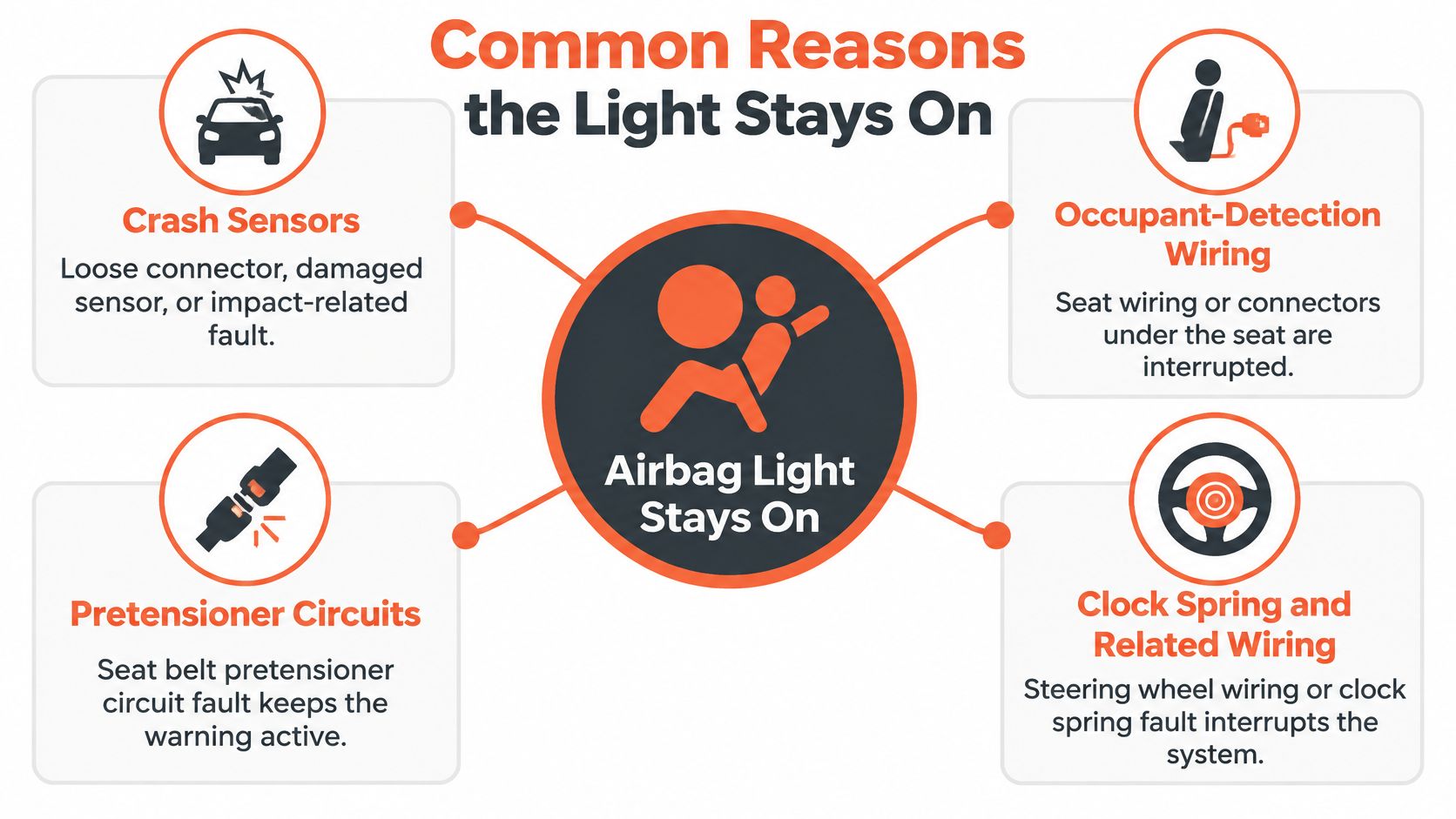
Faults Out in the Car
Crash sensors detect impact and report to the control module. A damaged sensor, loose connector, or shifted mounting after a collision can set a fault. Occupant detection wiring under the seats tells the system whether someone is sitting there. Seats get moved, removed, and swapped, and the connectors underneath are easy to disturb.
Pretensioner circuits are a frequent post crash cause. A pretensioner pulls the belt tight in an impact, and once it has fired, the module sees an open or faulty circuit. If you're unsure what that part does, this explanation of seat belt pretensioners and why they need repair walks through it in plain terms. The clockspring in the steering column carries the driver airbag circuit while the wheel turns, and a worn ribbon inside it can break that connection.
Faults Inside the Module
The SRS control module is the system's recorder and decision maker. After a collision it can store crash data and hard fault codes, and the light stays on even after you replace every damaged part around it. That surprises many rebuilders. New airbags, new belts, tidy wiring, and the lamp still glows because the module is still reporting the old crash.
Recall history shows these aren't rare edge cases. In a Toyota recall announced in November 2018, approximately 17,000 model year 2004 to 2006 Scion xA vehicles were covered because electrical shorting could damage airbag circuits, illuminate the warning light, and deactivate airbags and pretensioners, according to the NHTSA recall notice for those Scion xA vehicles. One lamp, many vehicles, and a real defect behind it.
Post collision cars often stack several causes at once. A deployed pretensioner, a pinched harness, and stored crash data can all exist in the same car. Fixing only the first fault you find and clearing codes won't finish the job. Sort each fault into its group, fix the physical damage, then deal with the stored data.
Clues That Point to a Specific Fault
Patterns narrow the search before any tool comes out. Consider a light that behaves itself in a straight line, then flickers or appears when you turn into a parking space. Center the wheel and it may behave again. That steering dependent pattern is one of the most useful clues an owner can report.
The likely suspect is the clockspring. Inside it, a flat ribbon conductor winds and unwinds as you steer. A partial break in that ribbon can touch when the wheel sits still and open up when you turn, so a stationary test can look normal. If you want a clear picture of the part, this guide to what a clock spring does explains how it carries the airbag circuit through the steering column.
How a Technician Confirms It
A manufacturer diagnostic procedure monitors the driver airbag circuit while the wheel is rotated from full left lock to full right lock and back to center. In that procedure, resistance varying above 12.5 ohms is specified as evidence the clockspring requires replacement, as set out in the Chrysler technical bulletin describing the lock to lock resistance test. Movement exposes the break that sitting still hides.
That test also explains what not to do. Technicians isolate the SRS system as the service procedure prescribes and use an approved airbag load tool rather than probing a live squib circuit directly. Airbag circuits carry deployment charges. This isn't a place for improvised jumper wires.
Other Patterns Worth Reporting
- Light appeared after moving or removing a seat: Suspect the connectors and wiring underneath first.
- Light followed interior or body work: A harness or connector may have been disturbed during the repair.
- Light returned after the battery was disconnected: The underlying fault likely survived the power interruption.
- Light joined by a dead horn or wheel controls: Those circuits often travel through the same clockspring.
Describe when it happens, not just that it happens. "Only when turning left" saves a technician real diagnostic time.
Clues guide where to test, they don't replace testing. A steering pattern points at the clockspring, but the resistance check confirms it. Write down what you observed, when it started, and what changed just before. Hand that note to whoever scans the car.
Checking Recalls and Codes Before Any Repair
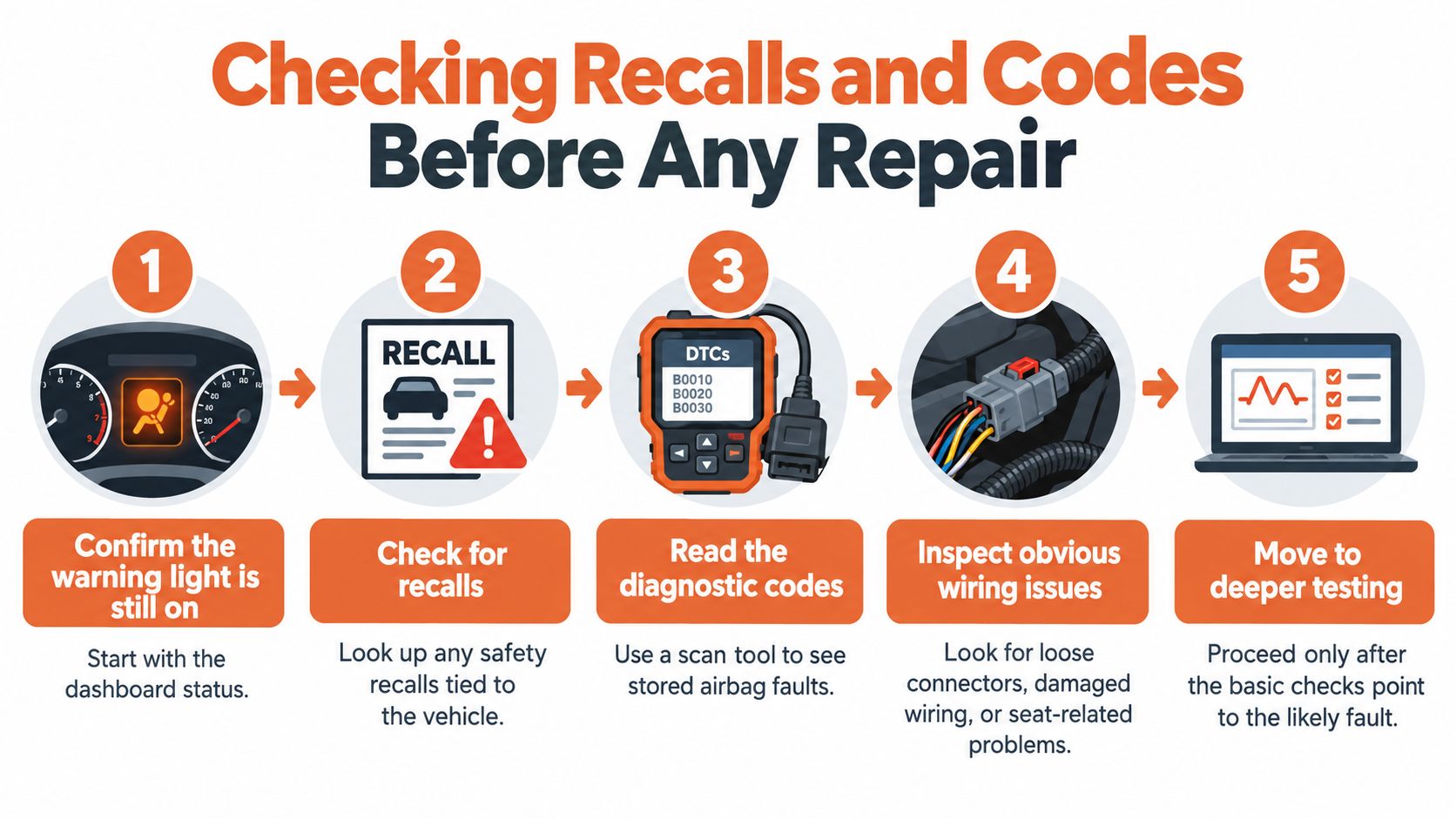
Order matters here. Start with the checks that cost nothing, then move to code reading, then to physical inspection. Replacing parts before those steps is how owners spend money twice.
The process below maps the sequence from dashboard status to deeper testing.
Step by Step, in the Right Order
- Check the VIN for open recalls: A campaign may already match your lit lamp to a known defect, whether that's a loose spiral cable, an occupant classification failure, or a control unit fault. Recall repairs follow the manufacturer's remedy, so confirm this before paying for parts.
- Read codes with an SRS capable scan tool: A basic engine code reader often can't communicate with the airbag module at all. You need the exact diagnostic trouble code, not a guess.
- Inspect what the code points to: Check connectors, harnesses, sensor mounting, seat wiring, and pretensioners in that circuit. For broader grounding in how vehicle wiring faults get traced, the SAAT Repairs Corp electrical repair guide is a useful reference on methodical electrical diagnosis.
- Decide the repair category: Determine whether you're facing a deployment fault, occupant classification issue, wiring problem, or stored crash data before ordering anything.
The short video below shows what code based diagnosis looks like in practice.
Why Lamp Status Alone Misleads
Here's the part that catches people out. A light being off doesn't guarantee a clean system. A crash investigation recorded 28 airbag system codes even though the frontal airbag warning lamp was off at retrieval, a finding noted in a recent NHTSA recall report discussing warning lamp limitations. So an airbag system can carry faults without showing you a lamp.
Decision point: If you don't have an SRS capable scanner and the exact codes, stop there and get a professional scan before buying any part.
If a recall covers your fault, follow that path. If codes point to stored crash data, the repair moves toward the module. If they point to a circuit, fix the circuit first. That sequence keeps you from resetting a module while a broken wire waits to turn the light straight back on.
Reset or Replace Restraint Components
Owners waste the most money because reset and replace sound interchangeable. They're not. A reset fixes data stored in a working module. Replacement fixes hardware that deployed or broke. Many post crash cars need both.
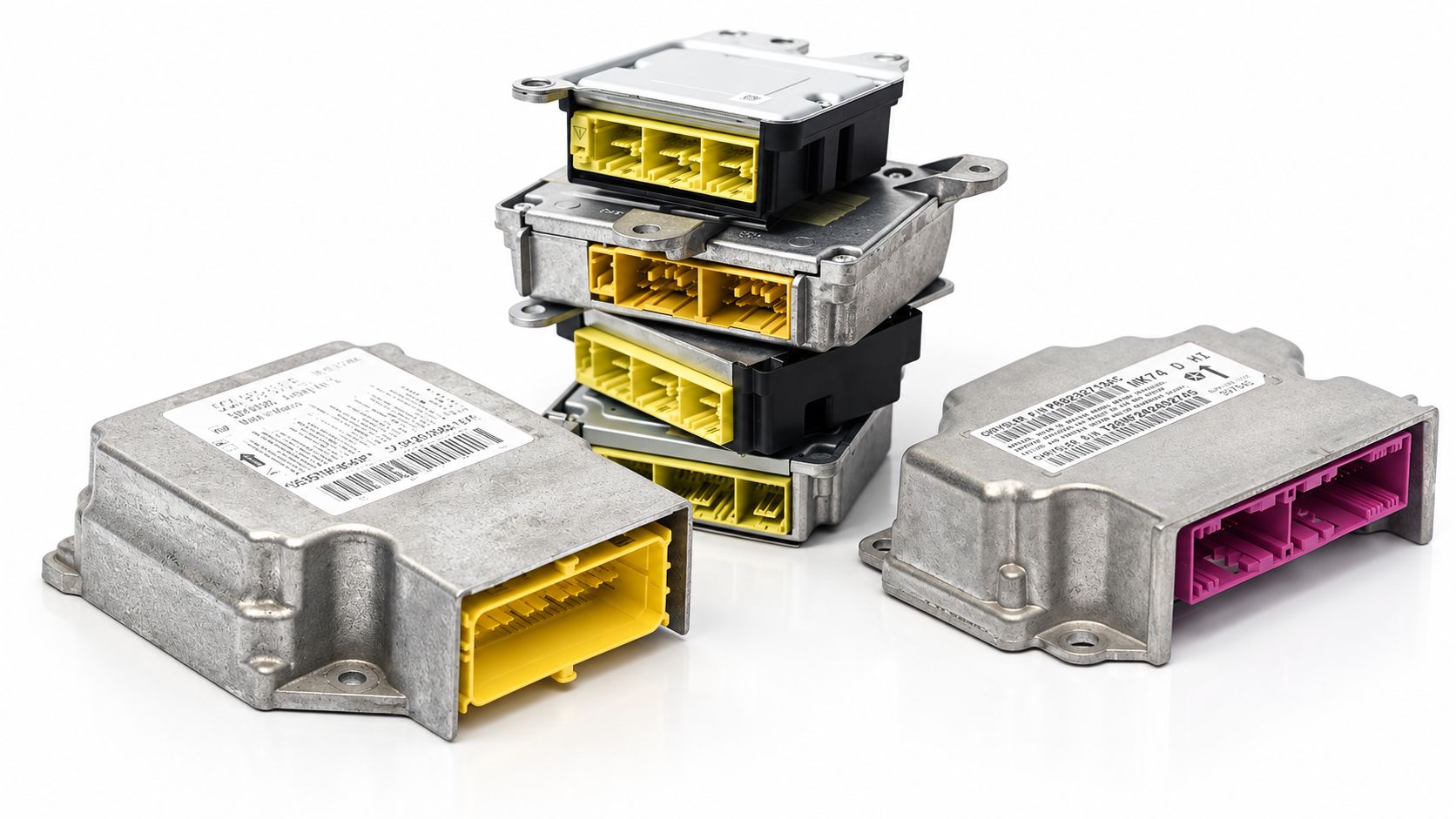
After a collision, the module is often physically intact. It recorded the event, stored hard codes, and now refuses to return to a ready state. Those records can't be cleared with a basic scan tool, so the light remains even after new airbags and belts go in.
Typical Action After a Collision
| Component | Typical action after a collision |
|---|---|
| SRS control module with crash data | Reset and reprogram the original unit |
| Deployed airbag | Replace the airbag unit |
| Fired or locked pretensioner | Repair or replace the belt assembly |
| Damaged impact sensor | Replace the sensor |
| Cut or pinched wiring | Repair the harness and connectors |
| Faulty clockspring | Replace the clockspring |
For a fuller breakdown of that divide, this comparison of what gets replaced versus what can be reset after a crash is worth reading before you order parts.
Dealership Replacement Versus a Reset
A dealership route usually means a new module, programming, and VIN coding, with wait time for the part. That makes sense when a module is physically damaged, water damaged, or no longer communicates. When the original module works and only holds crash records, replacing it discards a functioning unit that's already paired to your car.
A mail in reset takes the other path. With a service such as the SRS Airbag Module Reset Service After Accident Airbag Light Reset and Crash Data Removal All Makes and Models from Seat Belt Repair, you remove your original module and ship it in. The service reprograms that module, removes stored crash data and deployment records, clears hard codes, and returns it ready to reinstall. Keeping the original unit avoids the extra programming step a new module requires.
One limit matters and it isn't optional. A reset covers the module only. Deployed airbags, blown pretensioners, damaged sensors, and faulty wiring still need physical repair by you or your shop. If any of those faults remain when the reset module goes back in, the light can stay on, and that's the system correctly reporting unfinished work.
Salvage rebuilders hit this combination most often. The car needs deployed components replaced, belts addressed, wiring checked, and the module reset, all before the system can pass its own self check. Plan for both halves of the job, not just the half that's easiest to order.
Verifying the Repair and Taking the Next Step
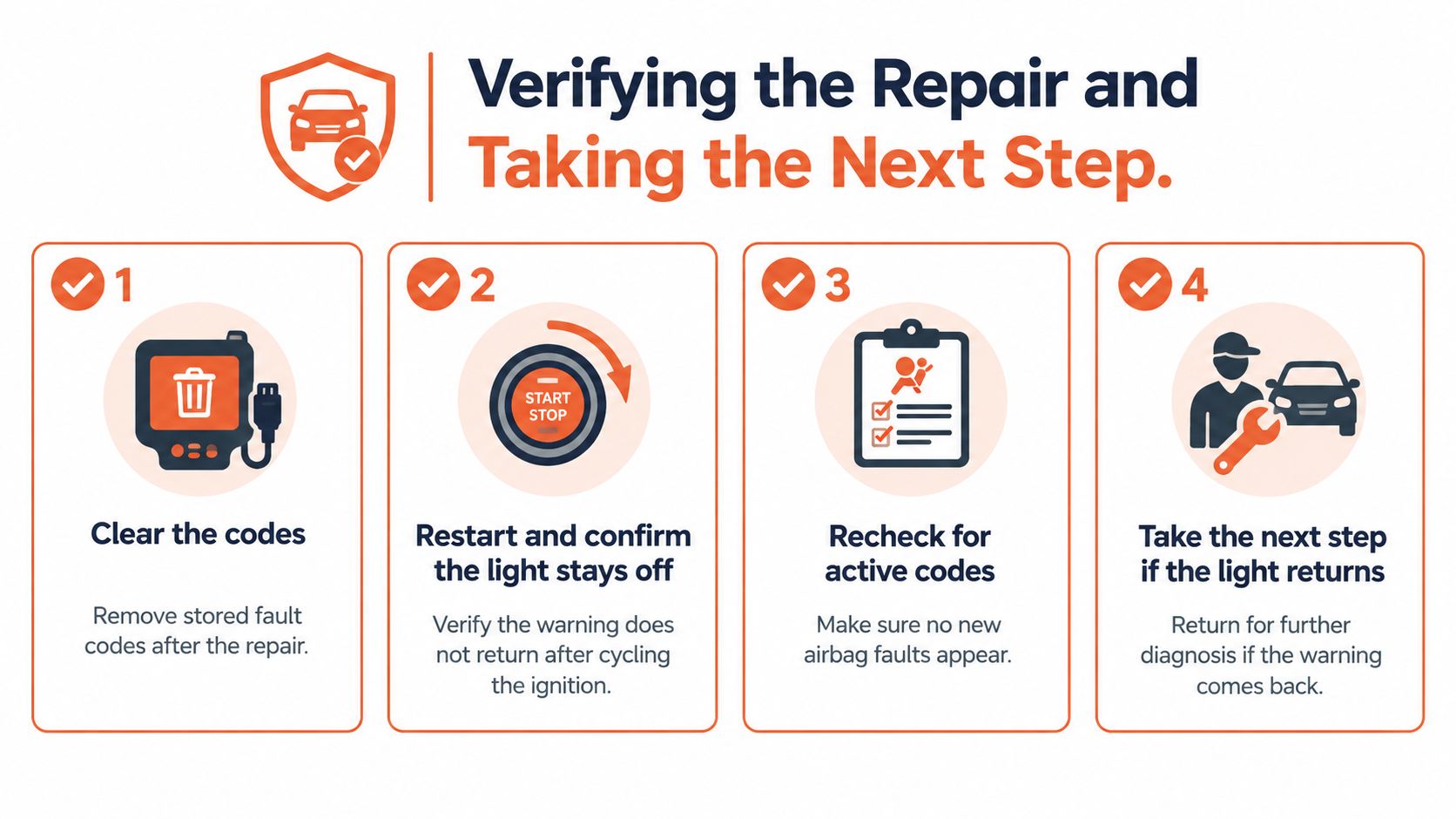
A dark dashboard right after clearing codes proves very little. Real verification means the system runs its own check, passes it, and keeps passing it on the next start. That's the standard to aim for.
Manufacturer service documentation is direct on this point. Clearing the lamp or disconnecting the battery is not a valid repair, because if the underlying resistance, communication, sensor, or crash record fault remains, the warning returns and readiness can't be established, as explained in the Nissan Titan service manual section on SRS diagnosis. The lamp is reporting a condition. Erasing the report doesn't change the condition.
A Verification Checklist You Can Follow
- Fix first, clear second: Only clear codes after the faulty part, wiring, or stored data has been addressed.
- Cycle the ignition: Confirm the lamp lights during startup, then turns off after the self check. Both halves matter.
- Rescan the system: Run a complete SRS self test and confirm no active codes remain.
- Restart and recheck: Start the car again later and confirm the light stays off and no new codes appear.
Verification is what separates a repaired system from a temporarily quiet one. One clean startup is a start, not a finish.
If the light returns, don't clear it again and hope. Read the new code, because it may point to a second fault that was hiding behind the first. Post crash cars often need that second pass.
Your next step depends on what your scan showed. If the codes point to stored crash data or the light is on after deployed parts were replaced, send the original module out for a professional reset using the mail in process, then reinstall and verify. If you don't have codes yet, take the car to a qualified technician with an SRS capable scanner and bring your notes on when the light appears. Either way, you're now working from evidence instead of guessing at a dashboard lamp, and that's how this repair gets finished properly.
If your scan points to crash data stored in the module, Seat Belt Repair offers a mail in SRS module reset that reprograms your original unit and clears those records, alongside seat belt pretensioner repair for deployed or locked belts. That combination covers the two most common reasons an airbag light stays on after a collision. Visit Seat Belt Repair to start your order and get your restraint system verified and back to ready.

Оставить комментарий
Этот веб-сайт защищается hCaptcha. Применяются Политика конфиденциальности и Условия использования hCaptcha.