

For men searching Seatbelt Belts Men, the fit test takes about ten seconds: the lap belt should sit low on the hip bones, not up on your stomach. The shoulder belt should run across the middle of your chest and collarbone — no sawing at your neck, no falling off your shoulder.
Check How Your Seat Belt Fits

Park first, then sit all the way back in the seat. Buckle up like you normally drive and take a quick look at where both pieces of webbing land.
Think of it like a backpack strap. Placement matters just as much as tightness. Height, torso length, and seat position all change the angle, so if it feels off, it doesn't mean the belt is bad.
- Check your hips. Lap belt stays below the belly, flat across the hip bones.
- Check your chest. Shoulder belt stays on your chest, never tucked under your arm.
- Check the webbing. No twists, fraying, cuts, or bunched-up spots.
Comfort still has to follow the right path. Pulling the belt off your chest is never the fix.
Use the quick chart below to pick one adjustment to start with instead of guessing what's wrong.
Quick Fit Check for Men
Here's where the belt should sit in the most common seating positions, and what to try first:
| Seating Situation | Where the Belt Should Sit | First Adjustment to Try |
|---|---|---|
| Tall driver | Across chest and collarbone | Recheck seat height and shoulder anchor |
| Shorter torso | Clear of the neck | Adjust shoulder anchor if available |
| Larger midsection | Low across hip bones | Sit fully back and reposition lap belt |
| Reclined passenger | Against chest and hips | Bring seatback more upright |
Most fit complaints come down to seating position, not broken hardware. Start there before you assume anything needs replacing.
Try a Fit Adjustment First
Change one thing at a time. Use the seat and belt settings from your vehicle handbook, then recheck both the lap and shoulder fit before you pull out.
Say someone else drove your truck and now the belt is rubbing your neck. Put your seat and anchor back where you had them. That alone fixes it nine times out of ten.
But if the belt still hangs loose or won't retract, that's past posture. That's mechanical.
Know When Fit Becomes a Service Issue
Here's how to tell the difference between annoying and actually broken:
- Adjust and recheck if the belt works fine but just sits in the wrong spot.
- Arrange inspection if the webbing is damaged, retraction is hit-or-miss, or the car was in a crash.
Seat Belt Repair services driver, passenger, rear, and center seat belts, plus single, dual, and triple stage pretensioners. Explore its seat belt repair services.
Do this parked check before your next trip. If a proper adjustment doesn't solve it, have a qualified repair professional look at the restraint.

The same seat belt can feel just fine on one guy and completely off on another. And neither of them did anything wrong.
Body shape changes how the belt lines up with you. The anchors stay put, your body doesn't.
Table of Contents
- Check How Your Seat Belt Fits
- Quick Fit Check for Men
- Try a Fit Adjustment First
- Know When Fit Becomes a Service Issue
- Why The Belt Path Changes With Body Shape
- Comfort Choices Without Losing Restraint
- Repair Options After a Crash or Wear
- Repair Cost Versus A New Assembly
- What to Do Before You Ship a Belt
Why The Belt Path Changes With Body Shape
Webbing only follows where it's told to go. That route is set by the retractor, the upper shoulder guide — most people call it the D-ring — and the buckle.
Those mounting points don't adjust themselves for wider shoulders, a longer torso, or a bigger stomach.
Think about a tall driver for a second. He slides the seat back to get legroom, his chest shifts away from that upper guide, and now the diagonal strap hits at a different angle. Same belt assembly, totally different fit.
- Torso length changes where the diagonal hits your shoulder
- Chest shape affects how flat the strap sits
- Midsection size can make it harder to keep the lap belt down low
Tighter isn't automatically better. The belt has to be routed right first, then tension can do its job.
Follow The Body's Landmarks
Remember the backpack example. Yanking harder on a crooked strap doesn't fix where it's anchored. It just digs in more where it already rubs.
A car belt works the same way. What matters are your pelvis, chest, and collarbone. Lap belt stays low on the hips. Diagonal belt stays across the chest, not pushed off to the side.
| Body Landmark | Routing Concern |
|---|---|
| Hip bones | Lap webbing riding up onto the belly |
| Collarbone | Shoulder webbing creeping toward the neck |
| Chest | Webbing floating off the torso |
One more thing. Sit upright when you check this stuff. You won't get a real read on fit while you're leaned forward grabbing your phone or turned around talking to someone in the back seat.
- Sit back in your normal driving position.
- Check the belt against those three landmarks.
- Only use the adjustments listed in your vehicle handbook.
Understand What Happens Under Load
The retractor lets the webbing move with you day to day, then locks when it senses it needs to hold you. If your car has a pretensioner, it pulls slack out fast in certain crashes. It doesn't reroute a belt that was sitting wrong to begin with.
That's an important difference before you buy parts. Seat Belt Repair's services fix damaged webbing and locked or fired tensioners, but even a perfect mechanism still needs the right positioning to protect you.
Before your next drive, look up the seating and shoulder anchor section in your handbook. If you've adjusted everything correctly and the fit is still off, have a qualified vehicle professional look at your seating position and restraint together.
A rubbing strap, a slow return, and a belt locked tight after a crash all feel annoying in the moment. But they point to different problems, so what you're feeling matters a lot more than yanking harder or ordering parts right away.
Common Seat Belt Problems Men Notice
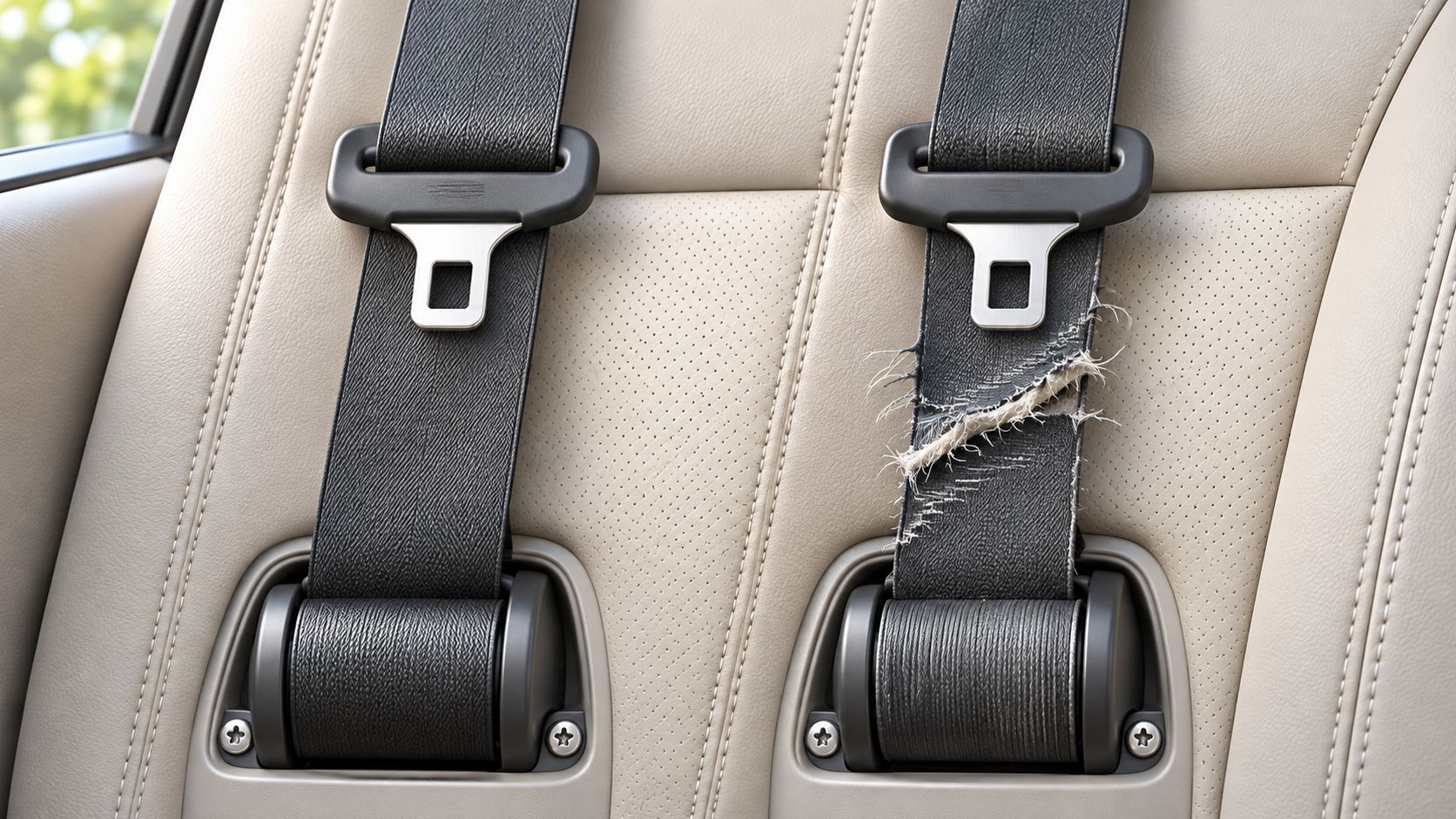
For guys searching “seatbelt belts men,” it helps to separate placement versus operation versus damage. Think of it like a jacket zipper — fabric snagging next to it is not the same as broken teeth.
A tall driver, for example, might get neck rubbing even though the belt pulls out and retracts just fine. That’s usually a seating position and shoulder anchor thing, not a sign the retractor is bad.
- Neck rubbing with normal movement usually means start with the belt path.
- Lap webbing that bunches up means check for visible twists and routing.
- Slack left hanging after you unbuckle means check operation, not comfort.
A belt that feels uncomfortable and a belt that cannot function need different responses.
Match Seat Belt Symptoms to Next Steps
Park somewhere safe and use this quick comparison before you touch any trim or tools. Think of these as starting clues, not proof anything is safe.
Seat Belt Symptoms and Next Steps
| What You Notice | Likely Area | Sensible Next Step |
|---|---|---|
| Shoulder strap rubs neck | Seating or upper guide | Check approved adjustments |
| Lap section won't lie flat | Twisted or bunched webbing | Inspect the visible route |
| Belt returns slowly | Dirt, grime, or retractor wear | Follow handbook cleaning guidance |
| Belt stays tight after collision | Possible deployed pretensioner | Arrange professional assessment |
| Frayed, cut, or chewed strap | Damaged webbing | Stop using that seating position |
If more than one symptom shows up, go with the most serious one first. Damage and post-crash locking always win over comfort.
Age, dirt, and grime can make a belt sluggish even if you’ve never had a crash. Cleaning can help, but it doesn’t prove the restraint will work right, so lingering slowness is worth getting checked.
For a closer look at that issue, read the guide to a seat belt retractor that isn't working. Stick to what your owner’s handbook allows and skip the lubricants or solvents.
Treat Collision Locking and Webbing Damage Differently
A belt that locked up in a crash is in a whole different category than a slow return from yesterday. Don’t force a locked mechanism, and don’t assume it’s fine just because it finally moved a little.
Seat Belt Repair repairs belts with locked or deployed tensioners and replaces frayed or damaged webbing. Explore the available seat belt repair services.
- Record the symptom, including whether it started after a collision.
- Photograph visible damage without taking anything apart.
- Arrange qualified assessment against the vehicle manufacturer's requirements.
Before your next drive, look the belt over while parked. If it stays stuck, retracts unevenly, or shows damage, use a different seating position that works properly and talk to a qualified repair pro.
Comfort Should Change How A Belt Feels, Not Where It Holds You. A softer cover means nothing if it pulls the shoulder strap off your chest or lets the lap belt ride up onto your stomach.
Comfort Choices Without Losing Restraint
Picture this. A guy adds a thick neck pad for his daily commute. The rubbing stops, sure. But the pad bunches up at the shoulder guide, so he slides the strap outward until it barely crosses his chest.
That's just one example, not a reason to swear off every accessory. The real question is simple — does it change belt routing, snugness, or free movement?
A Comfort Accessory Must Never Become A Detour Around Proper Restraint.
Before you buy anything, know the difference between an adjustment and a modification.
- Try approved settings first. Move the seat and the shoulder anchor height the way your vehicle handbook describes.
- Reject routing tricks. Never tuck the shoulder strap behind your back, under your arm, or into a clip that holds it away from you.
- Check every occupied seat. That includes rear and center passengers. A short trip is not an excuse to skip the belt.
Separate Appearance Changes From Safety Repairs
Classic cars are a different story. A lot of owners want fresh webbing that matches the original interior instead of a bright modern belt that sticks out.
Seat Belt Repair offers classic car seat belt webbing restoration and custom color replacement. Check out their seat belt restoration services.
But a color change is not the same as clipping on a cushion. Webbing is the restraint, so talk to a qualified shop about compatibility, manufacturer requirements, and whether repair or replacement makes sense.
| Choice | Practical Boundary |
|---|---|
| Seat adjustment | Follow the vehicle handbook |
| Comfort accessory | Must not redirect the belt |
| Replacement webbing | Requires qualified component service |
Medical discomfort needs one-on-one advice, too. The VeganOstomy clothing guide talks about stoma protection, but it doesn't prove vehicle compatibility or crash performance.
- Ask your clinician about pressure around a stoma or surgical site.
- Ask the vehicle manufacturer about proper restraint accommodations.
- Leave webbing and pretensioner work to qualified pros using the right original equipment components.
Laws vary, so check the current requirements where you drive instead of assuming one rule fits everywhere. Before your next trip, pull off any routing workaround — and if you still can't get a comfortable, correct fit, get professional help.
A crash repair and a chewed strap might use the same mail-in service, but they shouldn't be ordered like the same job. Match the service to the damaged component, not just to whether the belt moves.
Repair Options After a Crash or Wear
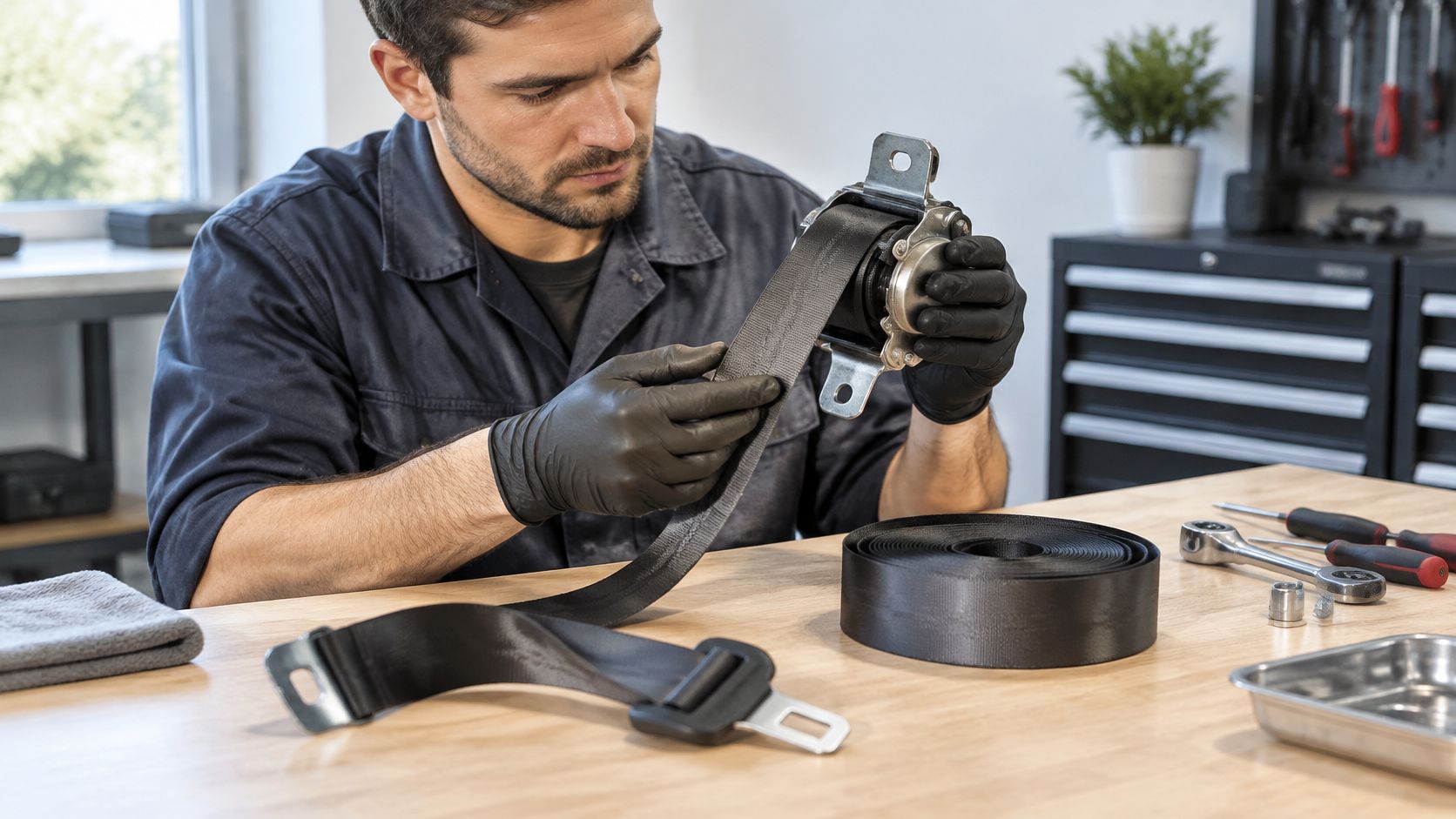
Take an auction car that shows up with blown airbags and a locked driver's belt. That's one situation.
Then there's the family car with tooth marks across webbing that still retracts. Or the older truck where the belt comes back slow, with no crash history at all.
Those three need different answers before anything gets shipped. Think of the restraint as connected equipment, not one interchangeable fix.
| Visible Problem | Service to Discuss |
|---|---|
| Locked belt after deployment | Pretensioner assessment |
| Torn or dog-chewed strap | Webbing replacement |
| Slow return without collision | Retractor diagnosis |
| Persistent airbag warning | SRS diagnosis |
A belt retracting again doesn't establish that the entire restraint system is ready for use.
Have a qualified shop check the vehicle manufacturer's post-collision requirements before you choose repair over replacement.
Separate Pretensioner Work From Webbing Replacement
Seat Belt Repair fixes locked, deployed, or improperly retracting belts by replacing the gas cartridge mechanism with genuine OEM parts, returning the repaired belt to like-new condition. Learn about its seat belt repair services.
But don't assume every slow retractor needs that mechanism replaced. Say whether it happened right after a crash or crept up over time with age, dirt, or grime, so the team can point you to the right work.
- Pretensioner work addresses the deployment mechanism on single-stage, dual-stage, and triple-stage assemblies.
- Webbing replacement addresses cut, torn, worn, or chewed straps, with original color matching or custom colors.
- Original labels can be re-stitched where applicable during webbing service.
These are distinct mail-in service options, even when one assembly needs more than one operation.
A collision is a good example. It can fire the pretensioner and tear the fabric at the same time. Tell the repair team about both instead of ordering just for the damage you notice first.
Identify the Assembly and Address Warning Lights
Before you order, use the service's belt identification guidance and confirm the assembly with support if anything looks unclear.
- One plug corresponds to the single-stage ordering option.
- Two plugs corresponds to dual-stage.
- Three plugs corresponds to triple-stage.
- A pretensioner buckle has its own ordering option.
Also, SRS module reset is a separate service for clearing stored crash data and hard codes. It isn't a replacement for diagnosing other faults or finishing required collision repairs.
Contact Seat Belt Repair with component photos and symptoms before shipping. Set up installation with your local shop, because this mail-in service doesn't install components, and have any lingering warning conditions checked before the vehicle goes back in use.
Repair Cost Versus A New Assembly
A frayed or locked belt doesn't mean replacement is your only move. Look at the full job cost, parts plus labor plus shipping, and have your shop check what the automaker actually allows for that car.
Seat Belt Repair starts from $64.97, but that's a starting point, not a flat quote for every belt or service combo. Confirm what your assembly needs before you set a budget. You can review Seat Belt Repair's service options to see what's offered.
Buying new means buying a whole replacement assembly. Using mail-in repair means sending in the belt you already have. Think of it like getting two estimates with different parts lines, but often pretty similar shop labor on both sides.
Savings should come from the right repair, never from skipping a replacement or safety check you actually need.
For salvage rebuilders, fleets, and recon teams, that difference matters on every RO. Repair can dodge the higher cost of a full replacement when it's appropriate, but there is no one-size savings number without real quotes side by side.
Compare What's Included Before Choosing
Seat Belt Repair uses OEM parts with processes built around factory specs and Federal Motor Vehicle Safety Standards. Every serviced part gets functional testing before shipment, not just boxed up and sent back.
That bench test is still not the same as checking the car after install. Keep those two jobs separate when you read the comparison of new, used, and repaired seat belt assemblies.
| Mail-In Repair Includes | Owner or Local Shop Handles |
|---|---|
| Approved component service with OEM parts | Confirming vehicle repair requirements |
| Functional testing before shipment | Removal and shipment arrangements |
| Return of the serviced component | Reinstallation and vehicle checks |
Say a dealership is pricing an auction car. Get both totals in writing before you decide. Make sure each estimate includes:
- Component work, tied to the actual fault found.
- Shipping, confirmed for that specific order.
- Local labor, for removal, reinstall, and any required checks.
Plan for Turnaround and Local Installation
Stated repair turnaround is 24 hours after receipt, with a typical 24 to 48 hour return shipping window. That is not door-to-door time from pulling the belt to having the car ready to deliver.
Services carry a lifetime warranty, and the company has been around since 2013. Ask about warranty terms and shipping timing before you order.
This is mail-in repair only. The business doesn't install parts. Reach out to Seat Belt Repair with your assembly details, get an estimate, and line up qualified local installation before you ship anything.
Before shipping, take a minute to confirm exactly which part needs service — and why.
What to Do Before You Ship a Belt
Think of your shipment as a repair work order. Are you dealing with a fit issue, damaged webbing, a locked pretensioner, or stored crash data? Sorting that out first saves a lot of back-and-forth.
Don't just box everything up with no notes. A little detail on your end helps the techs get it right the first time.
- Describe the fault. Include the seating position, any visible damage, and whether the problem started after a collision.
- Match the hardware. Double-check your ordering option before you pack anything.
- Confirm module needs. An airbag light needs proper diagnosis. Don't assume a belt repair alone will clear it.
| Ordering Option | Hardware Identifier |
|---|---|
| Single Stage | One plug |
| Dual Stage | Two plugs |
| Triple Stage | Three plugs |
| Pretensioner | Buckle assembly |
For a quick refresher on prep, check the seat belt pretensioner repair guide. If you're unsure about the connector, send photos to support before ordering instead of guessing by vehicle model.
The right component matters just as much as the right service. Never force a locked mechanism to get it ready for shipping.
Arrange Removal and Verify Reinstallation
Most belts and modules come out after removing trim and unbolting them from the frame. If you're not comfortable with that, follow factory procedures and have a qualified technician handle removal.
Need a hand with removal? Help is available by email, phone, or text during posted hours. It's worth confirming the steps before you disconnect any restraint parts.
- Ship to Seat Belt Repair, 40 Main St., Westfield, MA 01085.
- Plan for local reinstallation. Service is done after we receive your parts — installation isn't included.
- Check the finished vehicle. Look for smooth retraction, solid buckle latching, correct routing, and secure mounting.
Lastly, have your installer confirm any old airbag warning condition was handled with the right diagnosis and module service. A belt that retracts doesn't mean every collision repair is done.
Contact Seat Belt Repair through its mail-in repair service with photos of your components and symptoms, confirm your order, and line up qualified installation before you ship.

Laisser un commentaire
Ce site est protégé par hCaptcha, et la Politique de confidentialité et les Conditions de service de hCaptcha s’appliquent.