

An SRS light is a serious safety warning, not a cosmetic glitch, and NHTSA-linked recall documents note that some airbag failures can light the lamp 300 to 400 miles before a possible non-deployment event. In plain terms, if that light is on, the restraint system may not be ready when you need it.
You're probably looking at the dash right now and wondering if the car is still okay to drive. Maybe it started after a battery change, maybe after someone slid a seat back, or maybe it came on with no warning at all. The problem is that the same light can point to a harmless low-voltage event or a fault that has taken airbags or pretensioners out of service, so guessing is how people waste money and miss a real safety issue. What a Supplemental Restraint System problem really means is usually more serious than most drivers think.
Table of Contents
- Recognizing the Warning and Why It Matters
- Common Mechanical and Electronic Triggers
- Severity Tiers and Diagnosis
- Immediate Safety Recommendations
- Professional Repair and Module Reset Options
- Next Steps and Avoiding Scams
Recognizing the Warning and Why It Matters
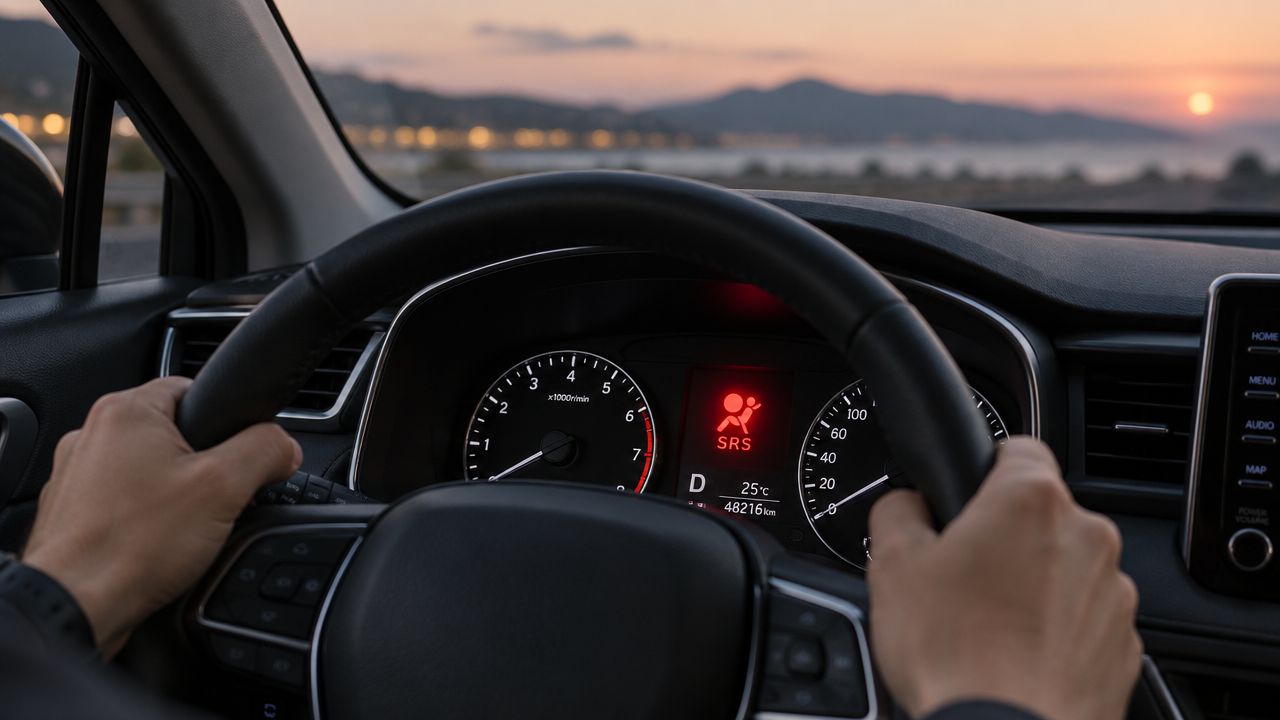
The first thing most drivers notice is the little airbag icon staying on after startup. It feels minor because the car still runs, the radio still works, and the brakes still feel normal, but that light is telling you the restraint system failed a self-check. In a crash, that can mean airbags, seat belt pretensioners, or both may not deploy as intended.
A practical example helps here. A driver sees the light after a battery replacement, keeps driving for a week, and assumes the system will sort itself out. Another driver sees the same light after a minor bump in a parking lot. Those two cases can have very different causes, but the warning matters in both because the system is telling you something inside the SRS needs attention now, not later.
Practical rule: if the SRS lamp stays on after startup, treat it as a safety fault until a proper diagnosis proves otherwise.
The reason the warning is taken so seriously is simple. Recall documents tied to airbag failures have described a window where the lamp can come on 300 to 400 miles before a potential non-deployment event, which gives you a limited early warning before protection can be lost. That doesn't mean every lit SRS lamp is about to fail tomorrow, but it does mean the system is not something to ignore and hope away. The system includes airbags and seat belt pretensioners, and recall guidance says the lamp is meant to alert the driver that immediate repair is necessary, not optional.
A lot of people try to judge severity by whether the car still drives normally. That's the wrong test. The engine and the restraint system are separate, so a vehicle can feel perfectly fine while the SRS has already disabled key protection components.
If the light is on, the next question isn't “Can I keep driving?” It's “What part of the restraint system failed its check?”
Common Mechanical and Electronic Triggers
An illuminated SRS light usually comes from a fault the control module has detected in a monitored circuit. In the field, that often means an open circuit, a short, or resistance that's out of range in a squib or pretensioner path rather than a simple bulb problem. Industry diagnostic guidance notes typical squib resistance is about 2 to 4 ohms, and that small range is one reason the system is picky about connector condition, wire damage, and module state.
What tends to fail first
Under-seat connectors are common trouble spots because seat movement works those plugs over and over. Corrosion, a loose fit, or a harness rubbed by the seat rail can create an intermittent fault that shows up the moment someone adjusts the seat. A failed clock spring is another repeat offender because it has to keep the driver airbag circuit alive while the wheel turns.
The belt side matters too. Seat belt buckle sensors and pretensioner circuits are monitored as part of the same system, so a damaged buckle switch or a triggered pretensioner can keep the lamp on even if the airbags themselves are untouched. That's why a fault code matters more than a guess, because the same light can reflect a wiring problem, a sensor problem, or a spent restraint component.
If you want a plain-language breakdown of deployment terms, the airbag deployment glossary from Vektracer is useful for understanding how the system talks to itself during a crash event. It helps translate the jargon without turning every warning into a parts list.
A common pattern after repairs or seat work
I've seen plenty of vehicles where the light appeared after upholstery work, seat removal, or a seat swap. That doesn't automatically mean the airbag failed, but it often means a connector was tugged, pinched, or left with poor contact. Corroded under-seat connectors, a damaged seat harness, a failed clock spring, or a triggered pretensioner can all keep the lamp on even when the bag itself is still intact.
For a broader repair walk-through, this seat belt warning-light guide shows how belt and restraint faults often travel together after impact. That matters because chasing only the dash light can miss the actual circuit that set it.
Severity Tiers and Diagnosis
Not every SRS light means the same thing, and the smartest way to think about it is by severity. A loose connector or low-voltage event can be annoying and temporary, while a post-collision module with stored crash data can keep the entire restraint system from going ready. The difference is urgency, not just cost.
Mild, moderate, and critical faults
A mild fault often starts after battery service, a seat move, or a brief voltage dip. The light may be intermittent at first, then stay on once the control module decides the fault is no longer passing its checks. That kind of issue can still require professional diagnosis, but it often points to wiring, power supply, or a connector issue rather than a deployed part.
A moderate fault is usually tied to a specific component, like a buckle sensor, seat harness, or clock spring. The light stays on because the module sees a bad signal every time it runs its self-test. Many people get into trouble by replacing parts based on guesswork, because the same warning can come from several different circuits.
A critical fault is the post-impact case. After a collision, many SRS systems store crash data in non-volatile memory and can lock the module until the data is cleared or the module is replaced. That's not a “clear the code and move on” situation, because the system may be sitting in a permanently disabled state until the module is properly serviced.
If you want a professional scan reference, the diagnostic test for your vehicle is the kind of next step that separates a guess from a real diagnosis. A capable SRS scan tool can read the module, show the stored fault, and save you from replacing the wrong part.
Rule of thumb: intermittent after battery work suggests one path, constant after impact suggests another, and both deserve a proper scan before anyone starts changing parts.
A simple way to think about it is this. If the light came on after a battery event and no crash, the fault may be electrical and temporary. If it came on after a collision, the module itself may have stored crash data, and the system may need reset or replacement work before it can go ready again.
Immediate Safety Recommendations
Don't keep treating the car like normal if the SRS light is active. You can usually drive a short, direct trip to a repair shop, but it's not the light you ignore for days or weeks while hoping it disappears. If the warning appeared after a crash, or after someone worked under the seats, assume the system needs attention before the car is used regularly.
What you can check without making things worse
Start with the basics. Make sure the battery connections are clean and tight, check whether the light appeared right after a seat was moved, and look for obvious under-seat harness pinching without unplugging anything. Don't probe SRS connectors with a standard multimeter unless you know the OEM procedure, because ordinary testing can be misleading or unsafe on restraint circuits.
Avoid random resets, battery disconnect tricks, and parts swapping based on internet guesses. Those shortcuts can erase clues, mask a real fault, or delay the repair that matters. If the light came on right after a battery replacement, a seat move, or a small impact, write that down before the car goes in, because that timing helps a technician narrow the fault fast.
When towing makes more sense
Tow the vehicle if the light came on after a collision and you know airbags or pretensioners may have deployed. That's also the safer call if other warning signs point to a hard SRS fault, like a locked belt, blown pretensioner, or visible damage around a seat or steering column. The car may still roll under its own power, but that doesn't mean the occupant protection system is in working order.
Professional Repair and Module Reset Options
The right repair depends on what the module found, not just on what the light looks like. After a collision, many systems need the crash data cleared or the module replaced before the restraint system can return to a ready state. That's why a scan tool alone often isn't the full fix, especially when the module has stored hard codes or locked itself after impact.
What professional repair usually involves
A proper repair path starts with reading the fault codes, then confirming the physical cause. If the issue is a corroded connector or damaged harness, the fix is electrical and mechanical. If the issue is a deployed or locked pretensioner, the bad component has to be repaired or replaced so the circuit comes back within spec.
OEM-style diagnostic procedures also call for checking deployment-control circuit resistance and verifying the clock spring when resistance is out of range. That's important because the module isn't just looking for “a bad part,” it's looking for a circuit that behaves exactly as expected during self-test. Until that circuit is restored, the system can stay disabled.
The mail-in repair model is worth mentioning because it's often a practical option for crash-data issues and seat belt pretensioner repairs. Seat Belt Repair offers mail-in SRS module reset and seat belt pretensioner repair, which can be useful when the problem is a locked module or a spent restraint component rather than a body shop issue. The point isn't to skip diagnosis, it's to match the repair to the fault instead of replacing entire assemblies unnecessarily.
For more detail on reset-based repairs, this SRS module reset guide explains why crash-data removal and pretensioner repair are separate jobs. That distinction matters because a reset won't fix a bad connector, and a connector repair won't erase crash data.
The clean repair is the one that restores circuit integrity, clears stored crash history when needed, and confirms the system passes its next self-test.
A lot of expensive mistakes happen when people replace the module without checking the rest of the system. If the problem is a sensor, harness, or clock spring, the new module won't solve it. If the problem is crash data, a scan-and-clear attempt won't solve it either. The repair has to match the fault.
Next Steps and Avoiding Scams
The biggest scam in SRS repair is the idea that a generic scanner or quick code erase equals a fix. It doesn't, especially when the module has stored crash data or the system is seeing a real circuit fault. A good shop will tell you exactly which circuit failed, what part of the restraint system is affected, and whether the repair needs replacement, reset, or both.
Ask direct questions before you hand over the keys. What code did the module store, which component failed the self-test, and does the shop verify the repair with another scan after the fix? If the answer is vague, or they start selling parts before reading the SRS codes, keep looking.
Watch for these red flags:
- Parts first, diagnosis later: replacing a clock spring, module, or sensor without reading codes is just expensive guessing.
- Generic scan only: many basic tools don't read SRS data, so a shop that relies on them is working blind.
- No explanation of crash data: after-impact faults are different from low-voltage faults, and the repair should reflect that.
- No clear recheck plan: a proper repair includes verification that the system is ready again.
The best shops separate a nuisance electrical event from a real restraint-system failure, then repair only what the fault actually demands. That's the line between paying for the right work and paying twice.
If your SRS light is on and you want the fault handled the right way, start with a proper diagnosis and then choose the repair that matches the code, not the guess. Visit Seat Belt Repair to review mail-in SRS module reset and seat belt repair options that fit post-collision faults, locked pretensioners, and related restraint-system issues.


Оставить комментарий
Этот веб-сайт защищается hCaptcha. Применяются Политика конфиденциальности и Условия использования hCaptcha.