

You pull into the driveway, reach for the buckle, and hear the familiar click. Then you tug the belt and feel something that doesn't seem right. Perhaps the tongue backs out, the release button sticks, or a rear-seat buckle works normally on one trip and refuses to latch on the next. That small piece of hardware has a much bigger job than making a reassuring sound.
Seat belt latches must retain the belt during a collision, tolerate repeated use, and release when an occupant needs to get out quickly. Federal requirements address both sides of that responsibility, including durability and release behavior under specified conditions (FMVSS No. 209). A latch that feels inconvenient today may be showing wear, contamination, misalignment, or an intermittent partial-engagement problem.
This guide starts with the mechanism, then moves through common symptoms, front and rear inspection, pull-back verification, cleaning, and repair decisions. The aim isn't to turn every owner into a restraint engineer. It's to give you a reliable way to recognize unsafe behavior and know when a buckle needs professional attention.
Table of Contents
- Introduction Why Seat Belt Latches Deserve More Attention
- How Seat Belt Latches Work and Why Standards Matter
- Common Seat Belt Latch Problems Across Vehicles
- How to Inspect Front and Rear Seat Belt Latches
- Why a Click Does Not Mean Secure and How to Verify Engagement
- Maintenance Tips and Repair vs Replacement Decisions
- Keeping Every Latch Reliable for the Long Term
Introduction Why Seat Belt Latches Deserve More Attention
You buckle in, hear a click, and pull the shoulder belt across your chest. The button feels stiff, the tongue enters only at a certain angle, or a rear center latch behaves differently in a cold cabin. These details are easy to dismiss because the buckle still appears present and usable. They can also signal that the retention mechanism needs inspection.
A seat belt latch connects the belt tongue to the vehicle's restraint system. Its internal parts must capture the tongue fully, hold it under belt tension and crash loading, and release predictably afterward. If the tongue is only partly engaged, the belt may not provide the intended restraint when it matters.
The sound is only one observation
Drivers are often taught to listen for a click. The sound is useful, yet it confirms only that some internal movement occurred. It does not prove that the tongue reached its proper position or that the locking parts are holding it securely.
Recent recall patterns show how a buckle can look and sound latched while becoming unsecured with slight movement when an internal component is out of specification, as summarized in NHTSA recall information summarized by the Automotive Safety Council. Make a pull-back check part of normal buckling: after the click, pull the belt tongue away from the buckle with firm, controlled force. A properly engaged latch should retain it without releasing or shifting into a questionable position.
Use that check with extra care after a repair, in a seldom-used rear seating position, or whenever the engagement feels different.
Practical rule: Treat an intermittent latch as a restraint fault until inspection proves otherwise.
Small symptoms can reveal larger problems
A sticky release button may have crumbs or dust around it, but it can also indicate internal wear. A latch that works in warm weather and becomes unreliable in cold conditions may have increased friction inside its latch channel. Cleaning the visible opening will not correct a damaged or misaligned internal part.
Front outboard buckles usually receive frequent daily use. Rear center buckles may sit untouched, collect debris, or be harder to align because of their position and shared seating space. That difference makes front and rear behavior worth comparing, not assuming they should feel identical.
Stop using a suspect seating position, examine the tongue and webbing, and arrange appropriate inspection, repair, or replacement if the latch fails the pull-back check or does not retain securely.
How Seat Belt Latches Work and Why Standards Matter
A buckle can click and still deserve a closer check. Understanding its internal sequence makes the warning signs easier to recognize, especially when temperature, wear, or seating position changes the way it feels.
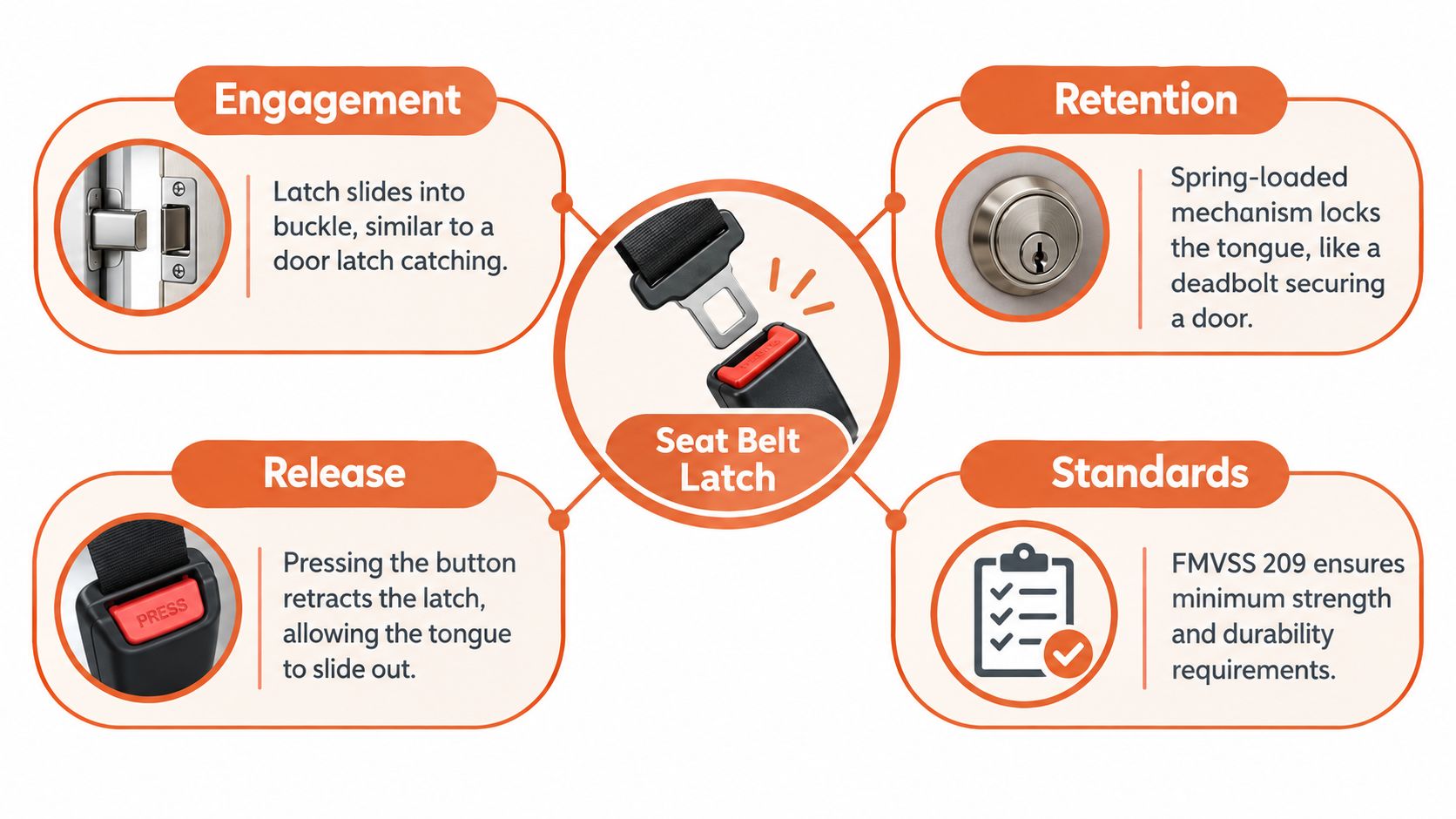
A seat belt latch works like a door latch with a controlled release. The metal tongue enters the buckle, and a spring-loaded internal part catches a shaped section of the tongue. Pressing the release button moves that part aside so the tongue can exit.
The comparison has limits. A household door only needs to stay closed during ordinary use. A restraint buckle must hold through vibration, repeated use, contamination, wear, and crash forces, then release through a deliberate button press.
Four jobs happen inside the buckle
Engagement starts as the tongue enters the slot. Alignment matters because the tongue must travel far enough for the internal latch to capture it. A click indicates movement of the mechanism, not proof that the tongue is fully retained.
Retention is the holding phase. The latch element must stay against the tongue instead of slipping away under belt tension or movement. A firm pull-back check tests this function more directly than sound alone.
Release begins when the button is pressed. The mechanism moves clear of the tongue, which should come out smoothly without excessive force, sticking, or delayed return of the button.
Hardware security includes the buckle, belt assembly, fasteners, and anchorage. NHTSA states that seat belt assemblies must include the necessary buckles and other fasteners. Its interpretation history also connected latchplate accessibility with convenience and usability in 1985 (NHTSA interpretation).
Why federal standards shape everyday feel
FMVSS No. 210 covers passenger cars, multipurpose passenger vehicles, trucks, buses, and school buses. Its purpose includes reducing the likelihood that seat belt anchorages fail in service. The design of the anchorage and its hardware therefore affects more than installation. It affects whether the restraint remains attached during use.
FMVSS No. 209 requires the buckle latch to withstand repeated opening and closing without failure or wear that impairs normal latching and unlatching. It also addresses partial engagement and release behavior, including a maximum separation force of 22 N for a metal-to-metal buckle in the specified partial-engagement test (49 CFR 571.209).
These requirements explain why geometry, spring force, friction, and wear resistance matter. Front outboard buckles may feel different from rear center buckles because their use, alignment, and exposure to debris differ. Cold conditions can increase internal friction, allowing a partial-latch problem to appear only at certain temperatures.
For owners reviewing the wider restraint system, the seat belt pretensioner guide explains the tensioning component's relationship to belt operation. The pretensioner and latch perform separate jobs, so a buckle complaint should not automatically be diagnosed as a pretensioner fault.
Common Seat Belt Latch Problems Across Vehicles
A buckle can pass a quick click test and still deserve attention. Owners and technicians should connect the symptom with the mechanical cause, then verify that the tongue stays retained. Repeatedly forcing a reluctant tongue can damage its edges, deform the buckle opening, or conceal an intermittent retention problem.
Obvious symptoms
- Debris in the slot: Crumbs, dust, coins, and sticky residue can block the internal path. The tongue may stop short, or the release button may return slowly.
- A sticky release button: Extra force, uneven travel, or incomplete button return can indicate contamination or internal wear. Avoid household lubricant. It can attract dirt or change the friction designed into the buckle.
- Weak or inconsistent engagement: A worn spring or damaged internal part may fail to position the latch correctly. The buckle can click during one attempt and resist during another.
- Poor alignment: A twisted belt tongue may enter at an angle. Rear positions see this more often because the belt can rest behind a cushion or fold against the seat.
Subtle symptoms that deserve more caution
Temperature-sensitive faults need a deliberate check. In a 2025 Hyundai recall, out-of-spec internal components could create friction in the latch channel, especially at low temperatures. The tongue might not fully engage even though the buckle appeared normal. The recall covered about 568,580 Palisade vehicles and cited 546 unique reports, with no crashes, injuries, fatalities, or fires reported in the recall document (Hyundai recall report).
A buckle that works after the cabin warms up may still have a fault. Temperature can alter clearances and internal friction, much like a drawer that moves freely when warm but binds when its parts contract. A cold-weather check should therefore include full insertion and a firm pull-back verification, not only the sound of the click.
Front and rear latches may also behave differently. Rear center buckles can use different tongues or anchor arrangements and may see less frequent use. If a center buckle needs unusual positioning, fails to sit flush, or releases during a gentle pull, leave that seating position unused until it is assessed.
For a visual example of how a locked or damaged belt may behave after a collision, watch this seat belt inspection video.
A post-collision belt may lock because its pretensioner activated. That condition differs from a contaminated buckle. This locked seat belt repair explanation explains how those conditions can be distinguished.
How to Inspect Front and Rear Seat Belt Latches
A latch can look clean and still fail to hold the tongue correctly. Inspect one seating position at a time, then compare it with a working buckle in the same vehicle. A basic owner check needs good lighting and a clear view, not buckle disassembly. The goal is to verify retention, not merely hear a click.
Start with the visible parts
Examine the buckle housing, release button, metal tongue, and belt webbing. Look for cracks, distortion, corrosion, loose trim, frayed stitching, cuts, heat damage, or webbing pinched near the latch.
Check the mounting area as well. The buckle should rest in its intended position, while the anchor hardware should not look loose, pulled away, or distorted. Keep hands away from a deployed pretensioner. Do not remove an anchor bolt unless you understand the vehicle's restraint-system safety procedures.
Test insertion, retention, and release
Use this sequence:
- Align the tongue: Remove twists from the belt and guide the tongue straight into the buckle.
- Insert fully: Push firmly until it clicks. Confirm that the tongue reaches its normal depth and the buckle face looks correct.
- Pull back: Hold the webbing close to the tongue and pull in the direction that would extract it. The tongue should stay captured without creeping toward release.
- Operate the button: Press the release button normally. The tongue should eject without binding, grinding, or unusual force.
- Repeat across the cabin: Check the front outboard, rear outboard, and rear center positions separately.
A belt that will not extend at all requires a different check. See this guide to what a stuck belt usually means.
Rear positions deserve close attention because buckles may sit between cushions, hide behind another belt, or be mistaken for adjacent tongues. Rear center buckles can also use different tongue or anchor arrangements than front buckles. Test each position with its own tongue, and leave a position unused if the buckle sits incorrectly or releases during a gentle pull.
Child-restraint lower anchors add another source of confusion. LATCH refers to the child-restraint anchorage system under FMVSS No. 225, not the ordinary seat belt buckle. NHTSA describes LATCH and seat belt use in its seat belt and LATCH information. A LATCH-equipped position may have different belt-use instructions, but the vehicle seat belt remains a separate restraint.
Temperature can expose a partial-latch problem. Check the buckle when it is cold if the vehicle operates in low temperatures, and repeat the insertion and pull-back test after the cabin warms. A buckle that works only when warm needs assessment.
If any latch fails, record the symptom, temperature, seating position, and whether the problem repeats. Check for an open recall or arrange a qualified restraint-system inspection before using that position.
Why a Click Does Not Mean Secure and How to Verify Engagement
You buckle in before leaving a cold driveway. The tongue clicks, yet the first pull on the belt feels different from the other seats. That sound confirms contact with the latch, not necessarily full engagement. A tongue can touch internal parts and produce a click before the retention mechanism captures it completely. Friction, an out-of-spec component, or an angled entry can leave the buckle looking seated while holding force remains inadequate.
Recent 2025 recall notices involving Hyundai, Jaguar Land Rover, and other vehicles stressed firm insertion followed by a pull-back check. One notice described an out-of-spec buckle that could appear latched, then release with slight movement, as summarized by the NHTSA recall information summarized by the Automotive Safety Council.
Use the pull-back habit
Insert the tongue while keeping the webbing aligned. Then pull the belt back toward yourself with deliberate hand force. This check recreates ordinary tension changes, not crash forces. The tongue should stay captured rather than sliding free when the belt direction changes.
A properly engaged buckle should resist the pull without releasing, excessive rattling, or shifting to a visibly different position. Keep your grip away from the release button. If your hand presses it during the check, reset your grip and test again.
The click starts the check. The pull-back confirms it.
Watch for partial engagement conditions
Rear center positions deserve extra care. The wrong tongue may be offered to a nearby buckle, or the belt may approach from an unusual direction. Front and rear positions can also use different tongue and anchor arrangements, so compare a questionable result with the correct position, not merely with the nearest buckle.
Cold temperatures can reveal a marginal latch. Friction may prevent an internal part from moving fully through its channel, a condition reflected in the Hyundai recall report. Repeat the insertion and pull-back check after the cabin warms. A buckle that works only when warm needs assessment.
Stop using that seating position if the tongue backs out, the pull test differs noticeably, or repeated insertion is required. Never tape the button, wedge the tongue, or hold the latch shut with an improvised object. Such fixes can obstruct quick release and hide a restraint fault.
Maintenance Tips and Repair vs Replacement Decisions
A buckle that works in the driveway can still fail after dirt, temperature changes, or a collision affect its internal parts. Cleaning is reasonable when loose debris is the only visible problem, but restraint hardware requires a light touch. Hold the buckle upright, inspect it with a flashlight, and remove material from the opening without pushing tools into the mechanism. A soft brush or controlled air flow can clear surface contamination.
Keep liquids out of the housing. Household oils, penetrating sprays, and grease can change internal friction, collect grit, reach the webbing, or make a temporary improvement that hides damage. Use a product only when the vehicle manufacturer specifies both the product and the procedure.
Choose the service path based on the fault
A cracked housing, failed pull-back retention, distorted metal, or unresolved intermittent fault calls for replacement or specialist evaluation. A buckle that changes behavior with temperature deserves the same caution. Cold conditions can expose marginal internal movement, as reflected in the Hyundai recall report. If it engages only after the cabin warms or requires repeated insertion, leave that seating position unused until it has been assessed.
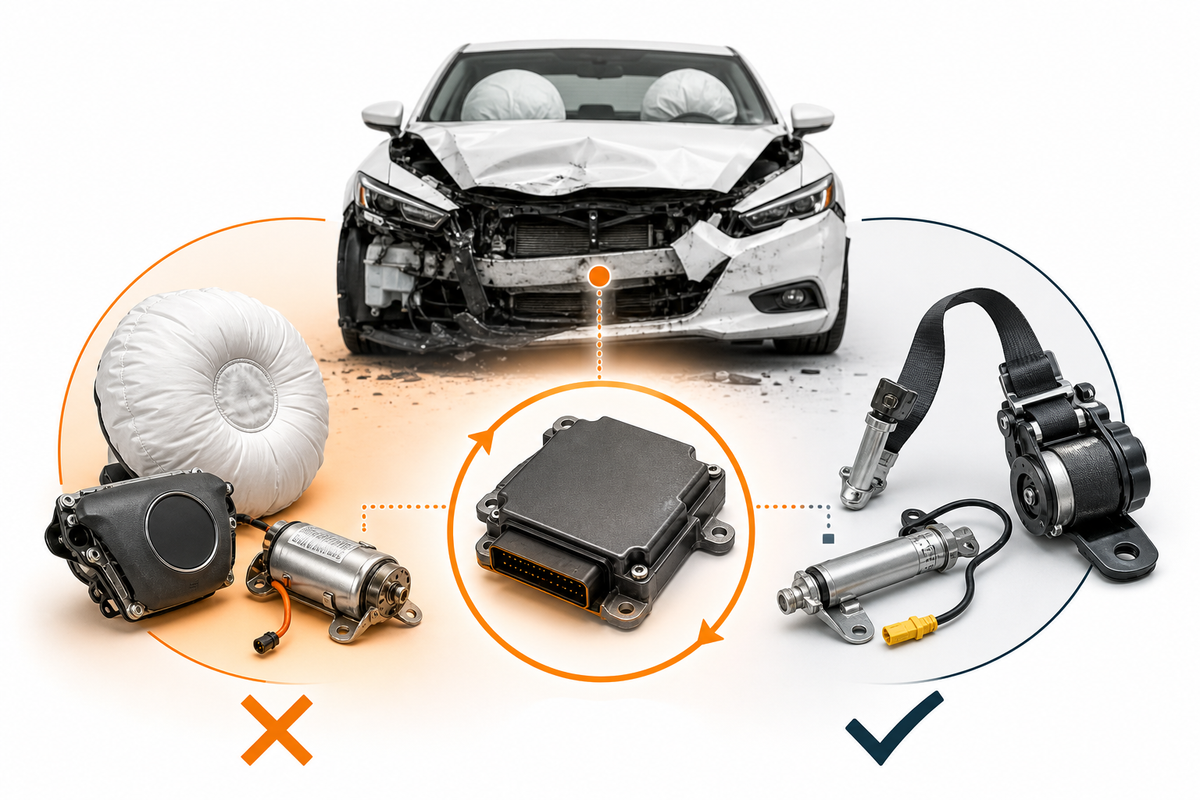
A collision can involve more than the latch. The pretensioner, retractor, webbing, wiring, or SRS module may also need attention, so diagnose the restraint system before ordering a random buckle.
| Factor | Repair Service | Full Replacement |
|---|---|---|
| Typical use | Suitable when a serviceable component can be restored and tested | Suitable when the buckle is damaged, contaminated internally, unavailable for service, or under a replacement remedy |
| Safety requirement | The provider should use appropriate components, follow manufacturer specifications, and function-test the part | The replacement must match the vehicle, seating position, connector, belt configuration, and restraint design |
| Turnaround | Mail-in service requires removal and shipping, followed by reinstallation by the owner or a local facility | Local parts availability may allow faster installation, but ordering can delay the repair |
| Cost decision | May avoid buying a complete assembly when the affected component is serviceable | May be the clearer choice when damage is extensive or the manufacturer directs replacement |
| Post-collision scope | Can fit workflows involving pretensioner repair, webbing replacement, or SRS module service | May require replacing the complete belt assembly and addressing related SRS faults |
Seat Belt Repair offers mail-in service for seat belt pretensioners, seat belt webbing, and SRS airbag control modules, with OEM components and functional testing before return, according to the publisher's service information. The service does not install parts in the vehicle. Reinstallation and final vehicle checks remain with the customer or a local repair facility.
Before authorizing work, record the vehicle identification information, seating position, connector details, fault symptoms, and collision history. Have the shop verify open recalls through the manufacturer or NHTSA, since a recall remedy may cover the repair.
Keeping Every Latch Reliable for the Long Term
A latch can seem fine during routine use and still deserve attention. Check every seating position, including rear seats, where infrequent use, hidden debris, unusual tongue routing, and center-buckle layouts can conceal problems. Front and rear latches may also respond differently to wear, temperature, or routing, so do not assume a passing driver-side check represents the whole vehicle.
Use three observations when inspecting a questionable buckle:
- Engagement: The tongue enters fully and sits correctly.
- Retention: A pull-back check confirms that it remains captured.
- Release: The button operates smoothly, without sticking or excessive effort.
A dependable latch must pass all three checks. A click is only the start. Pull the belt back after buckling, because a partial engagement can sound normal while failing to hold the tongue securely. Cold conditions can expose marginal engagement or stiffness, and recall patterns have shown why front and rear latch behavior should be assessed by seating position rather than assumed to match.
If a latch fails the pull test, releases unexpectedly, behaves differently in cold weather, or shows damage, leave that position unused and arrange a qualified inspection. After a collision, have the belt, pretensioner, retractor, buckle, wiring, and SRS module evaluated together. Document the exact seat position and provide the correct component for service. Avoid improvised fixes and unverified replacement parts.
Make the final check routine: buckle normally, pull back to confirm retention, and respond to any change before a minor annoyance becomes a restraint failure.
Seat Belt Repair handles mail-in pretensioner repair, webbing replacement, and SRS module reset for owners and repair facilities working with damaged or post-collision restraint components. Visit Seat Belt Repair to review service options and guidance for identifying the correct part before shipping it for evaluation.


Оставить комментарий
Этот веб-сайт защищается hCaptcha. Применяются Политика конфиденциальности и Условия использования hCaptcha.