
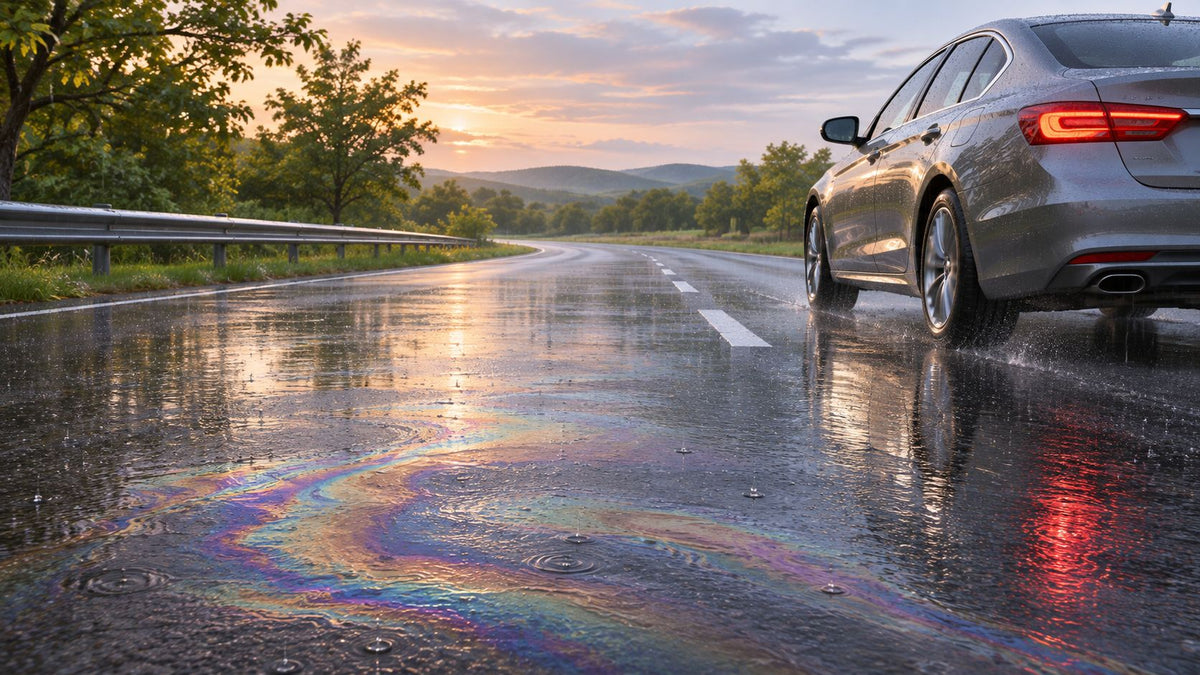
The road is most slippery just after rain begins following a dry spell, and when a nearly freezing road carries a film of invisible ice. The popular advice to watch out for the heaviest rain misses two hazards: the oily first rinse and the cold, wet-looking surface that may already be glazed.
Those slick minutes threaten more than tire grip. A slide can end in a collision that fires a seat-belt pretensioner and stores crash data in the SRS system. Driving gently helps prevent that sequence; if a crash does happen, restoring the restraint system matters before the next trip.
Table of Contents
- When the Road Is Most Slippery
- Why a Thin Film Beats Dry Pavement
- First Rain Oil and Ordinary Trips That Slide
- Black Ice Bridges and Near-Freezing Pavement
- Drive the Slickest Minutes
- What a Slide Does to Belts and Airbags
- After the Slide Restore the Restraint
When the Road Is Most Slippery
Two conditions deserve your first attention: rain starting on a road that's been dry, and a near-freezing road with clear ice you can't see. In the first case, water lifts oil and road residue into a slick film. In the second, the pavement can look merely damp while a glaze of ice lies between the tires and the road.
| Condition | Why grip fails | Typical temperature | Driver response |
|---|---|---|---|
| First rain after a dry spell | Oil, rubber dust, and drips mix with a thin film of water | Any mild or warm weather after dry conditions | Slow down before entering the wet stretch and leave extra room |
| Freezing rain | Liquid water freezes into a clear glaze on contact | At or just below freezing | Delay the trip; if already moving, coast and avoid hard braking |
| Black ice | Invisible ice covers bridges, shade, or low spots | Near freezing, when moisture meets a cold surface | Assume bridges may be icy and turn cruise control off |
| Polished packed snow | Traffic presses and smooths snow into a slick sheet | Below freezing, after traffic packs the snow | Use gentle inputs and leave much longer gaps |
| Heavy rain and standing water | Tires can ride up on pooled water instead of gripping pavement | Any temperature once water pools | Slow well below highway pace and stay out of ruts |
| Cold wet pavement just above freezing | Water stays on the surface while cold tires grip less effectively | Just above freezing | Add following distance and expect a longer stop |
The table separates two kinds of danger that are easy to confuse. A thin film can reduce grip even when the road isn't flooded; deep water creates a different problem, as tires may lose contact with the pavement. In either case, a driver who brakes hard or changes lanes abruptly can turn a brief loss of grip into a crash.
Bridges, overpasses, shaded bends, and low spots deserve extra caution in cold weather. They can cool faster than the road around them, so a lane that looks uniformly wet may hide ice in one exposed section. Treat the start of rain and a near-freezing forecast as reasons to ease off, not as proof that the whole road is equally slick.
Why a Thin Film Beats Dry Pavement
Dry pavement is like sandpaper under a shoe. Its rough texture gives the sole something solid to press against. Put a plastic sheet between shoe and floor, and the shoe can slide instead. Tires also need to press their rubber into the small texture of the road; a film of water, oil, or ice gets between those surfaces.
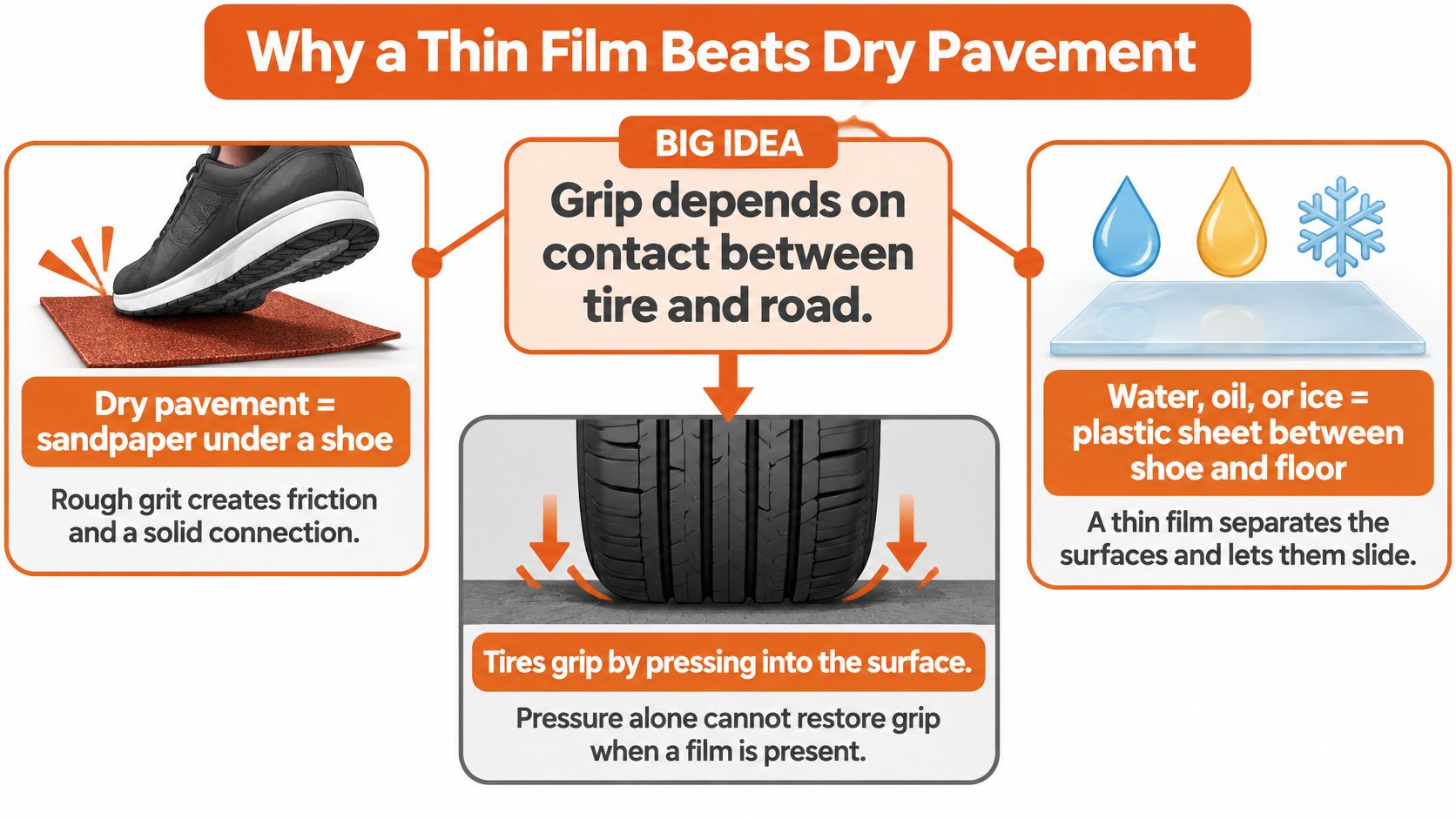
Consider a road after several dry days. Vehicles leave oil drips, rubber dust, and other residue on the asphalt. When rain first arrives, a small amount of water can lift and spread that material without washing it away. The tire now meets a slick mixture instead of clean, textured pavement.
The slickest moment is often the start of the rain, not the heaviest part.
As rain continues, it can rinse some residue away. But more water brings its own hazard: when water pools deep enough, a tire may ride on top of it rather than maintain contact with the road. That's why a light shower on dirty pavement can be treacherous even though a heavier rain may look more threatening.
Temperature changes what the film does. In warmer weather, water can carry oily residue across the lane. Near freezing, moisture may turn to ice instead of washing the surface clean. Cold rubber also becomes less flexible, making it harder for a tire to conform to the road's texture. Tire condition matters in all weather, but no tread can make a slick film disappear.
The two highest-risk situations are different: the first wetting of a road coated with residue, and a cold surface carrying clear ice. One begins with rain; the other can look like an ordinary damp road.
First Rain Oil and Ordinary Trips That Slide
Faint clues show up before the tires do. Near a stoplight, a rainbow sheen may spread across the wet asphalt like a thin film on a puddle. In merge lanes, darker wheel tracks can mark where traffic has polished and carried residue. Oily spray from the vehicle ahead is another sign that the surface is slicker than it looks. Treat those visual cues as a reason to ease off, even when the road seems only damp.
A parking lot after a dry week makes the trap easy to miss. The rain has just started, the highway looks ordinary, and the merge lane shines under the lights. The mistake is accelerating to the usual highway speed before the tires have settled onto the wet road. Build speed smoothly, leave space, and avoid a sharp lane change across the sheen. Think of the first few blocks as a test strip, where gentle steering and braking tell you more than the color of the pavement.
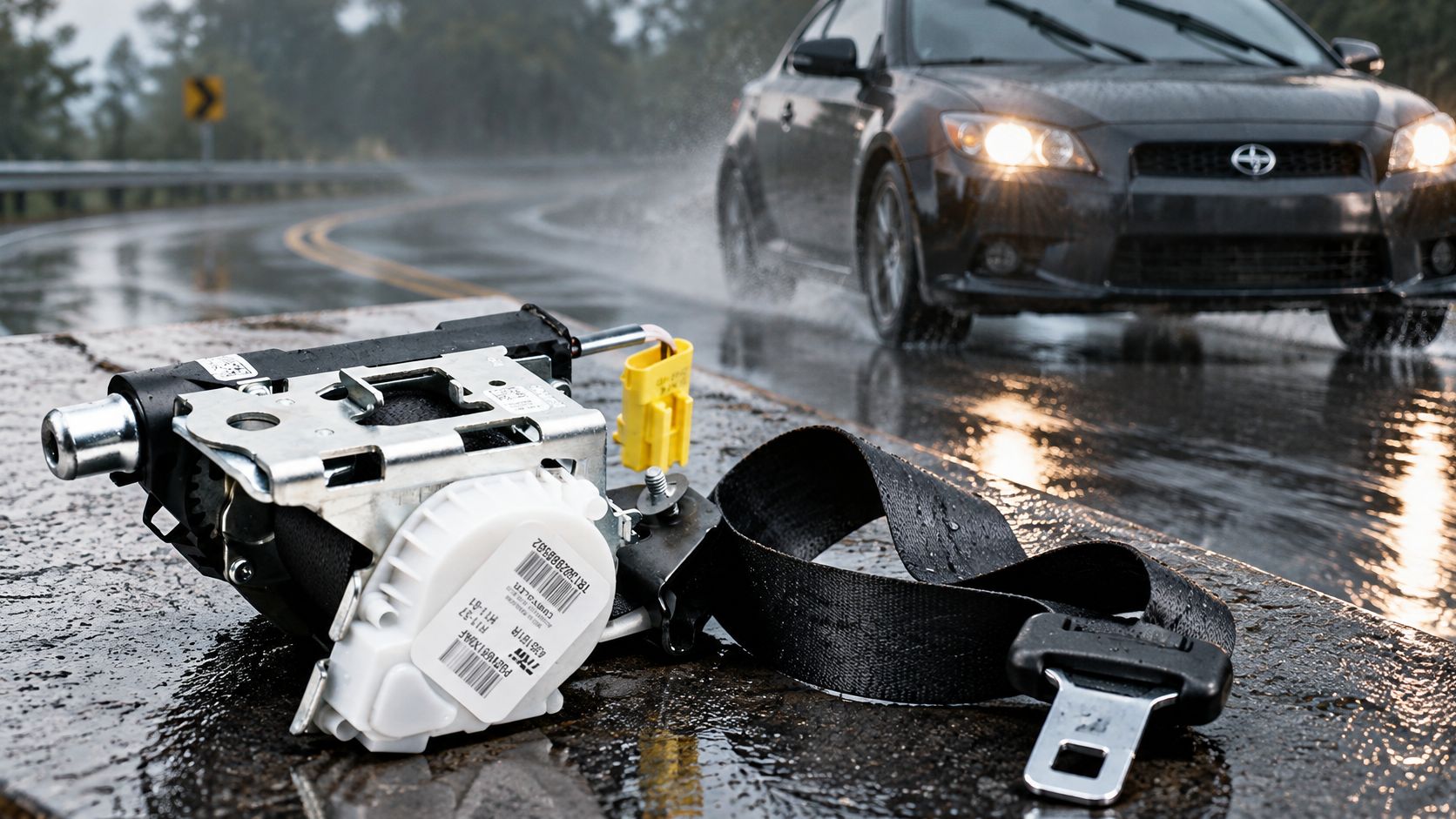
Other routine trips have their own traps:
- The cold morning commute: The street looks wet, but a bridge over a creek may have a thin ice film. Braking hard at the end of the ramp leaves little room to recover.
- The trip after plowing: Tire tracks may look clear while packed snow in a stop sign's approach has been polished smooth by traffic. A quick stop can break traction.
- The sunny drive after a freeze: Meltwater crosses a shaded bridge and freezes again. A patch of shade may be icy even when nearby pavement has thawed.
In each case, the dangerous input is often abrupt: a hard stop, a fast steering correction, or cruise control holding speed as the car reaches a slick surface. A vehicle can start sliding before the driver has time to react. Smooth inputs and a slower approach give the tires a better chance to keep the car on its intended path.
Black Ice Bridges and Near-Freezing Pavement
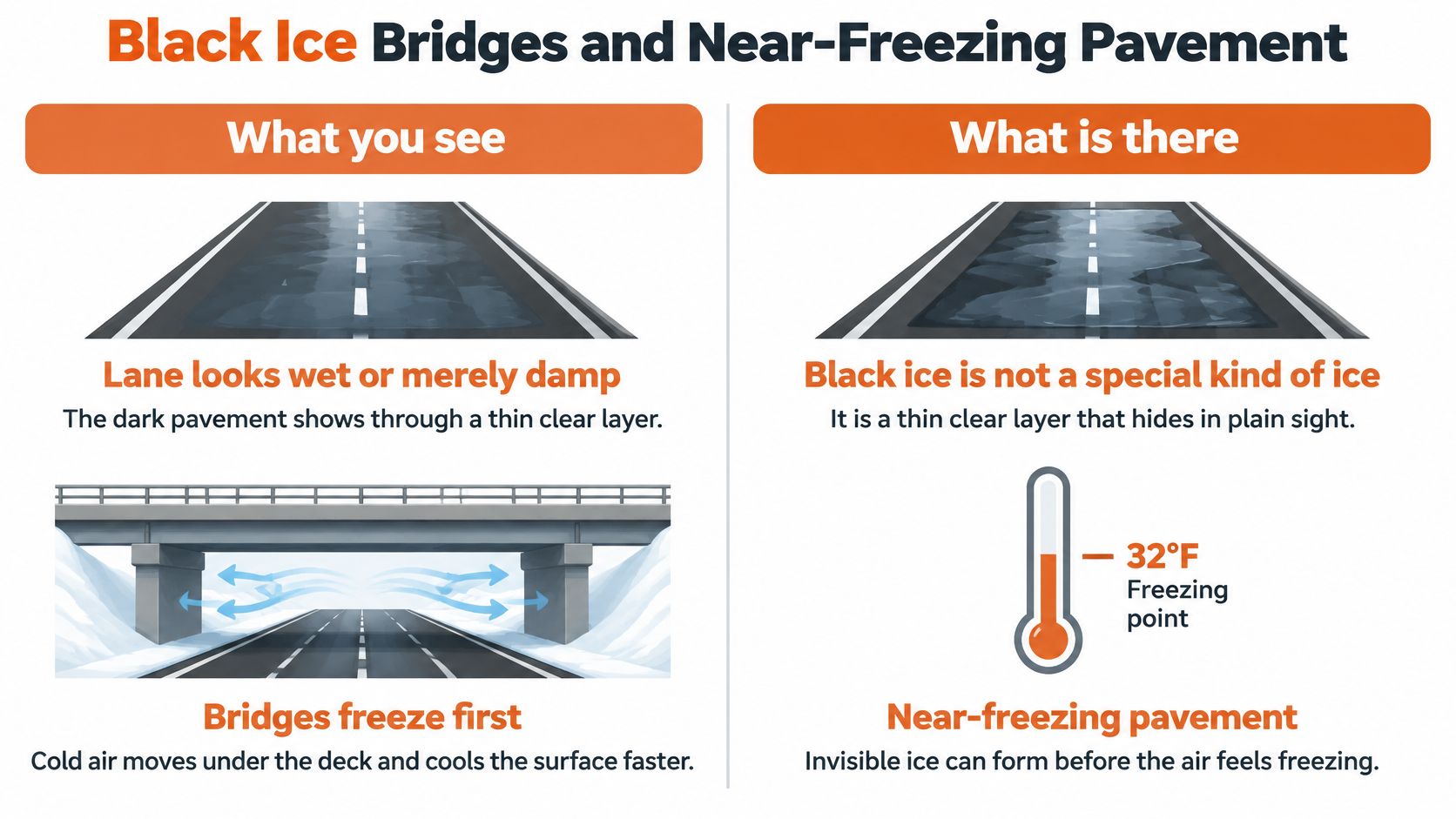
Black ice isn't a special kind of ice. It's a thin, clear layer that lets dark pavement show through, so the lane can look wet or damp. Moisture may freeze as drizzle, dew, or meltwater, or when a damp road cools after sunset.
Bridges and overpasses lose heat faster than the ground beneath them because air moves around and under their exposed surfaces. Shaded bends and low areas can also stay colder than the open road nearby. That's why a bridge may be icy while the road leading to it looks wet.
| Surface | Where it forms | What makes it deceptive |
|---|---|---|
| Black ice | Bridges, shaded bends, and other cold surfaces | Clear ice lets the dark road show through |
| Cold wet pavement | Exposed wet roads near freezing | It may remain liquid, but cold tires still have less grip |
| Polished packed snow | Tire tracks and intersections | Traffic smooths the snow into a hard, slick layer |
Freezing rain can coat the lane and nearby objects with glaze, while packed snow develops its own slickness as vehicles pass over it. These surfaces look different up close, but each can catch a driver who assumes the road has the same grip everywhere.
When the air is near freezing, don't use the appearance of the open lane as your only guide. Trust the cold bridge deck and shaded patch to be more hazardous than the road around them.
Drive the Slickest Minutes
Set up before leaving, then make your inputs earlier and gentler than usual.
- Check the tread. Use a tread-depth gauge or a coin to inspect the grooves. Replace tires worn smooth; shallow grooves leave less room to channel water away from the contact patch.
- Set cold tire pressure. Use the pressure on the driver-door sticker, not the maximum pressure molded into the tire sidewall.
- Clear the glass. Remove ice from the windshield and windows before driving, so you can spot a shaded bend or bridge in time.
- Give yourself time. Leaving earlier makes it easier to choose a slower pace instead of rushing into a wet merge.
- Slow before the slick stretch. Ease off before the shiny lane, shaded bend, or overpass. Braking once the car is already on ice can upset its balance.
- Switch off cruise control. You want direct control of speed on a surface where grip may change without warning.
- Make room and keep movements smooth. Increase the gap, release the accelerator gradually, and avoid quick lane changes across wet sheen or packed snow. If you're unsure whether a belt has locked after an impact, how a seat belt lock behaves can help you recognize that symptom.
- If the car slides, ease off the accelerator. Look and steer toward the path you want the car to follow. Don't pound the brake or jerk the wheel. On a long icy patch, coast and wait for a rougher or drier surface before asking the tires to do more.
Standing water needs a separate response. Slow well below your normal highway pace and avoid ruts where water collects. If the tires begin to ride up on water, abrupt steering or braking can make the vehicle harder to control.
What a Slide Does to Belts and Airbags
A slide can end in a rear-end collision, a spin into a guardrail, or a low-speed impact. The car may stop sliding, but the restraint system may have activated in the collision. Seat belts are the primary occupant protection; airbags provide additional protection in certain kinds of impact.
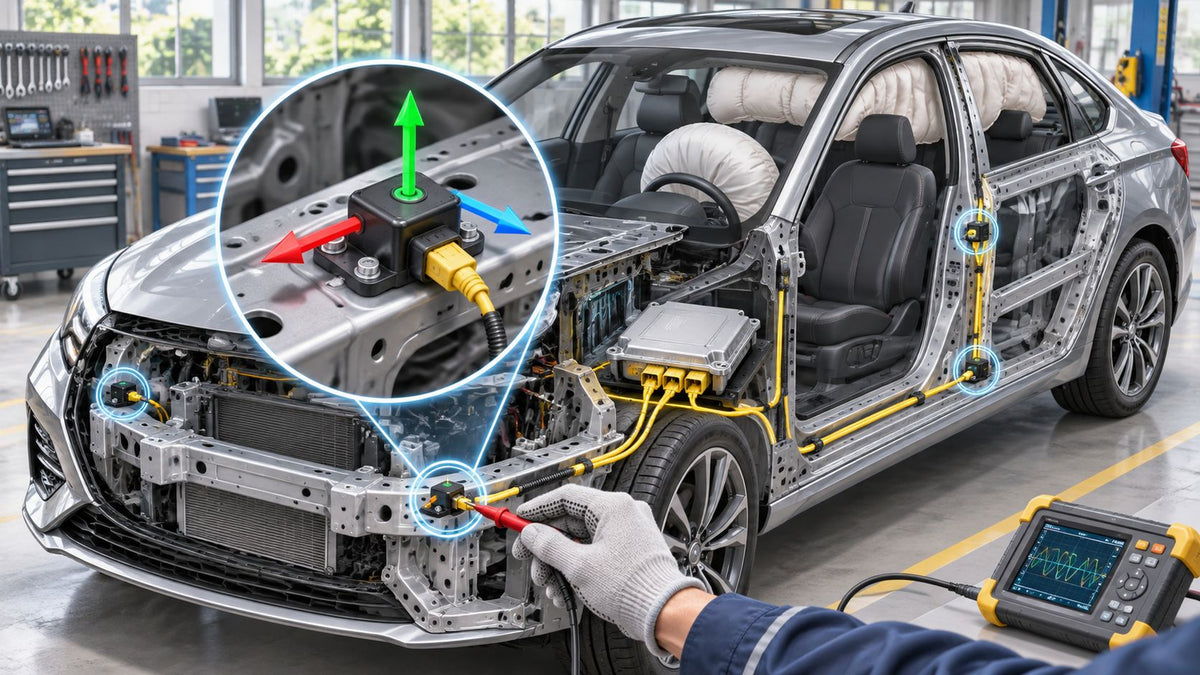
Many modern vehicles use a pretensioner to tighten the belt rapidly during a crash. Once it fires, the belt may remain locked, refuse to extend, or stop retracting even if the webbing looks undamaged. A vehicle's SRS control module may also store crash data, and the airbag warning light may stay on.
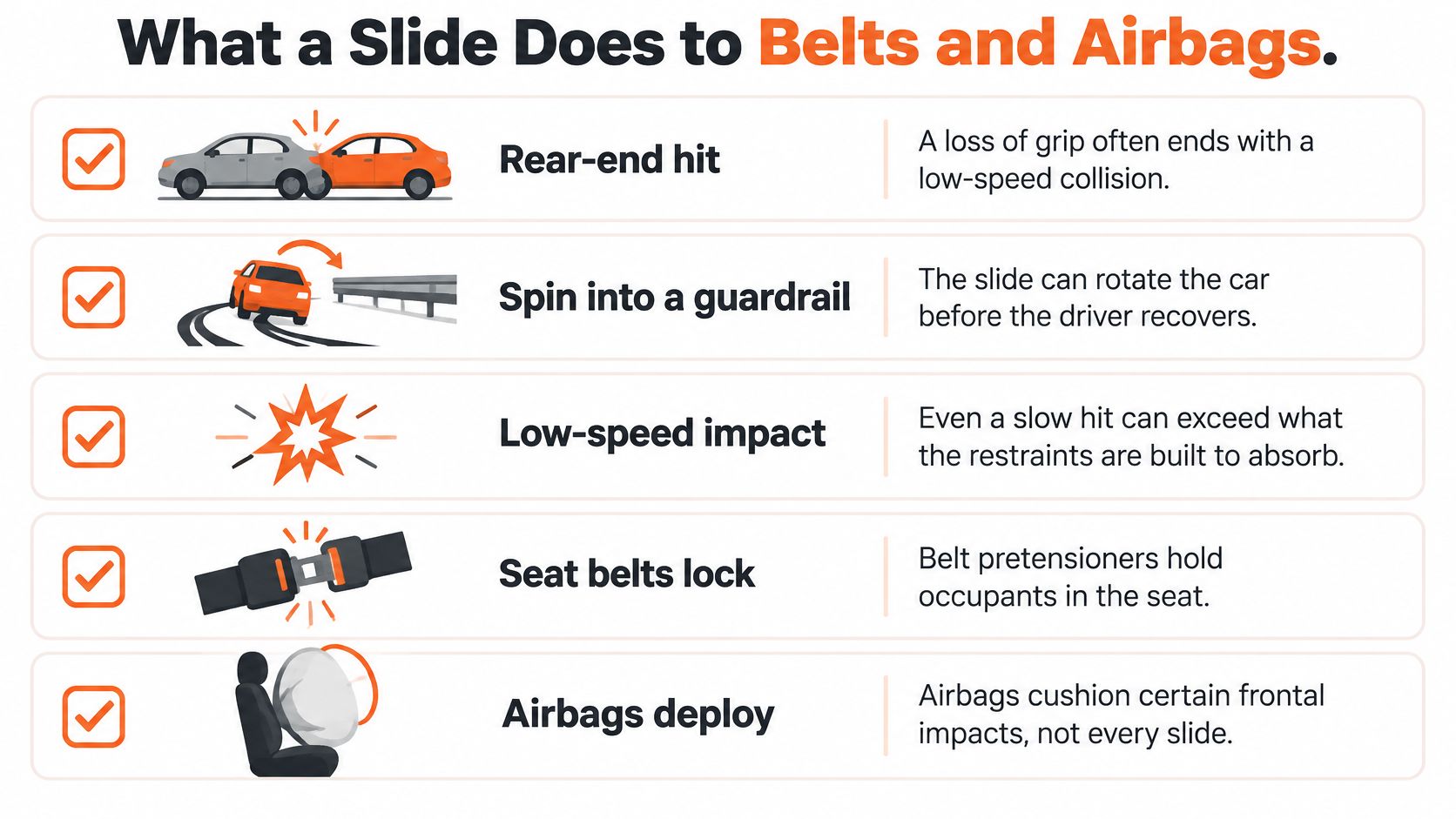
Check for these warning signs after a collision:
- The belt won't pull out.
- The belt won't retract.
- The belt feels jammed.
- The airbag light remains on.
A scan tool can read fault information, but it can't reset a fired pretensioner. A warning light going out by itself, or a belt that looks fine from the outside, doesn't establish that the restraint is ready for another crash. For a plain-language explanation of the mechanism, see how a seat-belt pretensioner works and why it needs repair.
A repair facility may recommend replacing the complete belt assembly. When the housing and mounting points are sound, a professional rebuild may be another option: Scion Seat Belt Repair for All Models covers locked or deployed Scion belts and includes functional testing after repair. Seat Belt Repair describes its mail-in service as using OEM components for belt repairs and SRS module resets; the owner or a local shop handles reinstallation. Don't take the next icy commute with a restraint that may have already fired.
After the Slide Restore the Restraint
A locked belt after a collision deserves the same care as a deployed airbag. Treat a locked belt the same way you would treat a deployed airbag: as a component that has done its job and must be serviced before it can do it again. An airbag light that remains on after the crash also needs proper diagnosis.
- Inspect the belt path and mounting points. Check that the webbing moves smoothly, the retractor feeds evenly, the latch plate engages cleanly, and the anchor bolt and mounting area show no damage or looseness. The guide to what may need replacement or reset after a crash can help distinguish those tasks.
- Have the affected parts assessed and removed. A qualified technician can identify which belt and, if needed, SRS module require service.
- Choose repair or replacement based on condition. If the belt's housing and mounting points are sound, a professional rebuild may restore the internal mechanism. Webbing that is cut, torn, worn, or chewed may need replacement before the restraint can be trusted again.
- Restore the system before driving again. Treat restoration of the belt and SRS module as a precondition for driving, the same way you would treat refilling the fuel tank before a trip.
The safer drive begins before the slide, with care on freshly wet roads and near-freezing bridges. After a collision, the priority is making sure the restraint that activated is ready to protect its occupant again.
Seat Belt Repair offers mail-in repairs for locked or deployed pretensioners, webbing replacement, and SRS module resets, with installation handled by you or a local shop. If a slick-road collision has left a belt locked or an airbag warning light on, visit Seat Belt Repair to review the service process.

Laisser un commentaire
Ce site est protégé par hCaptcha, et la Politique de confidentialité et les Conditions de service de hCaptcha s’appliquent.